The oxygen discovery raises questions about how deep-sea mining to extract polymetallic nodules will affect marine ecosystems
An unknown process is producing oxygen deep in the world’s oceans, where it is too dark for photosynthesis, scientists reported on July 22 in the journal Nature Geoscience. The finding has important implications because it helps support life and the discovery implies the existence of previously unknown ecosystems.
Many governments are also bound to take notice since one explanation for the oxygen is that polymetallic nodules are transporting electric charges that split water molecules around them, releasing oxygen. Polymetallic nodules are lumps of iron, manganese hydroxides, and rock partially submerged in many parts of the ocean floor. If their concentration exceeds 10 kg per sq. m, mining them is considered to be economically feasible — and many countries are planning to do so as a new resource.
Scientists reported an unknown process is producing deep in the world’s oceans, where photosynthesis can’t occur due to the lack of sunlight.
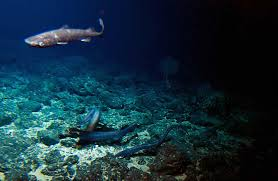
The Zone is noted for having the highest concentration of polymetallic nodules in the world. This discovery is significant because it supports marine life and suggests that there may be previously unknown ecosystems. Scientists observed an unexpected increase in concentration in some areas of the abyssal zone (where sunlight is extremely low and insufficient for photosynthesis).
Researchers noted that this finding represents a new source of oxygen where photosynthesis does not occur, and termed it as ‘dark oxygen’. Typically it is provided by the ‘Great Conveyor Belt’, a global circulation system which should decrease without local production, as small animals consume it.
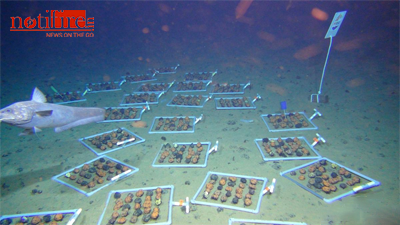
One hypothesis for oxygen production is that polymetallic nodules are transporting electric charges that split water molecules, releasing oxygen. Polymetallic nodules are lumps of iron, manganese hydroxides, and rock found on the ocean floor. However, the exact energy source for the nodules’ ability to produce oxygen remains unclear. The study was conducted in the Clarion-Clipperton Zone Region off Mexico’s west coast.
Scientists have found a source of ‘dark oxygen’ 4,000 meters below the surface of the Pacific in the target zone for deep sea mining. The discovery could have far-reaching implications for science and the wannabe deep sea mining industry.
It’s often said that we know more about the surface of the moon than we do about the deep ocean. This new discovery of dark oxygen shows how true that is – but what is this mysterious-sounding variation of oxygen?
What is dark oxygen?
What scientists mean by ‘dark oxygen’ is that – in the total darkness of the very deep ocean – around 4,000 meters below the surface of the Pacific Ocean – oxygen is being produced – in the dark.
It’s previously been thought that on Earth is produced on land and at the surface of the ocean, where sunlight makes plant photosynthesis possible.
Plants on land are the biggest producers of oxygen, but marine algae and phytoplankton also produce it. These microscopic organisms perform photosynthesis in the ocean, which covers about 70% of the Earth’s surface.
Blue-green algae – or cyanobacteria – are some of the oldest organisms on Earth and can also produce oxygen. They were among the first to do so through photosynthesis, and they also need sunlight.
The common factor in production is sunlight – until this discovery of dark showed that it is also being produced in another way in the deep dark sea.
Why is the dark oxygen discovery significant?
The dark oxygen discovery is being hailed as a groundbreaking scientific discovery, but it also has other implications.
Nick Owens, the director of the Scottish Association for Marine Science (SAMS) says: “The fact that we’ve got another source on the planet other than photosynthesis has consequences and implications that are utterly profound.”
Andrew Sweetman, who was one of the SAMS scientists involved in the research, says in a video: “This research potentially sheds light on where life began on the planet. This discovery has shown that, well, maybe there was another source of oxygen a long time ago and aerobic life or life that breathes oxygen could have persisted before the rise of photosynthesis — and if it’s happening on our planet could it be happening on other planets too?”Play
But as well as those wider implications, the discovery has significant and immediate implications for the controversial deep sea mining industry which somewhat ironically sponsored the science.
Here’s the thing. This dark oxygen, instead of being produced by plants and sunlight, is being produced by strange potato-shaped metallic lumps found on the deep sea floor.
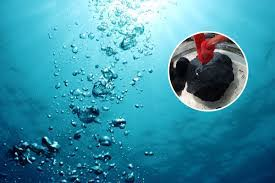
It turns out that these lumps – otherwise known as ‘polymetallic nodules’ – give off almost as much electricity as AA batteries! By reacting with salt water, their electrical charge is producing way down there on the seabed of the deep ocean through a process known ‘seawater electrolysis’ which splits seawater into hydrogen and oxygen.
So, these little metallic lumps, which the wannabe deep sea miners have been metaphorically calling ‘batteries in a rock’ actually turned out to be just that – and they’re producing dark that could play a critical role in the deep ocean ecology.
What the dark oxygen discovery means for deep sea mining
The discovery of metallic nodules producing dark oxygen has been a huge surprise to science which could even require a new way of thinking about how life first began on planet Earth.
But it could also be the final straw in the case against deep sea mining. It could stop the industry before they begin.
The discovery was made in the Clarion-Clipperton Zone (CCZ), a huge flat area of the seafloor that stretches between Hawaii and Mexico, where mining companies like the Metals Company have plans to start harvesting these very same nodules that turn out to be producing all this dark oxygen.
These oxygen-producing nodules could be supporting a whole range of known and unknown deep sea lifeforms. Dark oxygen could be a critical factor in the deep sea ecosystem!
Greenpeace and others have long said that this new extractive mining industry should not be allowed to start in the very deep ocean because the life there is so little understood, and the ecosystems are fragile and potentially vital for the health of the ocean and all life on Earth.
This new discovery underlines the point.
The timing is good because world governments are meeting in Jamaica right now to decide the fate of this new mining industry. They’ll be deciding whether or not to allow deep sea miners like The Metals Company to go ahead with their plans to drop giant mining robots onto the seafloor to start harvesting these life-sustaining nodules.
Greenpeace is in Jamaica arguing strongly that deep sea mining should not be allowed to go ahead – especially now that we know the deep ocean is another source of oxygen that could be vital for the health of the ocean and all of us who depend on it.
In the climate and biodiversity crisis, we know that nature, in all its diversity, must be protected.
Follow us for more