6 verified briefings on Multi Cloud. Each story includes a plain-English summary, why it matters, and the concrete action engineering teams should take.
A new engineering framework shows that changing your multi-cloud architecture can save far more money than just negotiating better rates. This approach focuses on optimizing service placement and communication to slash hidden data transfer fees.
Google BigQuery can now analyze data stored on other clouds like AWS and Azure without moving it. This uses the open Apache Iceberg standard to reduce costs and complexity for companies with multi-cloud data strategies.
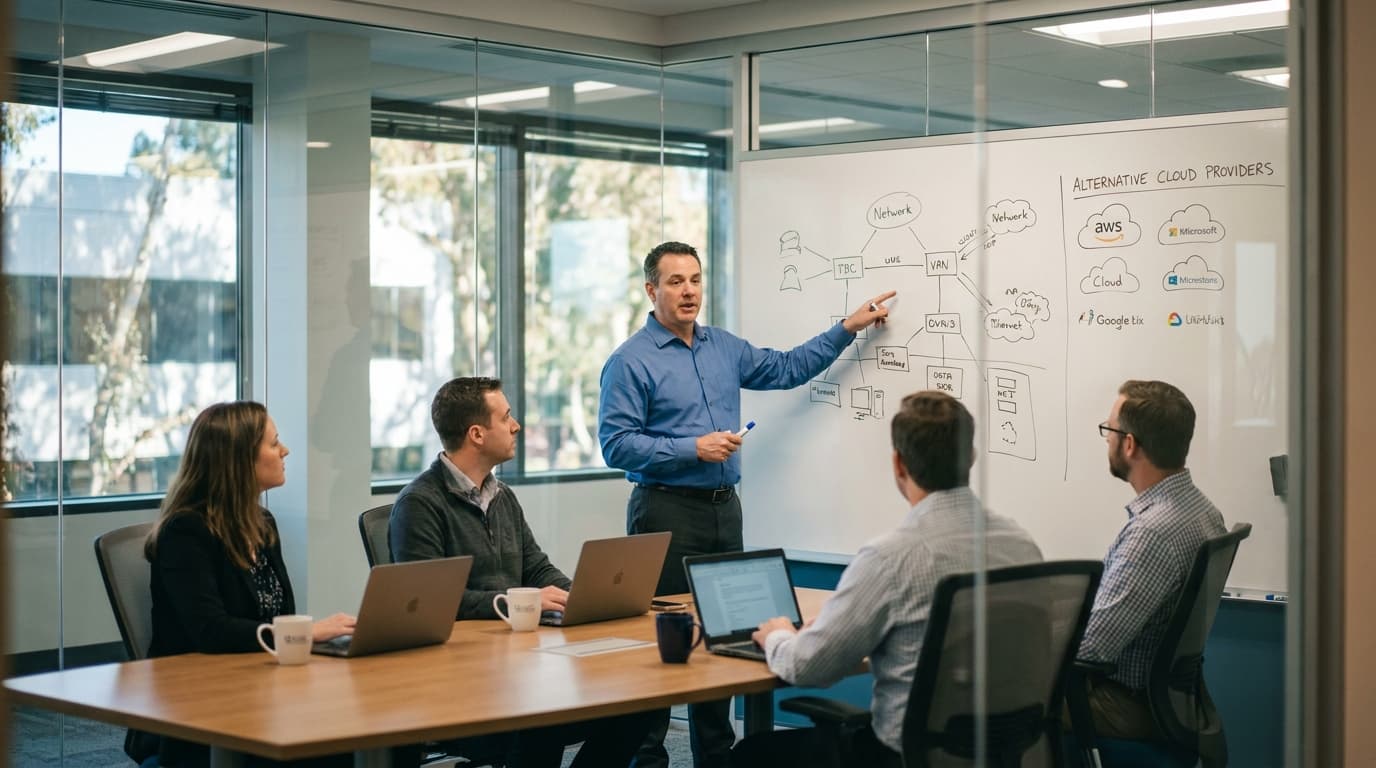
Companies are moving beyond AWS and Azure, adopting alternative cloud providers for specialized tasks. This shift helps them cut costs, avoid vendor lock-in, and gain access to better infrastructure for AI and edge workloads.
GPU cloud provider Nscale is buying Anyscale, the company behind the open-source Ray framework. The acquisition tests whether a critical AI tool can stay cloud-neutral, a major concern for developers building on any platform.
A new architectural approach uses Clean Architecture to make serverless applications portable. This lets developers write business logic once and deploy it across multiple clouds like AWS and Azure, avoiding expensive vendor lock-in.
Slack shared its four-phase journey from a single-cloud AI setup to a multi-cloud platform using both AWS Bedrock and Google Vertex AI. The move offers a valuable roadmap for companies seeking more flexible and resilient AI infrastructure.