OpenAI revealed how its internal AI agent, Kepler, analyzes over 600 petabytes of data. It uses techniques like RAG and automated code analysis to overcome context limits, offering a blueprint for building large-scale AI systems.
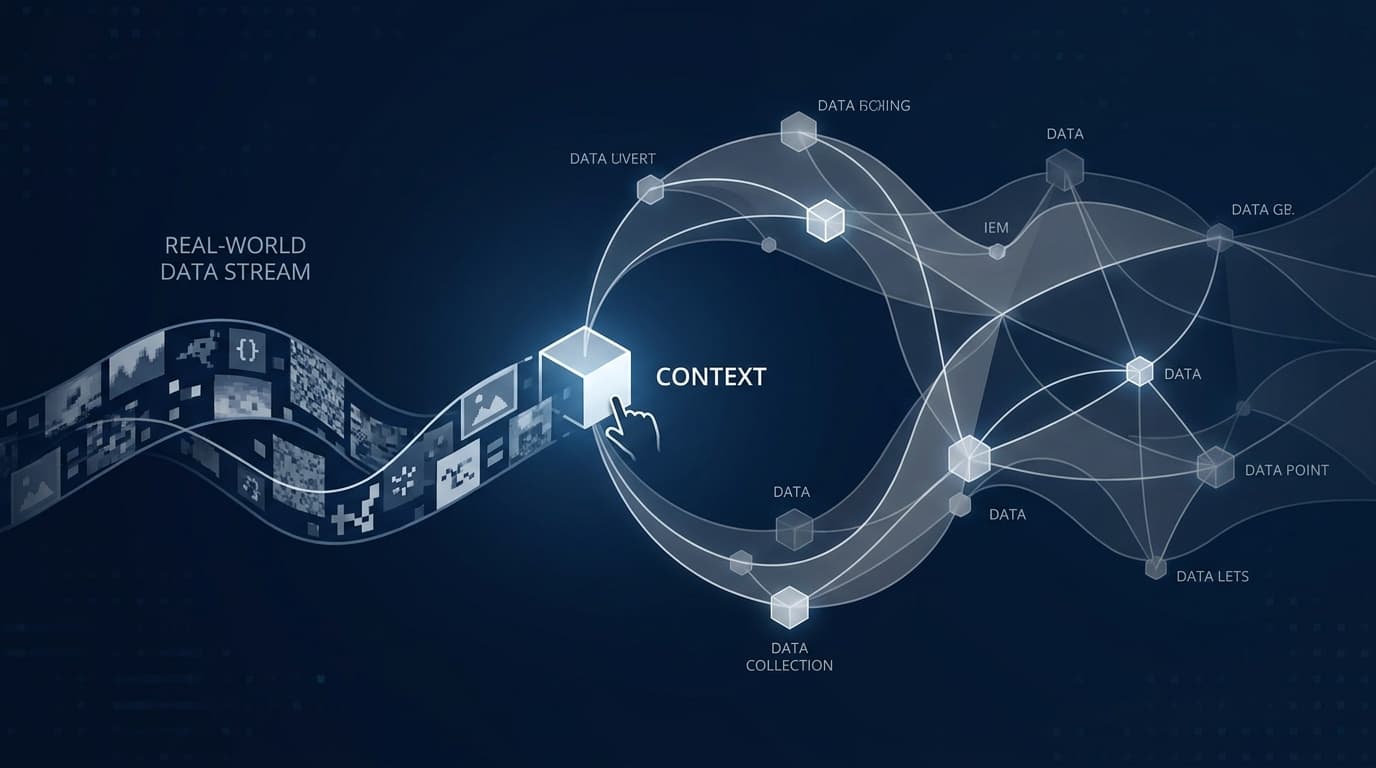
New AI models consistently achieve higher benchmark scores, yet they often fail in real-world applications by hallucinating or mishandling queries. This gap highlights that raw intelligence isn't enough; models require specific, real-time context to perform reliably and reason effectively in production environments.
Scaling AI applications is revealing the limits of simple vector search. Production systems now require a complex retrieval layer that combines keyword matching, semantic search, ranking, and real-time data. This shift treats AI retrieval as a complex systems problem, not just a tooling one.
Simple vector search is no longer enough for production AI. Companies are now building hybrid systems that combine it with ranking and personalization to deliver more relevant and useful results.
Vector search alone is often insufficient for Retrieval-Augmented Generation (RAG) systems. An analysis in InfoQ suggests a hybrid approach, combining traditional keyword search (BM25) with vector search using Reciprocal Rank Fusion (RRF), can deliver more accurate and relevant results for AI applications.
A new AI coding agent named Claw-Coder runs entirely on a local machine, addressing privacy and security concerns associated with cloud-based models. It uses Retrieval-Augmented Generation (RAG) and knowledge graphs to enhance the performance of smaller, local language models, offering a private alternative to tools like Codex.
Standard Retrieval-Augmented Generation (RAG) struggles with complex enterprise data like supply chains. While vector search finds similar text, it misses crucial relationships. Graph-enhanced RAG is emerging as a superior method, helping AI understand structure and answer multi-step questions more effectively.