These New Robots Grow and Move Like Plants
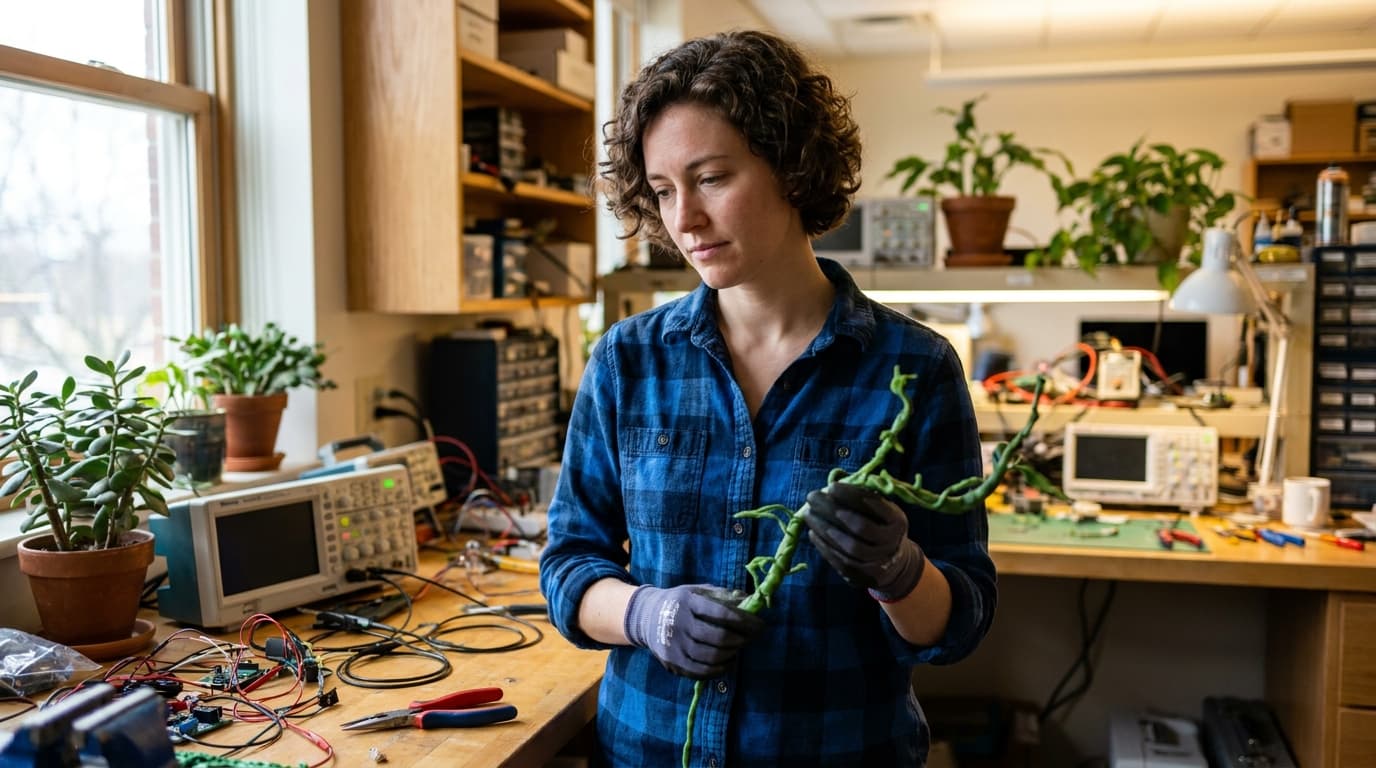
TL;DR: Roboticist Barbara Mazzolai is pioneering a new field of robotics inspired by nature. Her work focuses on creating soft, flexible robots that mimic biological systems to perform complex tasks and potentially restore ecosystems.
Key facts
- Category
- Tech Updates
- Impact
- Low
- Published
- Source
- IEEE Spectrum
Full summary
A leading roboticist is building a new generation of soft robots inspired by biological systems to solve complex environmental and engineering challenges.
Roboticist Barbara Mazzolai is working to establish a new field of engineering that takes its cues directly from the natural world. According to a profile in IEEE Spectrum, Mazzolai, who began her career as a biologist before moving into engineering, is a key pioneer in bioinspired robotics. Her work focuses on creating machines that don't just mimic nature for functional purposes but are also designed to give back to the environment. This approach marks a significant departure from traditional industrial robotics, aiming to build technology that integrates with and even helps to heal natural ecosystems, rather than just operating within them.
Unlike conventional robots made of rigid metal and plastic, bioinspired robots often use soft, flexible materials that allow them to move and adapt like living organisms. Instead of relying on a central processor for all commands, these systems can use decentralized control, much like a plant root navigates soil or an octopus controls its tentacles. The innovation lies in mimicking the underlying principles of biology—growth, adaptation, and efficient energy use. For example, a robot inspired by a climbing vine might add new sections to its body to extend its reach, rather than moving its entire structure. This allows for navigation through complex, unstructured spaces where traditional machines would get stuck or cause damage.
The concept of learning from nature, known as biomimicry, is not new in technology. Engineers have long studied bird wings to improve aircraft design and mimicked the structure of termite mounds to create self-cooling buildings. However, Mazzolai's work represents a deeper integration of biological principles into the core functionality of a machine. It is part of a broader trend in engineering that seeks more sustainable, adaptable, and resilient solutions by moving away from brute-force mechanics. This shift recognizes that billions of years of evolution have produced highly optimized systems for movement, sensing, and survival, offering a vast library of proven designs for engineers to draw from.
Looking ahead, the practical applications for this technology are extensive and could redefine multiple industries. In agriculture, soft robots could navigate through soil to deliver water and nutrients directly to plant roots with minimal disturbance. In disaster recovery, they could squeeze through rubble to locate survivors. In medicine, they could enable less invasive surgical procedures. The primary challenge remains in developing new materials, power sources, and control algorithms to make these robots robust and autonomous enough for real-world deployment. As this field matures, the key milestone to watch for will be the transition from laboratory prototypes to scalable solutions that can operate effectively in the wild, fulfilling the vision of technology that works in harmony with nature.
Why it matters
This shift towards bioinspired, soft robotics represents a fundamental change in engineering principles, moving away from rigid, predictable machines. For developers and engineers, it opens new avenues for creating adaptable systems that can navigate and interact with complex, unstructured environments where traditional robots fail.
Business impact
Bioinspired robotics could unlock new commercial applications in fields like precision agriculture, environmental monitoring, and minimally invasive surgery. Companies that explore these nature-based designs may gain a significant competitive advantage by solving problems that are currently intractable for conventional, rigid robots.
Tags
Related on Notifire
Related stories
Primary source: IEEE Spectrum