A Five-Year-Old Rocket Just Set a New Flight Record
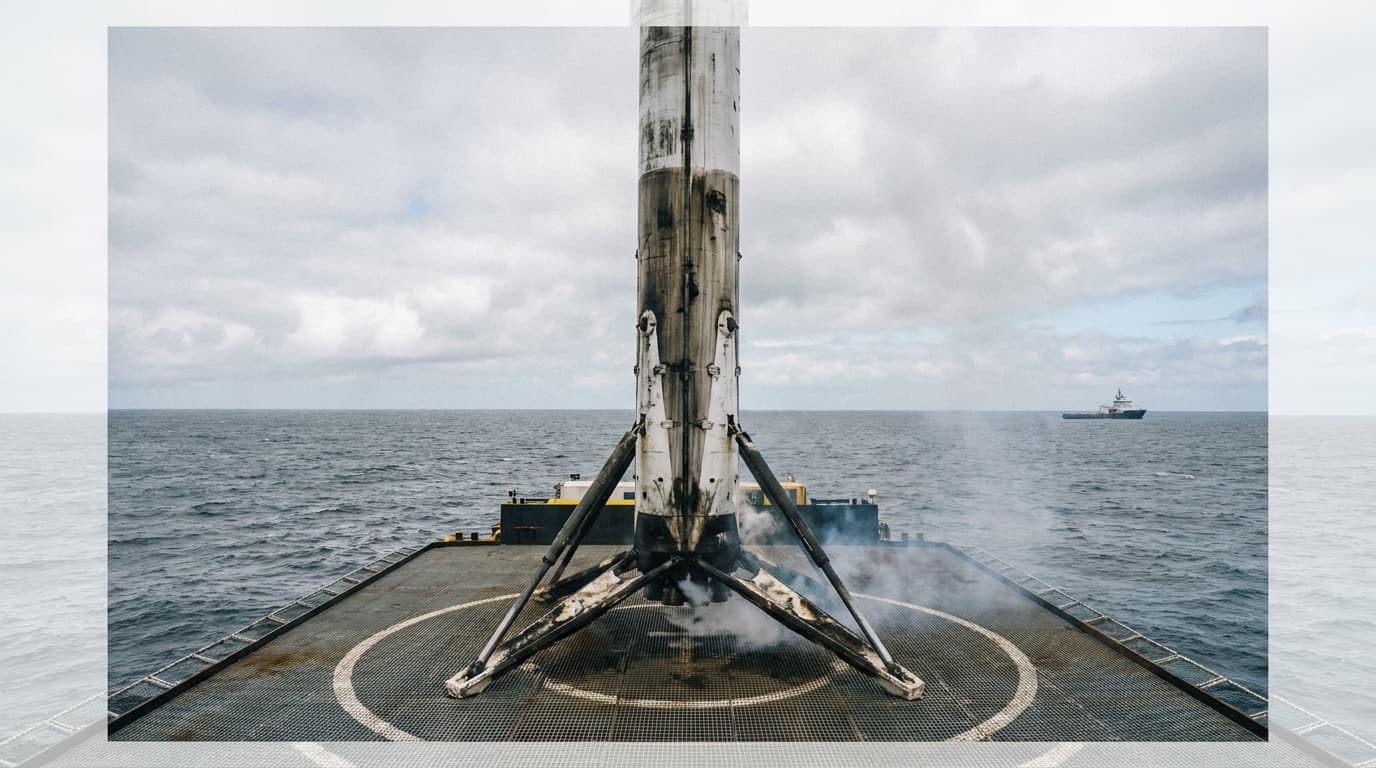
TL;DR: A SpaceX Falcon 9 booster just set a new record for reusability, completing its latest mission five years after its first flight. This milestone showcases incredible hardware reliability and points to more efficient, long-term operational models for complex systems.
Key facts
- Category
- Tech Updates
- Impact
- Medium
- Published
- Source
- Ars Technica
Full summary
A five-year-old Falcon 9 rocket booster just set a new record for reusability, proving the long-term viability of its hardware.
A SpaceX Falcon 9 first-stage booster recently set a remarkable record for reusability, completing another successful mission just over five years after its debut. The booster, designated B 1067, first launched in mid-2021, carrying a Cargo Dragon resupply mission to the International Space Station. In its early life, it launched two separate astronaut crews and several commercial spacecraft. Since then, its focus has shifted almost exclusively to building out the Starlink satellite constellation, where it has become a reliable workhorse. This latest flight marks a significant milestone for the reusable rocket program, showcasing a level of hardware endurance and operational reliability that was once a distant goal in the aerospace industry.
AThis achievement is more than just a new record; it is a powerful validation of long-term hardware viability and operational efficiency. For technology leaders, including CTOs and founders, the story of B 1067 offers a compelling case study in designing complex systems for longevity and sustained performance. The booster's success proves that high-performance machinery can be engineered to last, directly challenging the traditional, disposable models common in hardware-intensive industries. This paradigm shift has profound implications, leading to dramatically lower costs, a higher cadence of operations, and a more sustainable model for accessing space. It provides valuable lessons for any organization focused on building durable, cost-effective, and dependable technology.
The continued success of aging boosters like B 1067 signals the maturation of reusable rocket technology from an ambitious experiment into a routine, predictable part of modern infrastructure. This reliability is what allows for an unprecedented launch rate, fundamentally changing the economics of the space industry. For business and technology readers, this isn't just a story about rockets; it's about the long-term payoff of investing in robust engineering and innovative operational models. It sets a new benchmark for hardware lifecycle management and challenges other industries to reconsider the perceived limits of their own physical assets.
Why it matters
This milestone proves that complex, high-performance hardware can be designed for long-term reusability and reliability, offering a powerful case study for any industry focused on operational efficiency and sustainable systems design.
Business impact
The success of reusable rockets dramatically lowers the cost of launching satellites and other payloads, creating new business opportunities in space and demonstrating a model for reducing capital expenditures in other hardware-intensive industries.
Tags
Related on Notifire
Related stories
Primary source: Ars Technica