How Biotech Is Breaking Farming's Fossil Fuel Habit
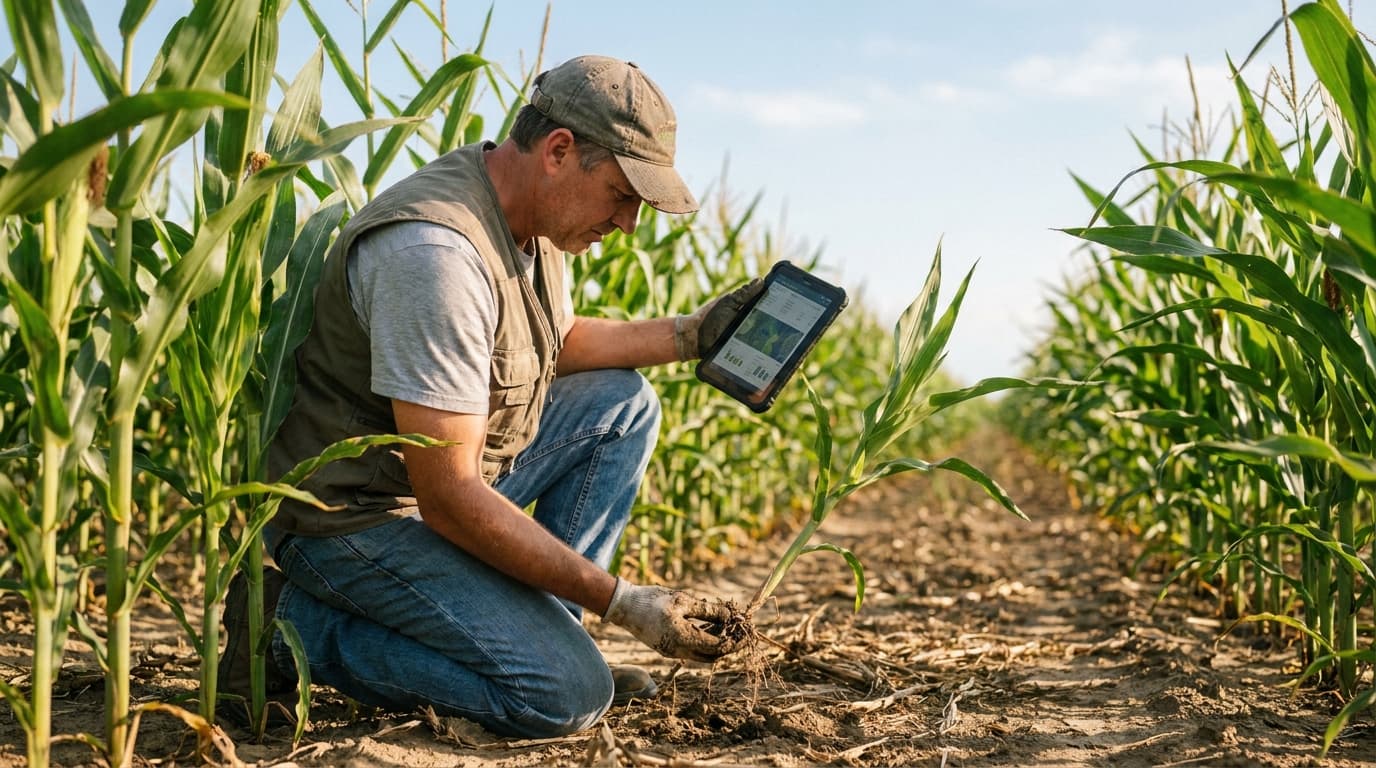
TL;DR: Modern fertilizer production relies on fossil fuels, making food prices volatile. Now, biotech startups are engineering microbes that produce nitrogen for plants, offering a path to more stable and sustainable agriculture.
Key facts
- Category
- Tech Updates
- Impact
- Medium
- Published
- Source
- MIT Technology Review
Full summary
Fertilizer prices are tied to volatile fossil fuels. A new generation of biotech startups is creating microbial alternatives to stabilize our food supply.
Based on reporting from MIT Technology Review, the hidden link between fossil fuels and our food supply is becoming increasingly clear. Soaring energy prices, exacerbated by geopolitical instability, have sent the cost of agricultural fertilizers skyrocketing. This volatility directly impacts farmers' operating costs, which are then passed on to consumers at the grocery store. The core issue is that modern agriculture is deeply dependent on synthetic nitrogen fertilizers, a product whose creation is one of the most energy-intensive industrial processes on the planet. This dependency not only makes our food system vulnerable to global energy shocks but also carries a significant environmental cost. The situation highlights a critical vulnerability in the global food chain, prompting an urgent search for more resilient and sustainable alternatives that can decouple food production from the volatile fossil fuel market.
The technology at the heart of this dependency is the Haber-Bosch process, a century-old chemical engineering marvel that converts atmospheric nitrogen into ammonia for fertilizer. While it has been credited with feeding billions, the process is incredibly inefficient, consuming an estimated 1-2% of the world's total energy supply, primarily from natural gas. A new wave of agritech and biotech startups is developing a fundamentally different approach: engineering biology to do the work. They are creating specialized microbes that live in the soil or on plant roots. These microorganisms are genetically programmed to perform nitrogen fixation, a natural process where they pull nitrogen gas from the air and convert it into a form the plant can use for growth. Essentially, these companies are creating living, self-replicating fertilizer factories that deliver nutrients directly to the crop, bypassing the need for massive industrial plants and the fossil fuels that power them.
This technological shift has profound implications for global food security, climate change, and economic stability. For farmers, a microbial alternative promises to insulate them from the wild price swings of the synthetic fertilizer market, leading to more predictable costs and stable operations. For the environment, moving away from the Haber-Bosch process would represent a massive step in decarbonizing the agricultural sector, which is a major contributor to greenhouse gas emissions. Furthermore, synthetic fertilizers are notorious for causing environmental damage through nutrient runoff into waterways. Biologically-based solutions could significantly reduce this pollution. For tech founders, developers, and investors, this represents a multi-billion dollar market ripe for disruption. It's a clear example of how deep tech—the application of advanced science and engineering—can be applied to solve fundamental, real-world problems with both significant economic and societal returns.
The race to commercialize these solutions is already well underway, attracting significant venture capital and strategic interest from agricultural giants. Startups like Pivot Bio, Joyn Bio, and Kula Bio are leading the charge, with products already being applied to millions of acres of farmland. Their business models often involve selling the microbial product directly to farmers as a seed coating or an in-furrow application during planting. The practical takeaway for business leaders is that the foundations of the $200 billion global fertilizer industry are being challenged. This isn't a distant, futuristic concept; it's a market in transition. Investors are betting that these biotech platforms can scale to become a core component of modern farming, offering a more sustainable and economically viable alternative to a century-old, fossil-fuel-guzzling technology.
While the promise is immense, the path to widespread adoption is not without challenges. The primary hurdles are scale, efficacy, and trust. Companies must prove their microbes can perform reliably across diverse climates, soil types, and crop varieties, consistently delivering yields comparable to or better than traditional fertilizers. Scaling up the production of living organisms from the lab to millions of farm-ready doses is a complex biomanufacturing challenge. Furthermore, farmers are a traditionally cautious group, and earning their trust requires extensive field trials and clear economic benefits. Key developments to watch include major partnerships between these startups and established agricultural distributors, regulatory approvals in key markets, and the next wave of technological improvements that enhance the microbes' efficiency and resilience.
Related on Notifire
Related stories
Primary source: MIT Technology Review