Kia's New Vans Drive Themselves Back to the Depot
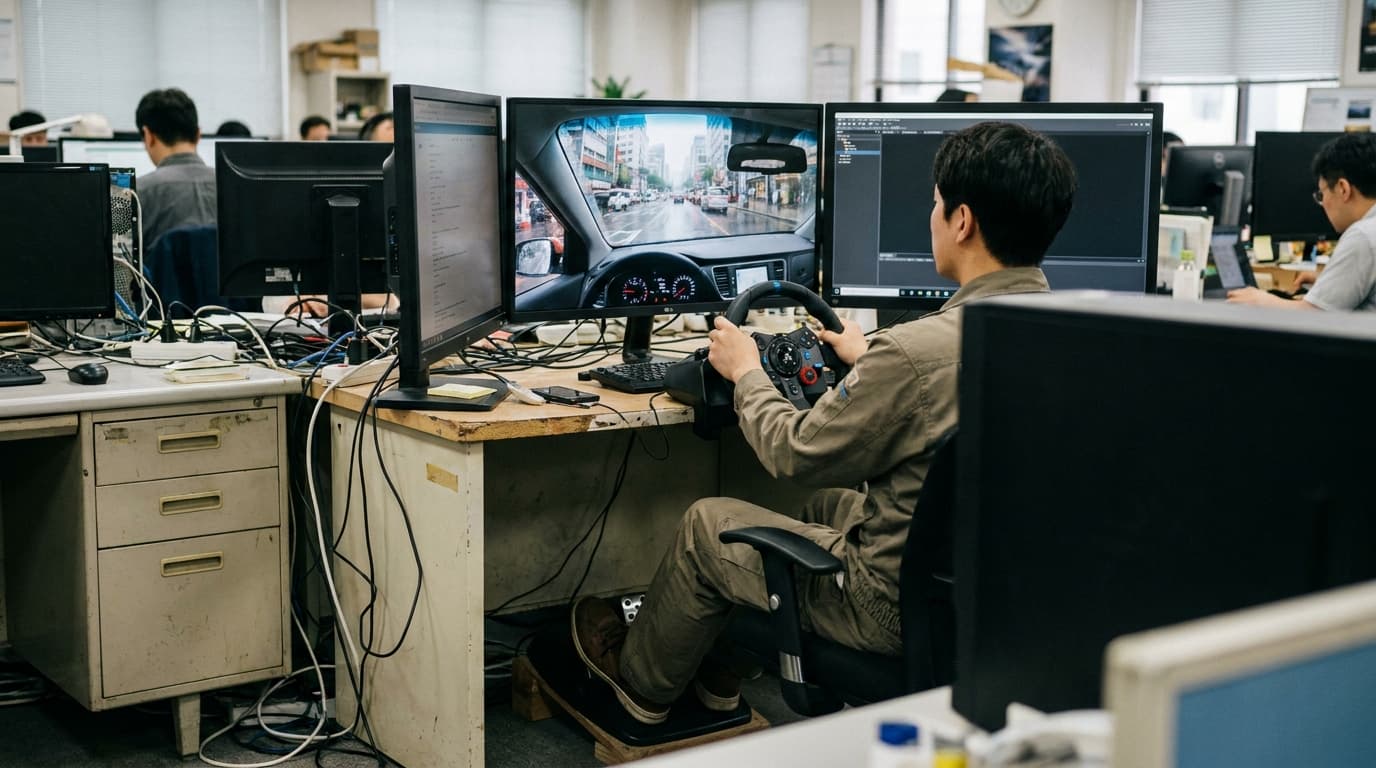
TL;DR: Kia is testing a car-sharing service in South Korea where remote operators deliver and retrieve electric vans. The trial aims to solve major logistics and parking challenges for large fleet operators using teleoperation technology.
Key facts
- Category
- Tech Updates
- Impact
- High
- Published
- Source
- TechRadar
Full summary
Kia's new car-sharing trial uses remote human operators to deliver and return electric vans, taking the hassle out of fleet management.
Kia has started a landmark trial for a remotely operated car-sharing service in South Korea, as first reported by TechRadar. The pilot program, located in the Pangyo Techno Valley, uses the company’s new PV5 electric vans. Customers can have a vehicle delivered to their location and, after their trip, the van is returned to a central depot by a remote operator. This eliminates the need for users to find parking or for a company to employ drivers to shuffle cars between locations. The service is designed specifically to address the significant logistical burdens faced by large fleet operators, which spend considerable time and money on vehicle retrieval, repositioning, and parking. By centralizing the driving function, Kia aims to prove a more efficient model for commercial vehicle fleets.
This technology is not full self-driving, but rather advanced teleoperation. A trained human operator sits at a remote command center, complete with a steering wheel, pedals, and multiple high-resolution monitors displaying a live feed from the vehicle. This “human-in-the-loop” system uses a high-speed wireless network to send control inputs to the van in real time. This approach cleverly bypasses the current technological and regulatory hurdles of fully autonomous driving. Instead of relying on an AI to handle every possible edge case in a complex urban environment, it leverages human intelligence for difficult maneuvers like navigating tight parking structures or finding a specific address. It automates the routine parts of fleet management while keeping an expert on call for the final, most challenging segments of a vehicle's journey.
The concept of teleoperation is not entirely new, but Kia’s public trial with a major automaker brings it into the mainstream for consumer-facing services. In the logistics sector, companies like Sweden’s Einride have used remote operators for years to supervise and control their electric freight trucks. In the US, startups such as Halo have experimented with a similar model for ride-hailing services in controlled environments. Kia’s involvement signals a broader industry shift towards pragmatic, near-term solutions for vehicle automation. As the development of true Level 5 autonomy proves more difficult than anticipated, major players are now investing in teleoperation as a viable bridge technology that can deliver immediate operational efficiencies and cost savings for commercial fleets.
For CTOs, developers, and IT teams, this trial serves as a crucial case study in the architecture of remote-first physical systems. The success of such an operation depends entirely on the underlying technology stack, particularly in networking and security. The system demands a persistent, high-bandwidth, and ultra-low-latency connection, almost certainly relying on 5G, to ensure that the operator’s commands are executed by the vehicle with no perceptible delay. Any lag or packet loss could have immediate and dangerous consequences. This pilot will generate invaluable real-world data on network performance, reliability, and the software needed to manage a fleet of remotely controlled assets, offering key lessons for any organization looking to control hardware over a network.
The most significant challenge, however, is cybersecurity. A fleet of remotely operated vehicles presents an enormous and attractive attack surface for malicious actors. A security breach could have catastrophic consequences, from vehicle theft on a mass scale to the weaponization of a vehicle in a public space. The potential attack vectors are numerous, spanning the vehicle's onboard systems, the wireless communication link, the operator's command station, and the central fleet management servers. Therefore, building a defense-in-depth security posture—including end-to-end encryption, robust operator authentication, and real-time intrusion detection—is not just a technical requirement but a prerequisite for public safety and regulatory acceptance. This trial will be a critical test of these security protocols in a live, unpredictable urban setting.
Why it matters
This trial is a major real-world test of vehicle teleoperation, a key step toward autonomous fleet management. For technical teams, it highlights the critical software, low-latency networking, and cybersecurity challenges of controlling physical assets remotely, setting precedents for future software-defined vehicle architectures.
Business impact
Remote operation could slash costs for fleet-based businesses by centralizing drivers and automating vehicle logistics. It creates a new competitive advantage in car-sharing and delivery services. However, it also introduces massive security and liability risks, as a single breach could compromise an entire fleet of vehicles.
Tags
Related on Notifire
Related stories
Primary source: TechRadar