Lasers Keep Drones Flying Almost Indefinitely
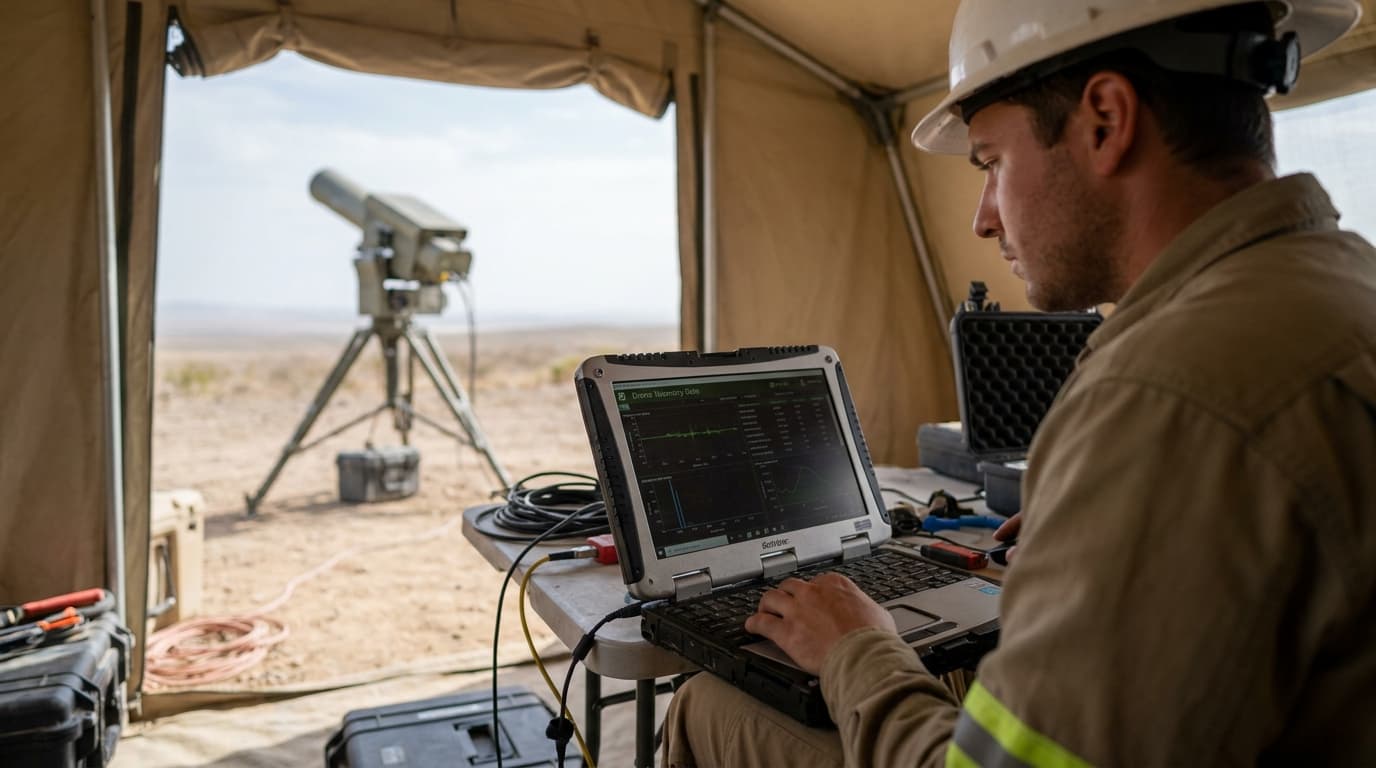
TL;DR: The US military is testing laser technology that recharges drones in mid-air from thousands of feet away. This "power beaming" could solve the biggest limitation for autonomous systems: battery life, enabling near-perpetual flight.
Key facts
- Category
- Tech Updates
- Impact
- High
- Published
- Source
- TechRadar
Full summary
The US military is testing laser "power beaming" to recharge drones in mid-air, potentially enabling them to fly almost indefinitely.
The United States military is investing in technology that could allow its autonomous drones to stay airborne almost indefinitely. According to a report from TechRadar, the Department of War’s Operational Energy - Innovation Directorate has awarded a contract to PowerLight Technologies to advance its laser-based wireless charging system. Known as Aerial ReCharge (ARC), the technology is designed to "beam" power to unmanned aerial vehicles (UAVs) while they are in flight. The system can reportedly deliver kilowatt-class power to a drone up to 5,000 feet away, recharging not only the craft’s main batteries but also any powered payloads it might be carrying. This development directly addresses one of the most significant operational limitations for drones: limited battery life and the need to frequently return to base for recharging or battery swaps.
The technology, often called "power beaming," works by converting electricity into a highly focused beam of light. A ground-based laser emitter directs this beam with high precision to a specialized photovoltaic receiver mounted on the drone. This receiver is engineered to be highly efficient at converting the specific wavelength of the laser light back into usable electrical energy. This is a major step beyond conventional solar panels, which are far less efficient and depend on ambient sunlight. The key innovations from PowerLight are in the system's ability to safely transmit a significant amount of power over long distances and to maintain a stable lock on a moving target. The system must also account for atmospheric conditions like clouds or rain, which can interfere with the laser beam, presenting a significant engineering challenge that the technology aims to solve.
While the concept of wireless power transfer is not new, ARC represents a significant leap in practical application for long-range, high-power scenarios. Previous solutions for extending drone flight time have included battery-swapping platforms, which are logistically complex, or tethered drones, which are severely limited in range and mobility. This move towards laser-based power beaming fits into a broader strategic trend across both military and commercial sectors: the push for more persistent, autonomous systems. The military's investment serves as a powerful validation of the technology's viability, much like its early development of GPS, which eventually became a ubiquitous commercial tool. This contract signals that power beaming is moving from a theoretical concept to a field-ready capability with serious backing.
For technology leaders and developers, the implications of this breakthrough are substantial. If successfully commercialized, it could fundamentally reshape industries that rely on aerial data collection and logistics. Imagine drone fleets for agriculture, infrastructure inspection, or last-mile delivery that operate 24/7 without needing to land. The key factors to watch will be the development of safety protocols and regulations for operating high-power lasers in open airspace. Observers should also monitor the system's performance in adverse weather and the overall cost-effectiveness of deploying the necessary ground-based infrastructure. The transition from a specialized military application to a scalable commercial product will be the next major hurdle, but the potential to untether autonomous systems from their batteries is a powerful incentive.
Why it matters
For engineers, this laser-based charging represents a fundamental shift in drone design and deployment. It moves the primary operational constraint from onboard battery capacity to the availability of a ground-based power network, enabling truly persistent, long-endurance autonomous systems and new classes of aerial applications.
Business impact
This technology could drastically reduce the operational costs and logistical complexity of managing drone fleets by eliminating the need for battery swapping and downtime. For industries like logistics, agriculture, and security, it unlocks the potential for continuous 24/7 aerial surveillance, monitoring, and delivery services.
Tags
Related on Notifire
Related stories
Primary source: TechRadar