Master's Degree Job Guarantee Fades
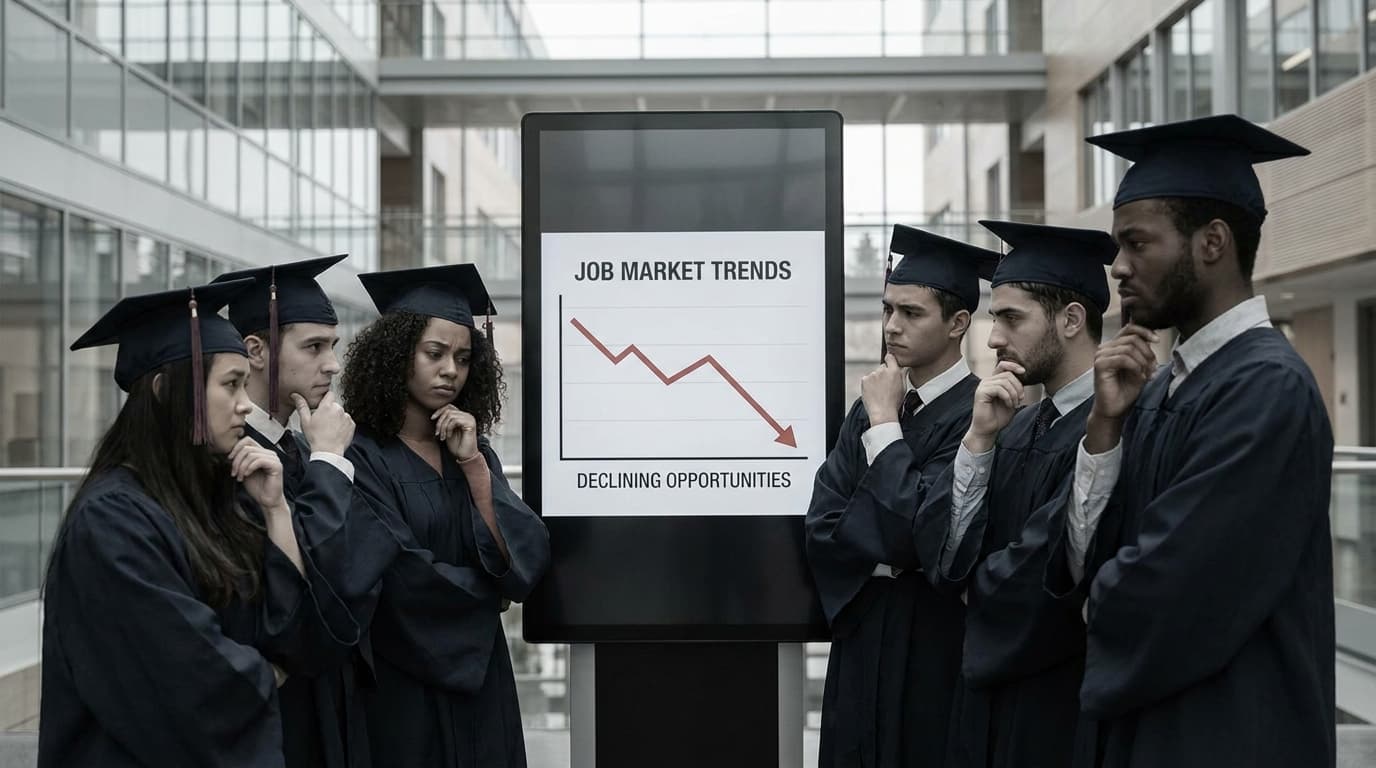
TL;DR: New data shows that a master's degree is no longer the job guarantee it once was for young professionals. The unemployment rate for workers under 35 with a master's degree has reached a 20-year high, challenging its value as a reliable career booster.
Key facts
- Category
- Tech Updates
- Impact
- Low
- Published
- Source
- Slashdot
Full summary
The unemployment rate for young professionals with a master's degree has hit a 20-year high, questioning its value as a career safety net.
New data indicates that a master's degree is no longer the reliable job market advantage it once was. According to an analysis by the Burning Glass Institute using data from the U.S. Bureau of Labor Statistics, the unemployment rate for workers under the age of 35 with a master's degree has reached one of its highest levels in the past 20 years. This trend contradicts the long-standing perception of graduate school as a dependable strategy for career progression, especially for young professionals looking to advance or navigate a challenging job market. The data suggests a significant shift in the value and security that an advanced degree provides in the current economic environment.
This development has important implications for both employers and employees in the tech industry. For founders, CTOs, and hiring managers, it suggests that the pool of highly educated candidates may be larger and more accessible, but also that academic credentials alone are not a proxy for immediate job readiness or success. Companies may need to adjust their recruitment strategies to prioritize practical skills, hands-on experience, and specific certifications over advanced degrees. For developers and other tech professionals, the return on investment for a master's degree is becoming less clear. The time and financial cost of graduate school must be weighed more carefully against the potential for career advancement, as the degree itself is no longer a guaranteed ticket to a better position or higher salary in a competitive field.
Why it matters
The declining value of a master's degree as a job guarantee signals a shift in the labor market, impacting how companies hire and how individuals plan their careers. It suggests a growing emphasis on practical skills over academic credentials.
Business impact
Companies may find a larger pool of highly educated candidates but will need to adjust hiring practices to value experience and skills alongside degrees. This trend could influence talent acquisition strategies and the perceived value of educational qualifications in the workforce.
Tags
Related on Notifire
Related stories
Primary source: Slashdot