Mobile Networks Are Learning to See Drones
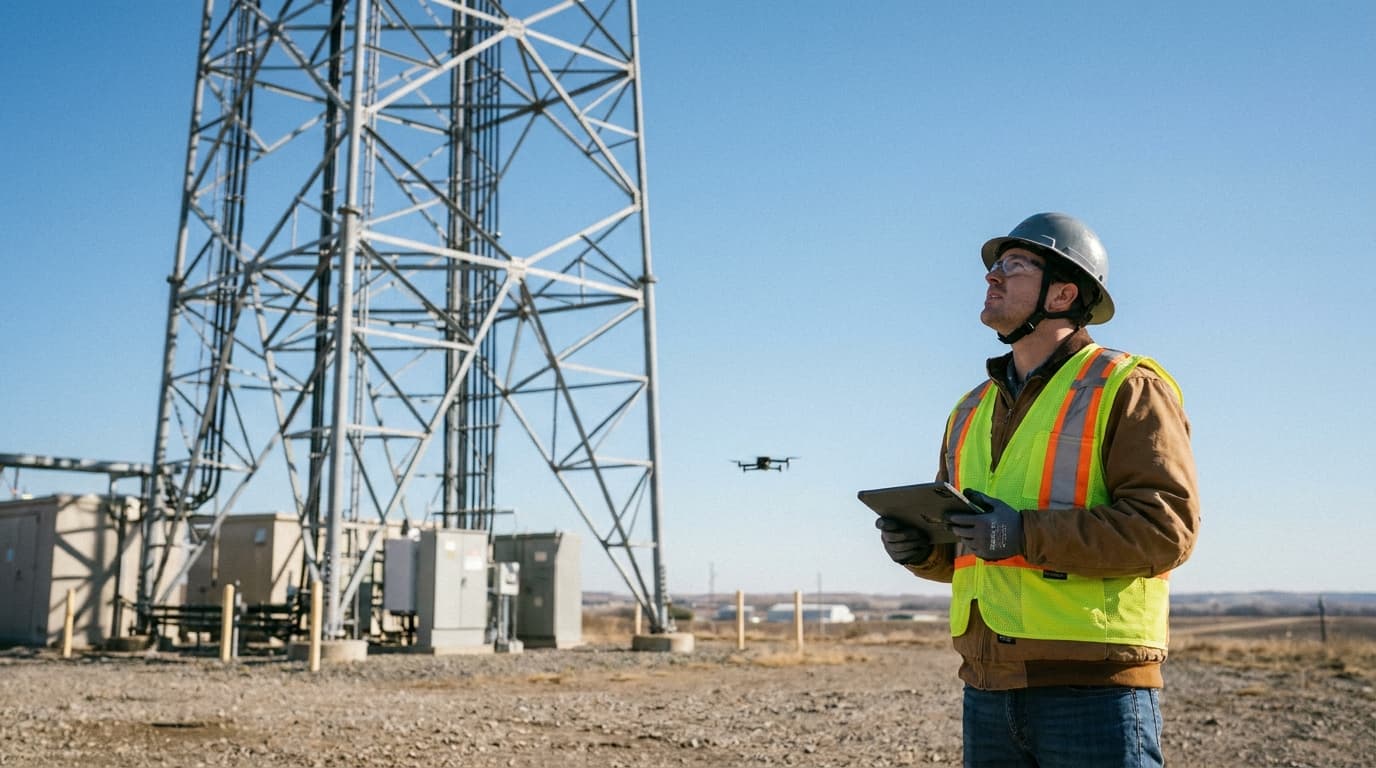
TL;DR: Ericsson is developing technology that allows existing mobile networks to detect and track drones. This could create a widespread surveillance system for unauthorized aircraft without requiring dedicated new hardware, leveraging the cell towers already in place.
Key facts
- Category
- Tech Updates
- Impact
- High
- Published
- Source
- TechRadar
Full summary
Ericsson is testing technology that turns existing mobile network infrastructure into a widespread system for detecting and tracking unauthorized drones.
Telecom giant Ericsson is developing a novel drone tracking technology that could turn cellular networks into a vast, real-time surveillance system for low-flying aircraft. According to a report from TechRadar, the system uses existing mobile network infrastructure, eliminating the need for specialized radar or sensor installations. The technology, called "network sensing," has already been tested in partnership with major carriers, including AT&T in the U.S. and Erillisverkot, Finland's state-run security network operator. The goal is to provide a scalable and cost-effective way to monitor airspace for unauthorized drones, addressing a growing physical security challenge for businesses and public safety agencies. While a commercial rollout is still several years away, the involvement of major network operators suggests a clear path toward future deployment.
The core innovation lies in using the mobile network itself as a form of passive radar. Traditional radar systems actively transmit radio waves and analyze the echoes that bounce off objects. Ericsson's approach, by contrast, leverages the constant stream of radio signals already flowing between cell towers and user devices. The system works by analyzing subtle disturbances and reflections in these existing signals. When a drone flies through the coverage area of a cell tower, it disrupts the radio waves in a predictable way. By processing these minute changes across multiple towers, the network can detect the drone's presence, calculate its position, and track its trajectory. This software-based method effectively adds a new sensory capability to the network without requiring any new hardware to be installed on the towers themselves.
This network-centric approach stands in sharp contrast to current drone detection methods, which typically rely on a patchwork of dedicated, localized solutions. Most organizations today use a combination of specialized radar, acoustic sensors that listen for propeller noise, radio frequency (RF) scanners that detect drone control signals, and high-resolution cameras. While effective, these systems are expensive to deploy and maintain, have limited range, and often suffer from line-of-sight restrictions. A cellular-based system would overcome these limitations by tapping into the ubiquitous grid of cell towers that already covers most populated areas. This could transform drone detection from a localized, high-cost capability into a widespread, relatively low-cost utility, much like GPS.
For CTOs and security leaders, this development signals a significant future shift in how physical security is managed. While not a solution that can be purchased today, it represents a powerful new tool on the horizon for protecting facilities from aerial threats like corporate espionage, contraband delivery, or physical disruption. The most likely business model would see telecom providers offering airspace monitoring as a subscription service to enterprise customers, critical infrastructure operators, and law enforcement. As 5G and future 6G networks become more sophisticated, this type of integrated sensing will likely become a standard feature. The key takeaway is to monitor this space and begin factoring network-based security services into long-term strategic planning for physical and perimeter security.
Why it matters
For security and infrastructure teams, this represents a shift from specialized, costly drone detection hardware to a software-based solution using existing telecom infrastructure. It could provide ubiquitous, low-cost airspace monitoring over vast areas, fundamentally changing how physical security perimeters are managed against aerial threats.
Business impact
This technology could create a new service layer for telecom providers, offering "airspace security as a service." For businesses, it promises a scalable and potentially cheaper way to protect facilities from drone threats, from corporate espionage to physical disruption, without investing in standalone radar or sensor systems.
Tags
Related on Notifire
Related stories
Primary source: TechRadar