This Tiny Chip Creates a Rainbow for Faster 6G
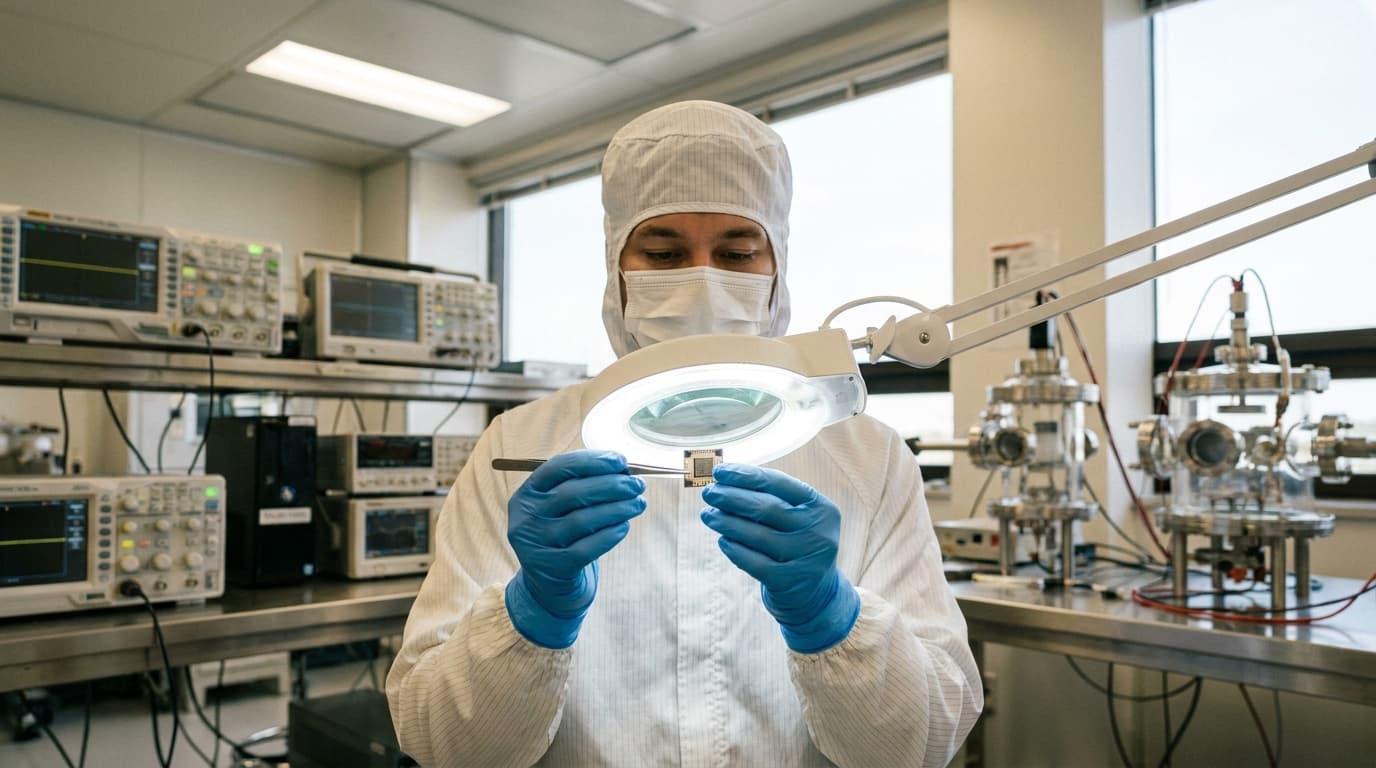
TL;DR: Researchers created a microchip the size of a grain of rice that generates a precise 'rainbow' of light. This breakthrough could enable faster 6G networks and more accurate quantum technologies by improving how data is transmitted.
Key facts
- Category
- Tech Updates
- Impact
- Medium
- Published
- Source
- Slashdot
Full summary
A new rice-sized microchip generates a precise 'rainbow' of light, a breakthrough that could eventually enable faster, higher-capacity 6G communications.
Physicists have developed a microchip, about the size of a grain of rice, that can generate a highly structured and precise spectrum of light, essentially a tiny, controllable rainbow. According to reporting in ScienceDaily, the international research team, including scientists from Loughborough University, demonstrated a system that produces a series of exact light frequencies from a single source. This capability is a significant step toward developing the underlying hardware needed for future technologies like 6G mobile networks and advanced quantum systems, which demand unprecedented levels of data capacity and timing accuracy.
The core innovation is the miniaturization of a complex device known as an optical frequency comb. Traditionally, these are bulky, expensive lab instruments. An optical comb takes a single color of light from a laser and converts it into a vast number of new, perfectly spaced frequencies—like turning a single musical note into a full chord with hundreds of keys. This new chip achieves this on a tiny scale. By creating this wide array of light channels, a single optical fiber can be used to transmit many parallel streams of data simultaneously, dramatically increasing its total bandwidth. The breakthrough lies in creating this effect on a chip that could be mass-produced.
For CTOs, founders, and engineering leaders, this research is a signal of where physical-layer network technology is heading. While 5G is still being fully deployed, the foundational work for 6G is already underway, and it requires a radical increase in data throughput. This 'rainbow on a chip' directly addresses that challenge by unlocking more capacity from existing fiber optic infrastructure. Instead of laying more fiber, networks could be upgraded by installing more advanced optical components at either end. For teams working in quantum computing, the chip's ability to generate hyper-precise light frequencies also offers a new tool for timing and synchronizing delicate quantum operations.
This development is still in the early research phase and is not a product you can buy today. However, its long-term business impact could be transformative. It points to a future where the components powering our global communications infrastructure become exponentially more powerful and compact. This could eventually lower the cost per bit of data transmission, enable new high-bandwidth applications like holographic communication or city-scale digital twins, and provide the backbone for a world with trillions of connected devices. For investors and strategists, it highlights a key area of deep tech that will underpin the next decade of digital infrastructure innovation.
Looking ahead, the next steps will involve refining the chip's efficiency, stability, and integration with other standard electronic and photonic components. The transition from a laboratory demonstration to a commercially viable product is a long road that will require significant engineering and investment. Companies in the telecommunications and semiconductor sectors should monitor progress in this area, as it represents a fundamental building block for the next generation of high-speed networks. The ultimate goal is to create a plug-and-play component that network equipment manufacturers can easily incorporate into future routers, switches, and transceivers.
Why it matters
This miniaturized 'rainbow' generator, an optical frequency comb, could dramatically increase the data capacity of a single optical fiber. It's a foundational step toward the terabit-per-second speeds required for future 6G networks and ultra-precise quantum computing.
Business impact
While still in the research phase, this technology points to a future of smaller, more powerful, and potentially cheaper optical components. It could disrupt the telecom and data center hardware markets, enabling new applications that require massive bandwidth and low latency.
Tags
Related on Notifire
Related stories
Primary source: Slashdot