A Flying Wind Turbine Now Generates Megawatt Power
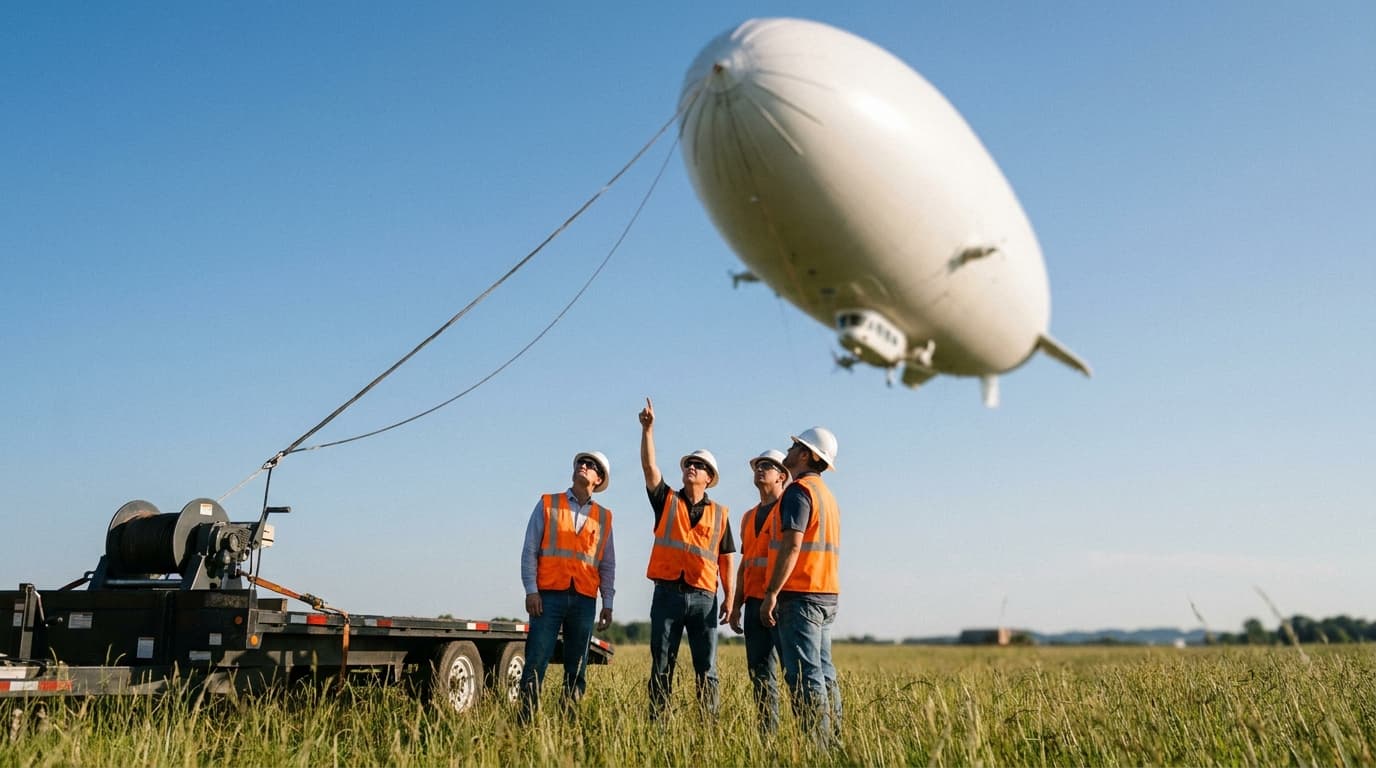
TL;DR: A Chinese company successfully tested a massive helium blimp that generates megawatt-scale electricity from high-altitude winds. This mobile power plant could provide sustainable energy for remote data centers, disaster relief, and off-grid industrial sites.
Key facts
- Category
- Tech Updates
- Impact
- High
- Published
- Source
- TechRadar
Full summary
A new helium blimp generates megawatt-scale power from high-altitude winds, offering a mobile, deployable energy source for remote operations.
A Chinese company has successfully tested a new type of mobile power plant: a massive, 747-sized helium blimp that generates electricity from high-altitude winds. According to reporting from TechRadar, the airborne wind turbine, called the S4000, reached an altitude of 4,000 meters during its test flight. At this height, it tapped into powerful, consistent air currents to produce megawatt-scale energy, a significant milestone for a technology that has been in development for decades. Unlike traditional wind farms, which are fixed in one location, this airship is designed to be mobile. It can be deployed to different areas based on energy demand or to follow the most favorable wind patterns, representing a major step forward in creating flexible and resilient power infrastructure.
This technology, known as Airborne Wind Energy (AWE), works by positioning turbines in the stronger and more stable winds found thousands of meters above the ground. Ground-level winds are often slow and turbulent due to friction with terrain and buildings, but high-altitude jet streams offer a much more reliable and potent energy source. The S4000 blimp acts as a stable, buoyant platform, lifting the turbines into this optimal atmospheric layer. The electricity generated is then transmitted back to a ground station through a high-strength conductive tether, which also serves to anchor the airship. The core innovation lies in creating a system that is large and stable enough to operate reliably in harsh conditions while remaining mobile, solving key engineering challenges that have hindered previous AWE projects.
For CTOs, infrastructure architects, and founders, this development signals a potential paradigm shift in powering remote and distributed operations. The ability to deploy a mobile, megawatt-scale power source could untether critical infrastructure, like edge data centers or AI training facilities, from the constraints of the traditional electrical grid. This is particularly relevant for projects in geographically isolated areas where grid access is unreliable or non-existent, or for temporary deployments such as disaster recovery command centers and large-scale construction projects. It opens up the possibility of locating energy-intensive computing resources based on other strategic factors, such as climate for natural cooling or proximity to data sources, rather than being solely dictated by the availability of grid power.
The broader business implications are substantial. A commercially viable airborne wind turbine could disrupt the market for off-grid power generation, which currently relies heavily on expensive and carbon-intensive diesel generators. Industries like mining, remote scientific research, and military logistics could become major customers for this type of deployable, clean energy. This success could also inject new momentum and investment into the renewable energy sector, proving that ambitious, alternative concepts can mature into practical solutions. The key will be demonstrating long-term operational reliability and achieving a cost per kilowatt-hour that is competitive with both fossil fuels and established renewables like solar and ground-based wind farms.
Looking ahead, the next critical steps will involve moving from successful tests to sustained, long-duration deployments. The system's resilience against extreme weather, its maintenance cycles, and its overall operational costs will be under intense scrutiny. Furthermore, regulatory frameworks for operating such large, semi-permanent aerial structures will need to be established, addressing airspace management and safety concerns. As the technology matures, we can expect to see further refinements in efficiency, autonomy, and cost-effectiveness. Tech leaders should monitor this space for potential partnerships and pilot programs, as it represents a new frontier in sustainable and decentralized infrastructure.
Why it matters
For tech leaders, this mobile megawatt-scale power source could enable data centers and AI operations in remote locations, decoupling high-power computing from traditional grid constraints and opening new strategic possibilities for infrastructure planning.
Business impact
This breakthrough could shift airborne wind energy from experimental to commercially viable, creating new markets for deployable power in industries like mining, disaster relief, and defense, and challenging the dominance of diesel generators in off-grid scenarios.
Tags
Related on Notifire
Related stories
Primary source: TechRadar