Rocket Lab Delays Its Carbon Fiber Rocket Again
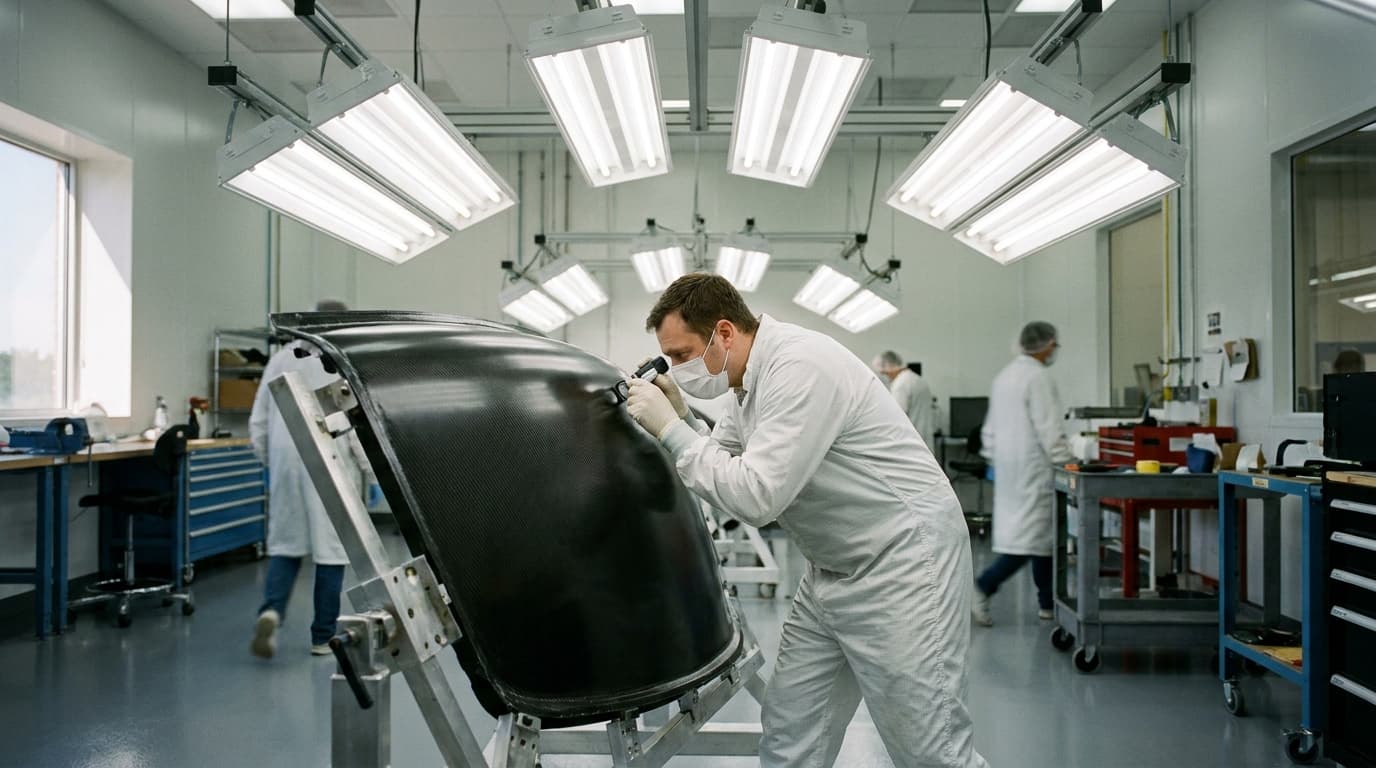
TL;DR: Rocket Lab's medium-lift Neutron rocket is now delayed until 2027. The company cited manufacturing issues with the rocket's advanced carbon composite structures, underscoring the challenge of pioneering new materials in aerospace engineering.
Key facts
- Category
- Tech Updates
- Impact
- Medium
- Published
- Source
- Ars Technica
Full summary
Rocket Lab's much-anticipated Neutron rocket is now delayed until 2027 due to challenges with its innovative carbon composite manufacturing process.
Rocket Lab has officially confirmed that the first flight of its medium-lift Neutron rocket is now delayed until 2027. According to reporting from Ars Technica, the company cited a specific issue discovered during the manufacturing of the rocket's large carbon composite structures. While the delay was widely anticipated within the aerospace industry, the public announcement makes it official, pushing the vehicle's debut back by at least two years from its most recent target. This setback highlights the immense difficulty of scaling up new manufacturing techniques for next-generation launch vehicles, even for a company with a strong flight record.
The core of the problem lies in the very material that makes Neutron innovative: carbon fiber composite. This material is prized in aerospace for its incredible strength-to-weight ratio, which is essential for building efficient and reusable rockets. However, manufacturing large, structurally critical components from it is notoriously difficult. The process involves layering sheets of carbon fiber fabric infused with resin and then curing the structure under precisely controlled heat and pressure. Any microscopic flaw—a tiny void, a wrinkle in a layer, or an improper cure—can create a weak point that could lead to a catastrophic failure under the extreme forces of a launch. Rocket Lab is now facing the reality that scaling this delicate process from the smaller components of its Electron rocket to the massive fuselage of Neutron is a fundamentally different and more complex engineering challenge.
This situation is not unique to Rocket Lab and provides important context for the entire commercial space industry. SpaceX, the current market leader, famously attempted to build its Starship vehicle from carbon composites before making a high-profile pivot to stainless steel. CEO Elon Musk cited the slow manufacturing speed and high cost of composites as primary drivers for the change. Rocket Lab's struggle validates the difficulty of that path and serves as a powerful case study in materials science and production engineering. It demonstrates that a company's past success with a technology does not guarantee a smooth transition when scaling it up. The physics of materials and the logistics of manufacturing do not grow linearly, and this delay underscores a common trend in deep tech where the jump from a working prototype to reliable, large-scale production proves to be the most difficult hurdle.
The practical takeaway for founders, CTOs, and engineers is that manufacturing and materials science are not secondary problems to be solved later; they are core to a product's success. An advanced design is worthless if it cannot be built reliably and affordably. Looking ahead, the industry will be watching closely to see how Rocket Lab addresses its manufacturing issues. The company may need to re-evaluate its tooling, its curing processes, or even the specific type of composite material it uses. This significant delay also reshuffles the competitive landscape in the medium-lift launch market, giving rivals like ULA's Vulcan and Blue Origin's New Glenn a wider window to secure customers and establish their own track records. The pressure is now on Rocket Lab to solve its engineering problems before its window of market opportunity closes.
Why it matters
This delay highlights a critical engineering lesson: mastering advanced materials like carbon composites at scale is a monumental challenge, even for established players. For engineers and CTOs in deep tech, it's a reminder that manufacturing innovation is as difficult and crucial as the core product design itself.
Business impact
Rocket Lab's delay to 2027 creates a significant opening for competitors in the lucrative medium-lift launch market. This setback could affect its ability to secure future launch contracts and puts pressure on its financial forecasts, potentially impacting its long-term competitive standing against rivals like SpaceX.
Tags
Related on Notifire
Related stories
Primary source: Ars Technica