SimpliSafe Adds Human Guards to Its Smart Doorbell
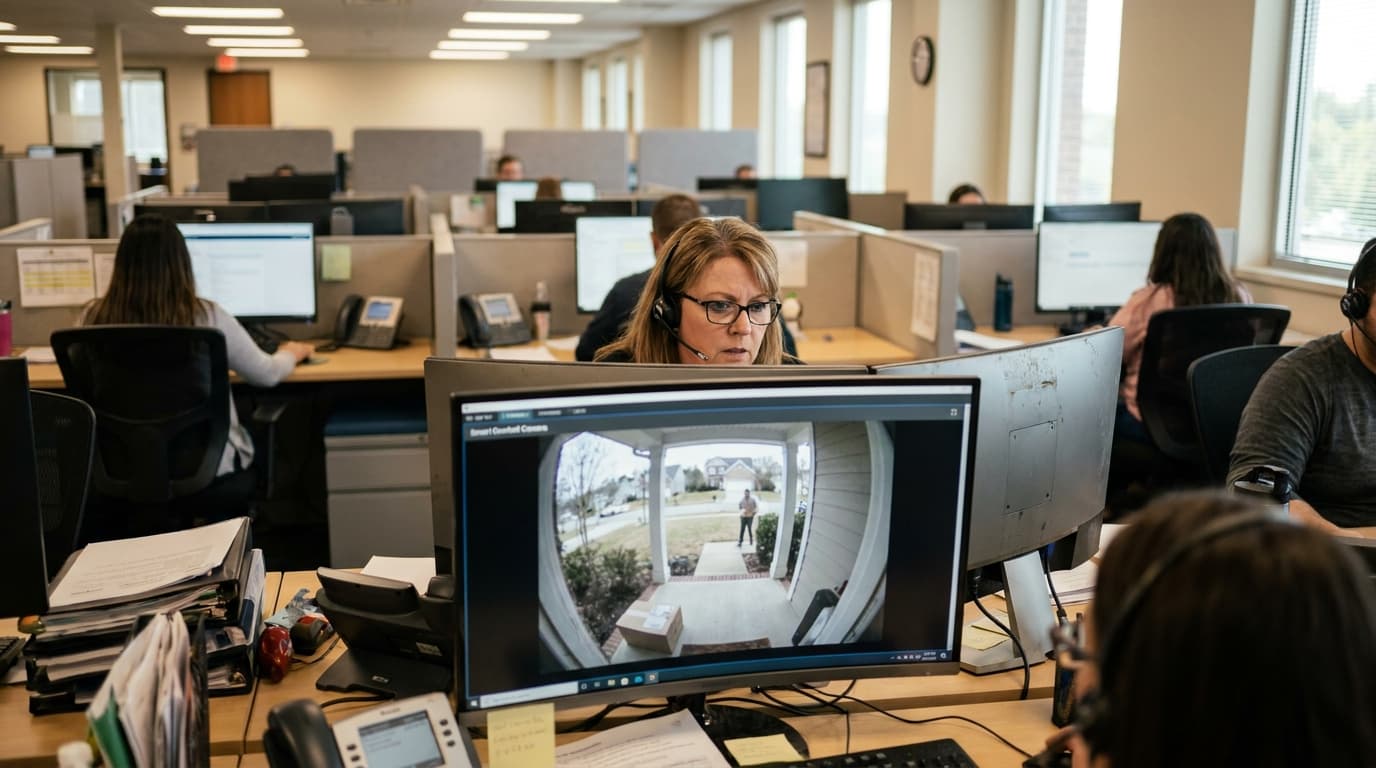
TL;DR: SimpliSafe's new video doorbell uses AI to detect threats, then alerts a live human agent who can intervene. The service combines automated analysis with human oversight to offer a new level of proactive home security.
Key facts
- Category
- Tech Updates
- Impact
- High
- Published
- Source
- The Verge
Full summary
SimpliSafe's new video doorbell combines AI threat detection with live human security guards who can watch and respond to your front door.
Home security company SimpliSafe has launched its new Video Doorbell Series 2, a device that brings a significant new capability to the front door: live human surveillance. As reported by The Verge, the new 2K-resolution doorbell integrates with the company's Active Guard Outdoor Protection service. While the hardware costs $199.99, the key feature is unlocked via a subscription starting at $49.99 per month. This service combines the device's onboard AI with a team of remote security agents who can be alerted to watch a live feed from your home and intervene during a potential security event.
The system operates on a sophisticated, multi-tiered architecture designed to filter out noise and escalate only genuine threats. The process begins at the edge, with the doorbell's local AI performing initial analysis to identify people and dismiss common false alarms like passing cars or animals. If the device detects a person lingering or other suspicious activity, it sends the video clip to SimpliSafe's cloud for a second layer of analysis by more powerful computer vision models. Only when this cloud AI confirms a high-probability threat does the system escalate the event to a human monitoring agent. This agent can then access the live video feed, use two-way audio to communicate with the person at the door, trigger a siren, and, if necessary, dispatch law enforcement. This hybrid approach aims to balance responsiveness, accuracy, and the operational cost of human review.
While human-monitored security is not a new concept, its integration into a mainstream, do-it-yourself video doorbell marks a notable shift in the smart home market. Niche companies like Deep Sentinel have previously offered a similar “guards-as-a-service” model, but SimpliSafe’s brand recognition brings the concept to a much broader consumer base. This product signals an industry evolution from passive security devices, which merely record footage for later review, toward proactive systems that offer real-time, verified intervention. This trend addresses a key weakness of many smart alerts, which are often ignored by users and deprioritized by police. However, it also introduces a significant new privacy trade-off, requiring customers to place immense trust in the company's remote agents and the security of its data infrastructure.
For technical and business leaders, this launch provides a clear view of the future of IoT services. The architecture is a prime example of a hybrid system that leverages the strengths of edge AI, cloud computing, and human intelligence. The primary engineering challenge is to build and maintain the secure, low-latency data pipeline that connects these components. From a business perspective, SimpliSafe is placing a major bet on a premium, service-based revenue model built on top of its hardware. This move puts pressure on competitors like Amazon's Ring and Google's Nest, who must now decide whether to follow suit with their own high-touch monitoring services or focus on advancing their fully-automated AI to a point where human oversight becomes obsolete. The market's response will be a telling indicator of consumer demand for the next generation of home security.
Why it matters
This product showcases a complex, multi-layered security architecture combining on-device AI for initial filtering, cloud-based computer vision for deeper analysis, and a human-in-the-loop for final verification. It's a key case study for engineers designing hybrid AI systems where accuracy and response time are critical.
Business impact
SimpliSafe is betting on a premium, human-in-the-loop service model to differentiate itself in the crowded smart home market. This strategy could create a new high-margin revenue stream but also introduces significant operational complexity and potential privacy liabilities that competitors will be watching closely.
Tags
Related on Notifire
Related stories
Primary source: The Verge