Uber Robotaxis Finally Ditch Their Human Drivers
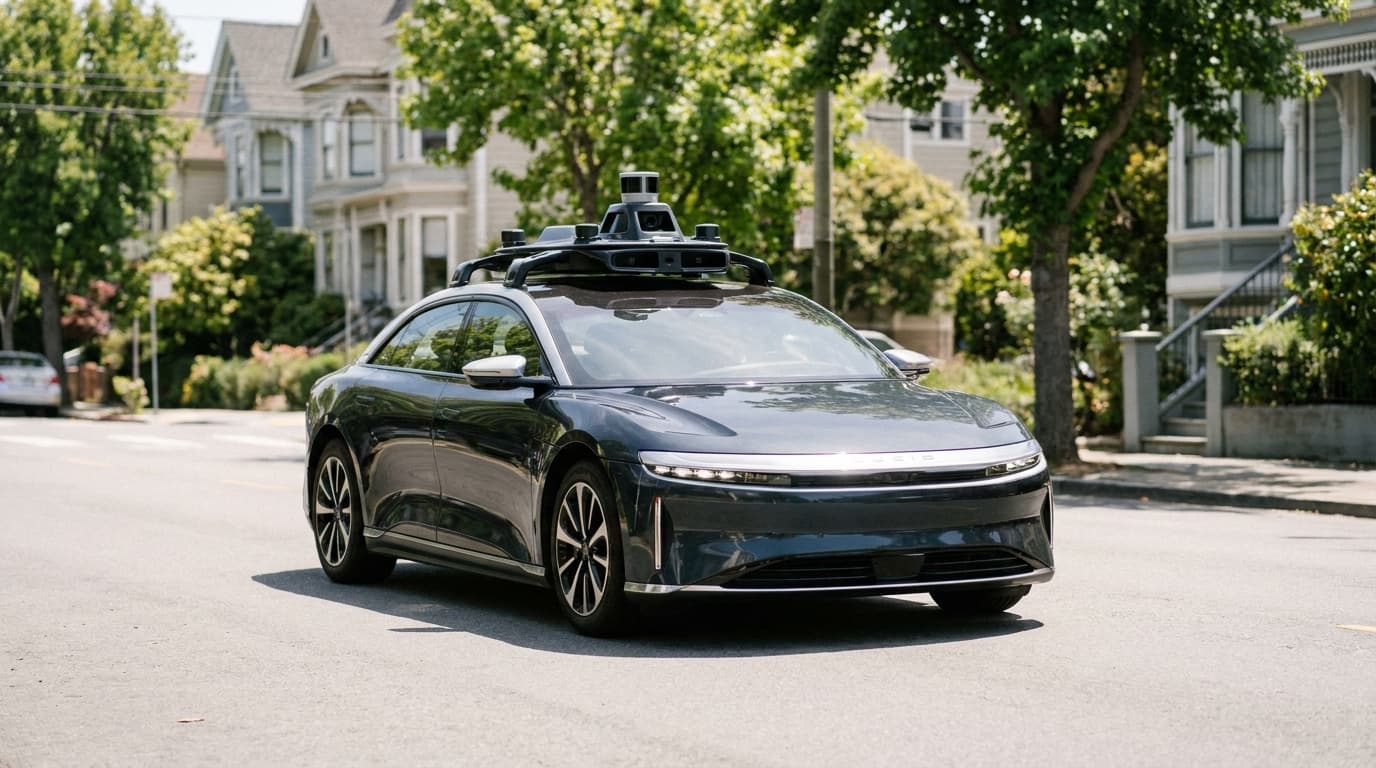
TL;DR: Uber, Nuro, and Lucid have started testing fully driverless robotaxis on public roads in the Bay Area. The move signals a major step toward commercializing autonomous ride-hailing after Uber previously abandoned its own internal efforts.
Key facts
- Category
- Tech Updates
- Impact
- High
- Published
- Source
- The Verge
Full summary
Uber, Nuro, and Lucid are now testing fully driverless robotaxis on public roads, marking a major milestone for autonomous ride-hailing.
Uber is making an aggressive return to the autonomous vehicle space, this time without anyone in the driver's seat. According to The Verge, the ride-hailing giant has started testing fully driverless robotaxis on public roads in the San Francisco Bay Area. The initiative is a three-way partnership with autonomous technology company Nuro and electric vehicle maker Lucid. The initial phase of the rollout will be limited to employee-only rides before potentially expanding to the public. This move marks a significant milestone, as the removal of the human safety driver represents a crucial step toward the commercial viability and scalability of autonomous ride-hailing services. For Uber, it’s a strategic comeback after the company sold off its own troubled and expensive self-driving unit years ago, opting instead for a more collaborative, asset-light approach to a technology that has proven incredibly difficult to master.
The collaboration leverages the distinct strengths of each company in a modular, capital-efficient structure. Uber provides its core competency: the vast ride-hailing network, customer interface, and demand aggregation platform that connects riders with vehicles. Nuro, known for its autonomous delivery pods, supplies the complete self-driving system—the suite of sensors, software, and AI that acts as the virtual driver. Lucid provides the physical platform with its premium all-electric Air sedans, which are retrofitted with Nuro's technology. This model contrasts sharply with vertically integrated competitors like Waymo and Cruise, which have historically invested billions in developing their entire stack, from the AI driver to custom-built or heavily modified vehicles. Removing the human safety operator is the key technical achievement here. It signifies that the system has reached a level of confidence where it can handle most driving scenarios and, crucially, fail safely or call for remote human assistance when it encounters an unsolvable problem, rather than relying on an in-car backup.
This launch does not happen in a vacuum. The autonomous vehicle industry has been a landscape of immense hype, staggering investment, and painful setbacks. Competitors like Waymo (Google's sibling company) and Cruise (majority-owned by GM) have been operating limited driverless services in cities like Phoenix and San Francisco for some time. However, their progress has been slow and fraught with challenges, including public backlash over traffic disruptions and high-profile safety incidents that have attracted intense regulatory scrutiny. Uber’s re-entry through this partnership is a calculated pivot. Instead of burning cash on its own R&D, it is now positioned as a neutral platform that can integrate technology from various partners. This strategy insulates Uber from the immense costs and risks of developing the core autonomous technology itself while still giving it a crucial foothold in what could be the future of transportation and logistics. It’s a sign of a maturing industry, where companies are moving from pure technological pursuits to forming complex ecosystems and business models to find a viable path to market.
For technology leaders, developers, and security professionals, this development is a critical proof point for the real-world deployment of large-scale, mission-critical AI and robotic systems. The primary focus now shifts from basic functionality to reliability, security, and scalability. The next steps to watch will be the speed at which the service expands from employees to the public, the specific geographic boundaries of its operational area, and how the system performs in the unpredictable and complex environment of Bay Area traffic. The regulatory and public response will be equally important, as past incidents have made residents and city officials wary of autonomous vehicle testing. From a security perspective, the attack surface of a truly driverless vehicle is immense, encompassing everything from sensor spoofing and GPS jamming to network intrusions on the remote operations centers that serve as a fallback. This new phase of deployment will generate invaluable data not just on autonomous performance, but on the operational, logistical, and security infrastructure needed to support a fleet of robotic cars at scale.
Why it matters
Removing the human safety driver is a massive technical and regulatory hurdle, signaling that the underlying AI, sensor fusion, and safety systems have reached a new level of maturity. For developers and engineers, it validates years of R&D and opens new challenges in scaling, security, and remote operations.
Business impact
This partnership allows Uber to re-enter the autonomous vehicle race without the massive R&D overhead of its previous in-house project. For competitors like Waymo and Cruise, it intensifies the pressure to demonstrate a viable, scalable business model for driverless technology beyond limited-geography testing.
Tags
Related on Notifire
Related stories
Primary source: The Verge