Viral Humanoid Robots Aren't Ready for the Real World
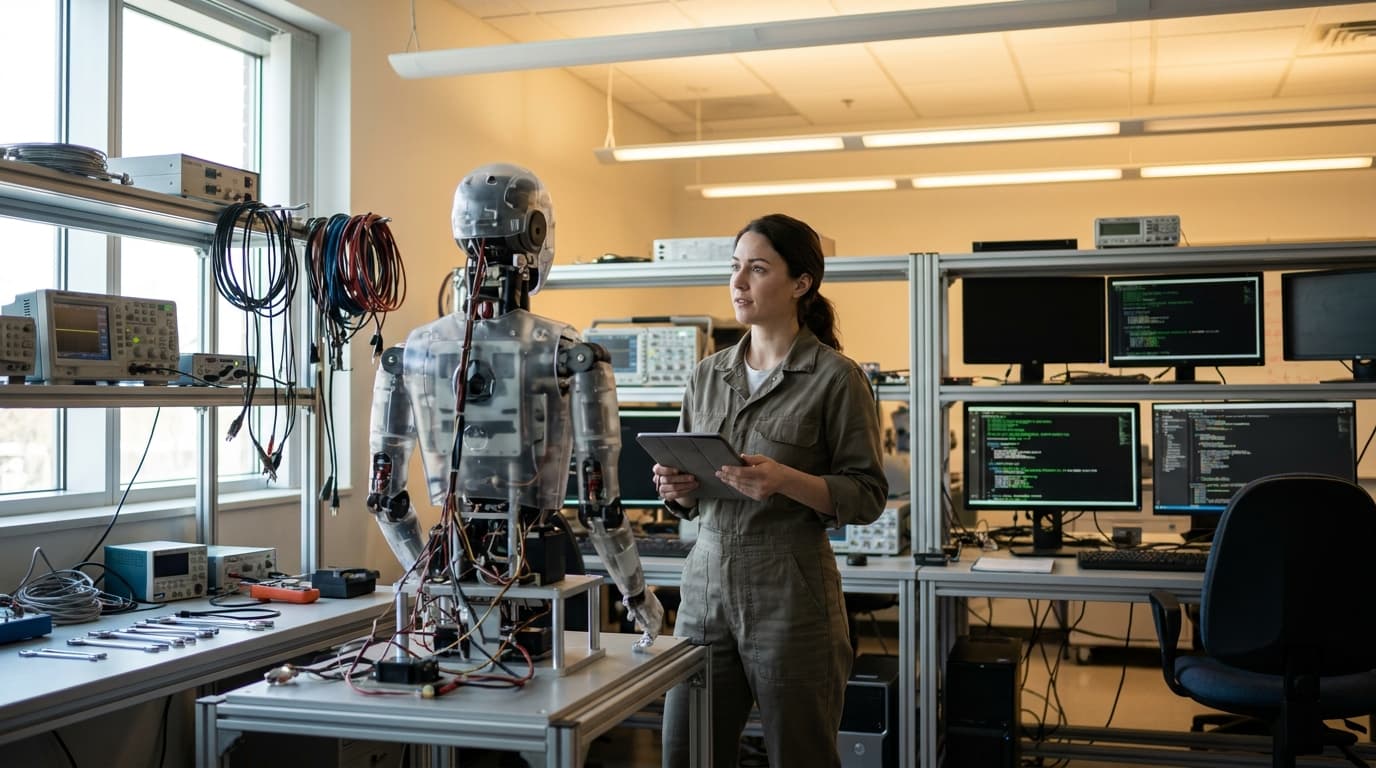
TL;DR: Viral videos of humanoid robots performing complex tasks are impressive but misleading. Experts warn there's a huge gap between controlled demos and the ability to perform reliably and repeatedly in the real world, a crucial distinction for tech leaders.
Key facts
- Category
- Tech Updates
- Impact
- Medium
- Published
- Source
- Ars Technica
Full summary
Viral videos of humanoid robots are impressive, but experts warn there's a huge gap between controlled demos and real-world reliability.
Tech companies are flooding social media with impressive videos of humanoid robots performing complex tasks, from acrobatic flips to delicate household chores. These demonstrations suggest a future where capable, general-purpose robots are just around the corner. However, experts in robotics and artificial intelligence urge caution, highlighting a significant gap between these carefully choreographed performances and what the machines can actually do. A robot executing a perfect sequence of moves in a controlled lab environment is fundamentally different from one that can reliably and repeatedly manage tasks in the unpredictable real world. The viral videos often hide the immense amount of engineering, programming, and trial-and-error required for a single successful take, creating a misleading picture of their current capabilities and autonomy.
For founders, CTOs, and business leaders, this distinction is critical. Making long-term investment decisions in automation based on this hype could be a costly mistake. The primary bottleneck for humanoid robots is not the hardware, which has advanced considerably, but the software and AI that power them. Real-world environments are chaotic and constantly changing; a robot must be able to perceive its surroundings, understand context, and adapt to unexpected events, like a person walking by or an object being in a slightly different position. These are monumental software challenges that remain largely unsolved. Relying on a system that only works under perfect conditions is impractical for any serious business application, from logistics and manufacturing to healthcare and retail.
The path from a compelling demo to a commercially viable product is long and fraught with challenges that are often invisible to the public. While the recent progress is undeniable and exciting, it represents research milestones rather than off-the-shelf solutions. Business leaders should therefore shift their focus from flashy physical demonstrations to breakthroughs in the underlying AI. The true indicators of progress will be robots that can learn new tasks quickly, generalize their skills to new situations, and operate safely and consistently alongside humans with minimal supervision. Until these fundamental software and intelligence hurdles are cleared, the humanoid robots seen in viral videos will remain confined to the lab.
Related on Notifire
Related stories
Primary source: Ars Technica