Volkswagen Will Now Pay You to Park Your Car
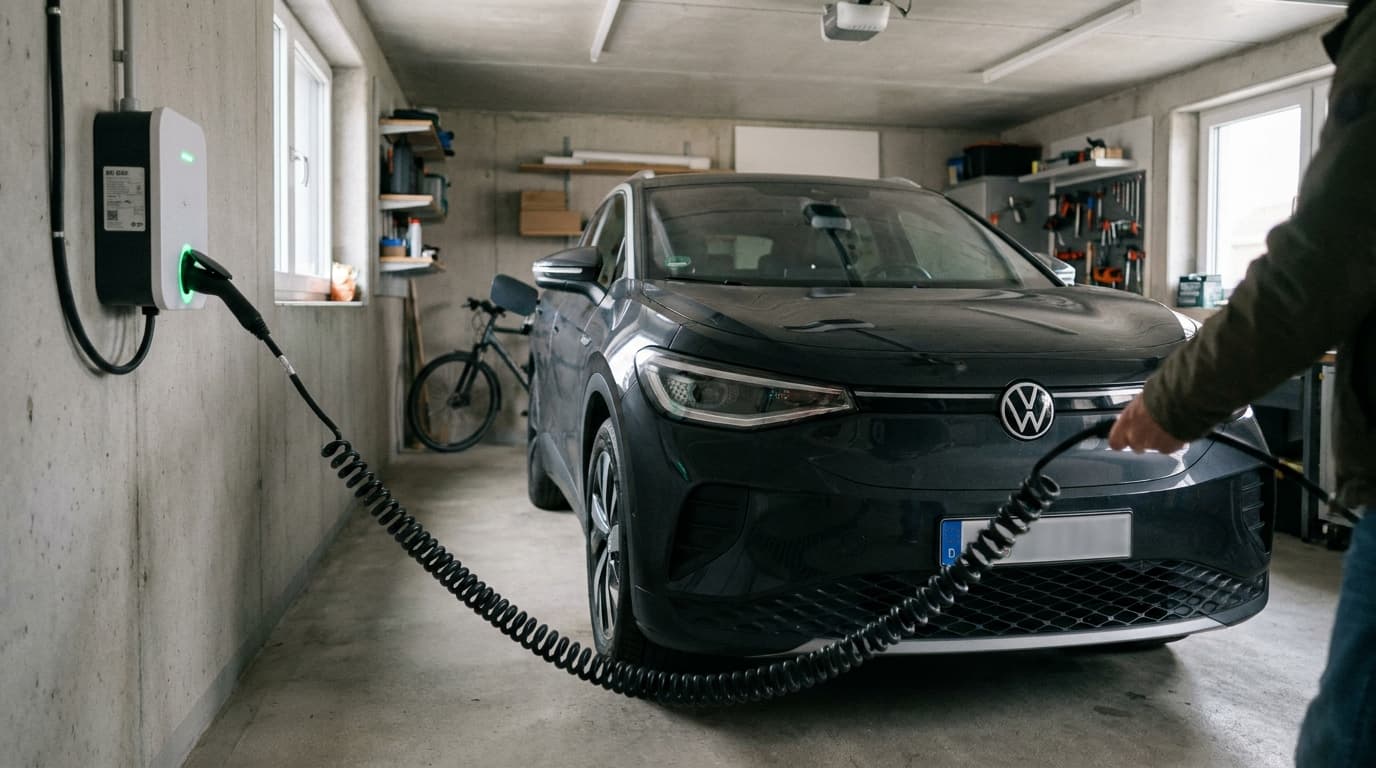
TL;DR: Volkswagen has launched a program in Germany that pays EV owners to send power from their car batteries back to the grid. The initiative turns personal vehicles into a distributed energy network, offsetting significant running costs for drivers.
Key facts
- Category
- Tech Updates
- Impact
- High
- Published
- Source
- TechRadar
Full summary
Volkswagen is paying German EV owners to send unused battery power back to the grid, turning cars into mobile power banks.
Volkswagen is turning electric vehicles into a source of income for their owners. According to reporting from TechRadar, the automaker's energy subsidiary, Elli, has launched its first commercial Vehicle-to-Grid (V2G) offering in Germany. The program uses a new bi-directional charger that allows EV owners to not only draw power from the grid to charge their car but also to sell unused energy from their car's battery back to the grid. To encourage adoption, the company is offering a bonus of €720 in the first year, which it claims can offset electricity costs equivalent to nearly 10,000 miles of driving. This move marks a significant step by a major automotive player to transform personal vehicles from simple transportation devices into active components of the energy infrastructure.
The technology enabling this is called bi-directional charging. A standard EV charger works as a one-way street, converting AC power from the grid into DC power to fill the car's battery. The new Elli BiDi charger, however, contains an inverter that allows this process to be reversed, converting the battery's stored DC power back into grid-compatible AC power. This two-way flow is managed by sophisticated software that monitors grid demand, energy prices, and the car owner's preferences. The system can automatically charge the vehicle when electricity is cheap and plentiful (such as overnight or during peak solar generation) and discharge a portion of that stored energy back to the grid when demand and prices are high. In effect, a network of participating EVs becomes a massive, distributed battery—a virtual power plant that can help stabilize the grid.
While the concept of V2G is not new, it has largely been confined to pilot programs and academic research. Volkswagen's commercial launch is a major signal that the technology is maturing and ready for real-world application. This development fits into a broader trend of decentralization across the energy sector, driven by the rise of intermittent renewable sources like wind and solar. A stable grid requires a constant balance between power supply and demand. The variable output from renewables makes this balancing act more challenging. Large-scale battery storage is one solution, and V2G leverages the millions of EV batteries that sit idle for most of the day as a vast, untapped storage resource. This initiative represents a critical convergence of the automotive, energy, and IoT sectors, where connected devices play an active role in managing critical infrastructure.
For technology leaders and developers, VW's program opens a new frontier. It creates a tangible ecosystem for APIs that manage energy trading, platforms that monitor battery health and degradation under V2G cycling, and robust security protocols to protect these grid-connected endpoints from cyber threats. For businesses, particularly those managing large corporate fleets, this model presents a paradigm shift. Fleet vehicles are no longer just a transportation expense; they can become active energy assets that generate revenue or reduce a company's overall electricity costs. The key factors to watch will be consumer adoption in Germany, the impact on battery longevity, and how quickly other automakers and utility providers launch similar programs. The success of this initiative could set the standard for how future smart cities and distributed energy resources are designed and managed.
Why it matters
This is one of the first large-scale, commercial rollouts of Vehicle-to-Grid (V2G) technology by a major automaker. For engineers, it signals the emergence of EVs as active, API-addressable components of energy infrastructure, creating new opportunities in IoT, grid management software, and distributed systems.
Business impact
The program creates a new revenue model where corporate EV fleets can become energy assets, generating income or reducing facility costs. It provides a real-world blueprint for integrating sustainability initiatives with operational assets, potentially influencing future infrastructure investments and corporate energy strategies.
Tags
Related on Notifire
Related stories
Primary source: TechRadar