Waymo's Robotaxis Sidelined by a Simple Noise Complaint
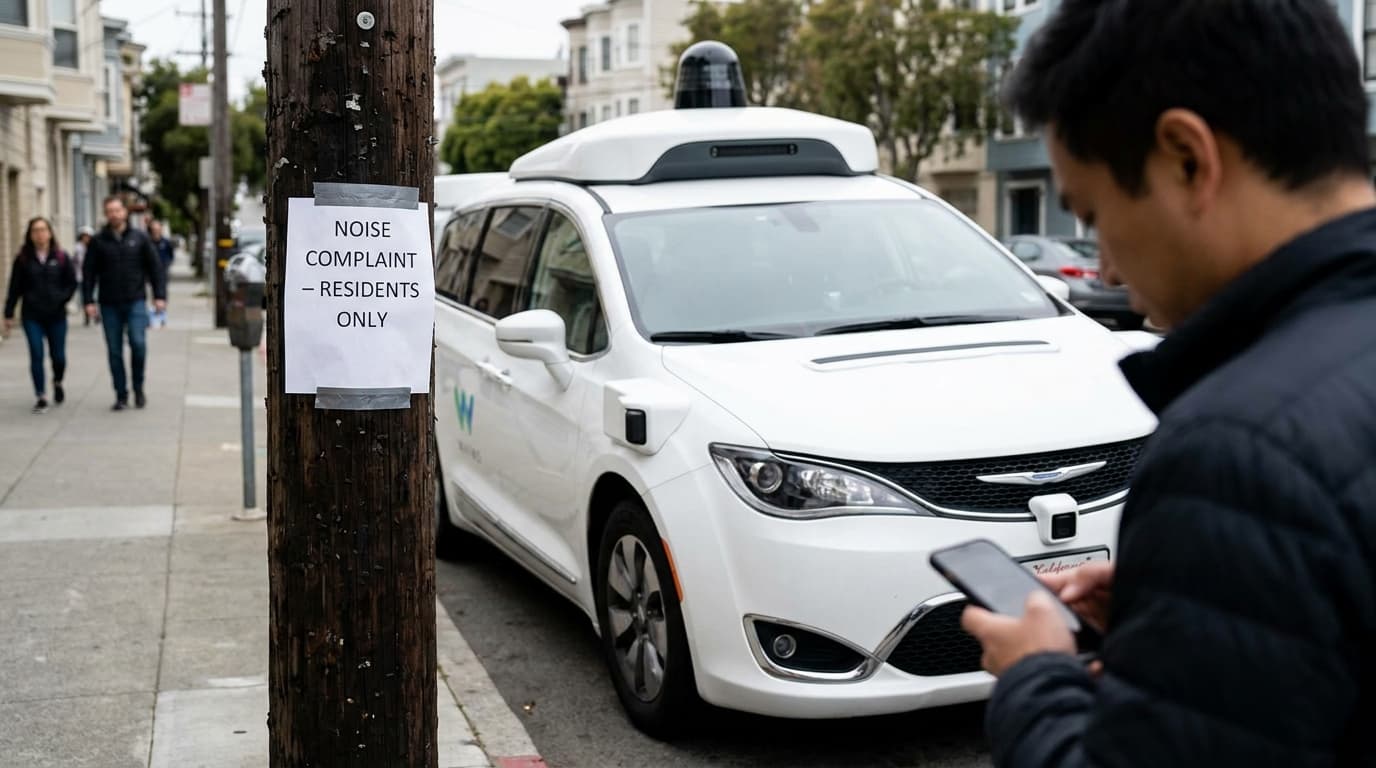
TL;DR: A judge has ordered Waymo to stop overnight charging in Santa Monica after noise complaints. The ruling highlights how scaling new tech can be blocked by non-technical challenges like public nuisance laws, a key lesson for innovators.
Key facts
- Category
- Tech Updates
- Impact
- Medium
- Published
- Source
- Ars Technica
Full summary
A judge ordered Waymo to halt overnight charging in Santa Monica, showing how non-technical issues can disrupt high-tech infrastructure rollouts.
Based on reporting from Ars Technica, a Los Angeles Superior Court judge has granted a preliminary injunction requested by the City of Santa Monica. This legal action forces Waymo, the autonomous vehicle company, to cease overnight charging operations at its local facility. The city's lawsuit frames the issue as a "public nuisance," stemming from noise complaints related to the charging depot. This ruling represents a significant, tangible obstacle for Waymo's expansion and daily service reliability in the area, moving a dispute from community forums into the legal arena and setting a potentially impactful precedent for the entire autonomous vehicle industry. The decision underscores a growing tension between the rapid deployment of new technology and the established quality-of-life regulations that govern urban spaces. It's a classic conflict between innovation and incumbency, played out not in code but in a courtroom.
The source of the "public nuisance" is not the silent electric vehicles themselves, but the industrial infrastructure required to support them at scale. High-capacity charging stations, especially those designed to quickly service an entire fleet of vehicles like Waymo's, generate significant noise. This sound typically originates from the high-powered cooling fans within the charging units and the vehicles' own battery thermal management systems, which work overtime during fast charging. Together, they can produce a constant, low-frequency hum that, while perhaps unnoticeable in a busy industrial park, becomes a persistent disturbance in a quieter, mixed-use or residential-adjacent neighborhood, particularly overnight. This isn't a software glitch that can be patched remotely; it is a physical engineering and site-planning challenge. The problem highlights a fundamental operational reality: a fleet of autonomous vehicles is not just a collection of smart cars, but a logistics network with real-world industrial footprints, including maintenance depots, cleaning stations, and power-hungry charging hubs.
This court order matters immensely to founders, CTOs, and strategists in any sector deploying physical technology in cities. It serves as a powerful case study that technological superiority and a strong software stack are insufficient for success. Go-to-market and expansion plans must rigorously account for "soft" factors like community engagement, zoning laws, and environmental impact assessments—even for technologies perceived as green. The "move fast and break things" philosophy, born in the world of software, proves ill-suited and even counterproductive when applied to physical infrastructure that directly interfaces with public life. A single, well-argued nuisance complaint can halt a multimillion-dollar operation more effectively than any technical competitor. This issue extends far beyond autonomous vehicles, affecting companies in drone delivery, ghost kitchens, micromobility charging networks, and logistics. For developers and engineers, it's a reminder that the operational context of a product is as important as its core functionality. The system's performance is not just measured in uptime or efficiency, but also in its ability to coexist with the community it serves.
The immediate business impact for Waymo is a significant operational headache. The company must now find an alternative for overnight charging, which is the most efficient and cost-effective time to prepare the fleet for the next day's service. This could mean reducing the number of vehicles available in Santa Monica, incurring higher costs by charging during peak hours, or investing in a new, potentially more remote or sound-proofed facility—all of which introduce friction and expense into their expansion model. For the broader industry, this ruling is a warning shot. It signals that municipalities are willing and able to use existing legal frameworks, like public nuisance laws, to regulate the on-the-ground effects of new technology. This could lead to a patchwork of local regulations, making it difficult for companies to scale with a standardized operational playbook. The key takeaway for any tech leader is the necessity of proactive engagement. Site selection, acoustic engineering for sound dampening, and transparent communication with local governments and residents are not optional add-ons but core components of a sustainable deployment strategy. Failing to address these ground-level realities can result in costly legal battles, operational shutdowns, and significant damage to public perception.
Why it matters
This ruling is a critical reminder for tech companies that scaling physical infrastructure involves more than just technology. Community relations, local ordinances, and public nuisance laws can become major roadblocks, impacting go-to-market strategies for any company operating in urban environments.
Related on Notifire
Related stories
Primary source: Ars Technica