Your Old Android Phone Can Power a Humanoid Robot
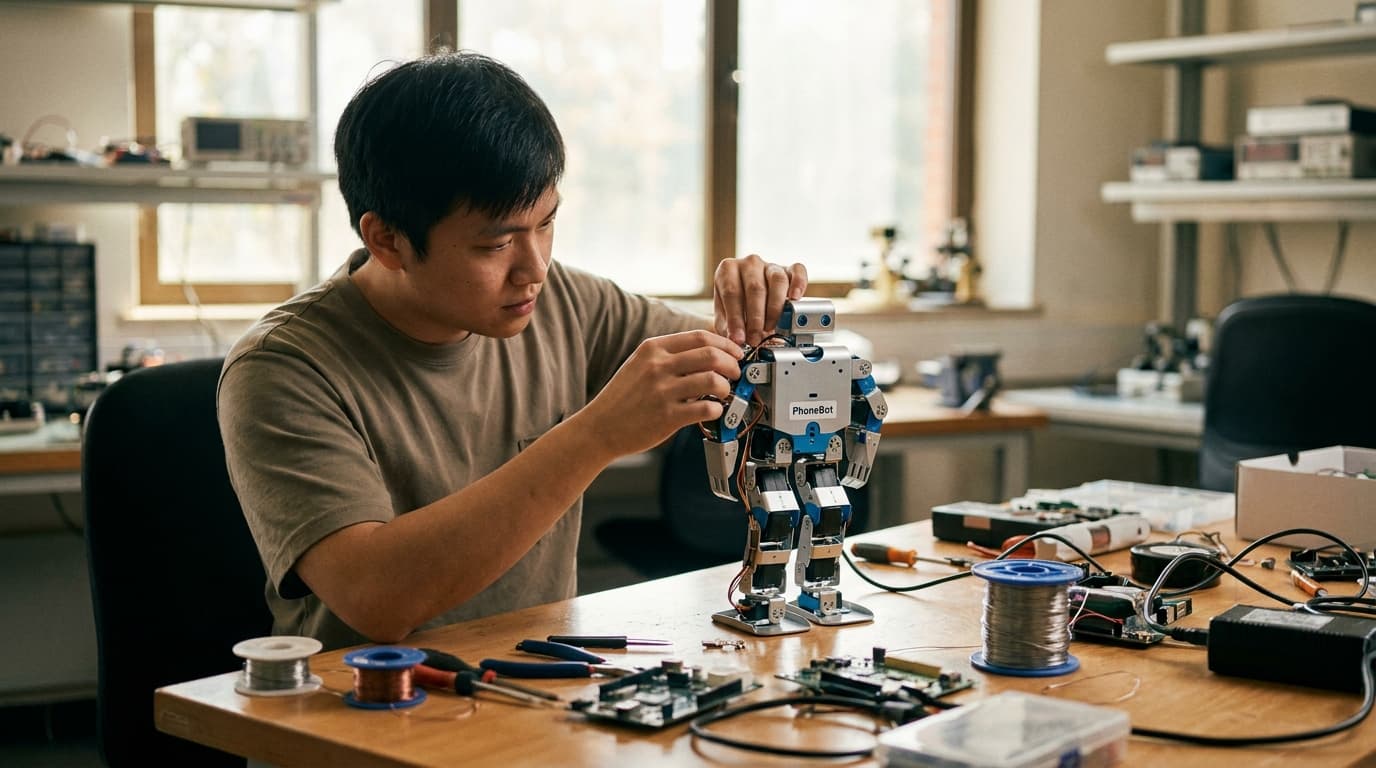
TL;DR: UCLA researchers built PhoneBot, a low-cost humanoid robot that uses old Android smartphones for its brain, sensors, and vision. The open-source project makes advanced robotics more accessible by repurposing common consumer electronics.
Key facts
- Category
- Tech Updates
- Impact
- High
- Published
- Source
- TechRadar
Full summary
UCLA researchers built a low-cost humanoid robot that uses old Android smartphones for its brain, sensors, and vision system.
Researchers at the University of California, Los Angeles (UCLA) have developed an open-source humanoid robot platform called PhoneBot, which cleverly repurposes old Android smartphones as its core components. According to a report from TechRadar, the project demonstrates how to build a capable, compact robot for approximately $400 in hardware. By using discarded phones for sensing, computation, and vision, the team has created a blueprint for making advanced robotics significantly more affordable and accessible. The project leverages the powerful, integrated sensor suites and processing power already present in modern smartphones, which often go to waste when the devices are replaced. This approach transforms potential e-waste into the brain and eyes of a sophisticated machine, opening the door for developers, students, and startups to experiment with robotics on a budget.
The technical innovation of PhoneBot lies in its distributed computing architecture. Instead of relying on a single, expensive onboard computer, the robot uses multiple Android phones working in concert. One phone acts as the primary “brain,” running the main control loops for walking and balance, while others are dedicated to specific tasks. For example, a phone mounted on the head uses its camera for visual perception, processing its surroundings to navigate and identify objects. Other phones can utilize their built-in accelerometers and gyroscopes to provide real-time feedback on the robot’s orientation and stability. This modular system not only reduces cost but also simplifies development, as engineers can leverage the familiar Android development environment and its vast ecosystem of software libraries to program the robot’s behaviors. The design effectively outsources complex hardware integration to the phone manufacturers, allowing creators to focus on high-level robotics challenges.
PhoneBot enters a landscape where humanoid robotics has largely been the domain of well-funded corporate and academic labs, with platforms like Boston Dynamics' Atlas costing millions of dollars and remaining proprietary. This project represents a significant step toward democratizing the field, much like Raspberry Pi and Arduino did for electronics and the Internet of Things. By providing a low-cost, open-source foundation, PhoneBot invites a global community of makers and researchers to contribute to its development. The project also aligns with a growing emphasis on sustainability and the circular economy in the tech industry. Finding high-value second-life applications for the billions of smartphones that are discarded each year is a major challenge, and PhoneBot offers a compelling proof of concept for how this can be achieved in a complex and cutting-edge field.
For developers, CTOs, and founders, PhoneBot is more than just a novel experiment; it is a practical platform for low-cost research and development. Teams can use it to prototype applications in areas like autonomous navigation, human-robot interaction, and assistive technology without a major capital investment. The open-source nature of the project means that any improvements, from new walking algorithms to advanced AI integrations, can be shared and built upon by the community. The key factor to watch next will be the level of adoption and contribution from the wider maker and robotics communities. The platform's ultimate success will be measured by the ecosystem of software, hardware modifications, and novel use cases that emerge from this newly accessible foundation for humanoid robotics.
Why it matters
This project demonstrates a viable path to low-cost, accessible robotics by leveraging ubiquitous, discarded hardware. For developers and engineers, it provides an open-source platform for experimenting with complex robotics and embodied AI without requiring expensive, specialized components, democratizing research and development.
Business impact
PhoneBot's approach could disrupt the robotics market by enabling rapid, low-cost prototyping for startups in logistics and automation. It showcases a circular economy model for hardware, reducing e-waste and creating new value from obsolete electronics, a key consideration for sustainable tech initiatives.
Tags
Related on Notifire
Related stories
Primary source: TechRadar