The escalating trade war between the United States and China has reached new heights in 2025, with China imposing a staggering 125% tariff on US goods in retaliation for US tariffs exceeding 100%. This tariff blitz, announced on April 11, 2025, has sent shockwaves through global markets, prompting countries like India to reassess their trade strategies. As the world’s two largest economies clash, India stands at a crossroads perhaps to gain from shifting trade dynamics while facing its own set of challenges. Here’s a detailed look at the US-China tariff war, its impact on India, and the opportunities it presents.
The US-China Tariff War: A New Chapter in 2025
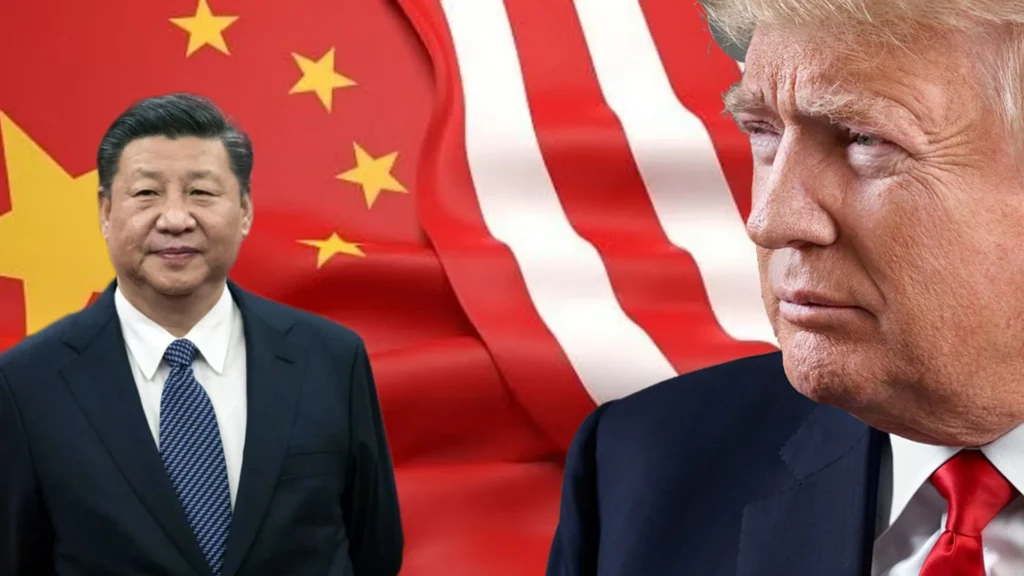
The latest salvo in the US-China trade dispute came after US President Donald Trump imposed tariffs exceeding 100% on Chinese imports, prompting China to retaliate with a 125% tariff on US products. Chinese President Xi Jinping, in a meeting with Spanish leaders, called for a united front against “unilateral bullying,” warning that “there are no winners in a tariff war. The US S&P 500 index dropped 3.5% on April 10, reflecting market fears of a global recession.
Amid this turmoil, Trump introduced a 90-day tariff pause on several countries, including India, providing temporary relief. However, the ongoing uncertainty has disrupted global supply chains, forcing nations to seek alternative trade partners. For India, this presents both opportunities and risks as it navigates its position in a protectionist world.
India’s Position: A Potential Beneficiary
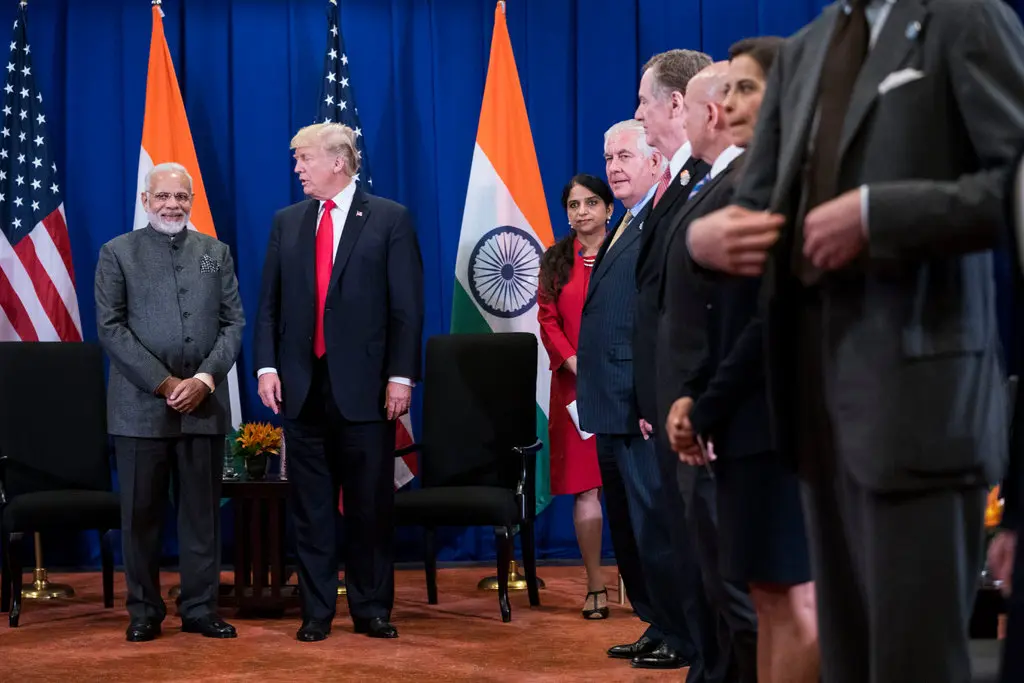
India, with its relatively low export dependence on the US (under 2% of global exports), is less vulnerable to tariff shocks compared to trade-heavy economies like China and Vietnam. The US reciprocal tariff on Indian goods stands at 10%, significantly lower than the 125% on Chinese imports, creating a competitive edge . Ajay Srivastava from the Global Trade Research Initiative (GTRI) notes that India could benefit by fast-tracking trade agreements with the EU, UK, and Canada while deepening ties with China, Russia, and ASEAN countries.
India’s IT and tech services sector, a major contributor to its economy, could see gains as US companies look for alternatives to Chinese tech suppliers. During the last round of trade tensions, India’s IT exports to the US grew by 8% annually, a trend that could repeat in 2025. Additionally, India’s shrimp exporters, who feared collateral damage from the tariff war, have expressed relief at the 90-day pause, with a senior official noting it as an “opening” for Indian exporters.
Challenges for India:
- The manufacturing sector, particularly electronics, depends on China for components like batteries, semiconductors, and display panels. Any disruption in this supply chain could raise production costs and delay outputs.
- The pharmaceutical industry is equally vulnerable, with 70% of India’s active pharmaceutical ingredients sourced from China. A supply crunch could impact global generic drug markets, where India is a key player.
Another concern is the potential influx of Chinese goods into India. With US and European markets tightening, China may redirect excess inventory, such as steel, to India, depressing local prices and hurting domestic producers. Viral Acharya, a professor at NYU Stern School of Business, warns that India’s high tariffs have fostered protectionism, disincentivizing efficiency and allowing market concentration, which could hinder long-term competitiveness.
Economic Impact on India: Growth and Risks
HSBC’s chief India economist, Pranjul Bhandari, estimates that Trump’s 26% tariffs on India could shave off 0.5 percentage points from India’s GDP growth. However, India’s overall export reliance on the US is minimal, giving it leverage in negotiations.
“Exports in merchandise are a tiny proportion of India’s economy,” notes Martyrossian from Aubrey’s global emerging markets fund, which has a 30% allocation to India.
On the positive side, India’s vast domestic market has fueled its growth, outpacing many global economies. The country’s relative detachment from global trade shocks could serve as a short-term shield, as other nations scramble to adjust to the US-China tariff fallout.
Opportunities For India:
– Expanding trade agreements with the EU, UK, and Canada, as suggested by Ajay Srivastava, could open new markets for Indian goods.
– The IT sector, which relies heavily on US clients, could see increased demand as companies diversify away from China. Additionally, India could position itself as a reliable manufacturing hub for global firms looking to reduce dependence on China, provided it simplifies tariffs and improves trade processes.
Final Note:
While challenges like supply chain vulnerabilities and potential GDP impacts remain, India’s low export dependence and robust domestic market provide a strategic advantage. By focusing on trade diversification, improving manufacturing efficiency, and leveraging its IT sector, India can navigate this global trade shift and emerge stronger. For now, the world watches as India balances opportunity with caution in this turbulent economic landscape.
For more such updates, stay tuned by following Notifier on Instagram and Facebook.