Nvidia's AI Will Soon Power Rovers on the Moon
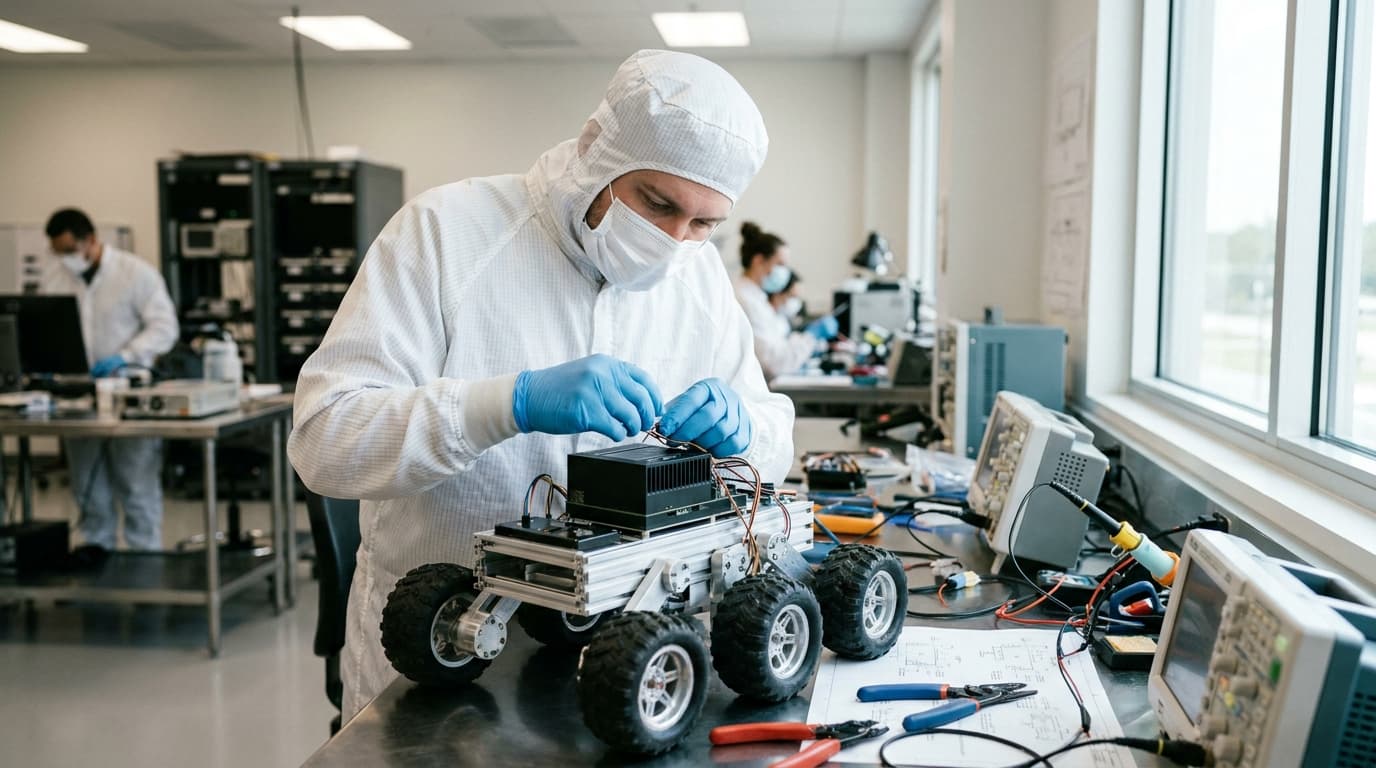
TL;DR: Nvidia's edge AI platform will power a lunar rover's navigation system starting in 2026. This collaboration with Lunar Outpost tests autonomous technology in one of the most extreme environments, paving the way for future space exploration.
Key facts
- Category
- AI
- Impact
- High
- Published
- Source
- TechRadar
Full summary
Nvidia's Jetson AI platform will power a lunar rover's command and control systems, a major test for autonomous tech in extreme environments.
Nvidia is sending its artificial intelligence technology to the Moon. According to a report from TechRadar, the chipmaker has partnered with space mobility company Lunar Outpost to integrate its hardware into future lunar missions. The collaboration will see Nvidia’s Jetson platform and CUDA-X software libraries used to power the command and control systems for a new lunar rover. This vehicle, part of the Lunar Voyage 2 mission scheduled for launch in 2026, will rely on Nvidia’s technology to manage its critical LiDAR navigation system. The partnership represents a significant step toward developing the autonomous infrastructure needed for a sustained human presence in space, moving beyond remote-controlled exploration to more independent robotic operations on the lunar surface.
The core of this initiative is "edge AI," a model of computing where data processing occurs directly on a device rather than in a remote cloud server. The Nvidia Jetson module is a compact, powerful computer designed specifically for this purpose. On the Moon, this is not a luxury but a necessity. The communication delay between Earth and the Moon—roughly 2.6 seconds for a round trip—makes real-time remote control impossible for tasks requiring split-second decisions, like dodging a rock. The Jetson module allows the rover to think for itself by processing data from its LiDAR sensor on the spot. LiDAR uses lasers to build a detailed 3D map of the terrain, and the CUDA-X libraries provide the software foundation to accelerate this complex data processing on Nvidia's GPU, enabling the rover to navigate autonomously and safely.
For developers, CTOs, and engineers in the fields of robotics and autonomous systems, this mission is a landmark case study. It demonstrates the maturity and resilience of edge AI platforms in one of the most unforgiving environments imaginable, subject to extreme temperatures, radiation, and the vacuum of space. If the Nvidia Jetson platform can reliably guide a rover across the Moon, it builds immense confidence for its use in mission-critical applications on Earth. This includes industrial automation in factories, self-driving vehicles navigating city streets, and autonomous drones conducting remote inspections. The project validates the hardware and software stack for anyone building systems that require high-performance, low-latency AI processing without a constant connection to the cloud.
From a business perspective, this collaboration marks a strategic expansion for Nvidia beyond its traditional strongholds in gaming, professional visualization, and data center AI. By entering the burgeoning space economy, Nvidia is positioning itself as a fundamental technology provider for the next frontier of exploration and commerce. The partnership is mutually beneficial: Lunar Outpost gains access to a state-of-the-art, commercially developed AI platform, while Nvidia secures the ultimate proof point for its technology's reliability and performance. The practical takeaway for business leaders is that the advanced, hardened technologies proven in space often become the standard for robust commercial products. The innovations required to operate on the Moon will directly influence the development of more capable and dependable AI systems for all industries.
Looking ahead, this mission is a foundational piece of a much larger puzzle. It serves as a precursor to more complex robotic tasks required by initiatives like NASA's Artemis program, which aims to establish a permanent human base on the Moon. Future rovers will need to do more than just navigate; they will be tasked with construction, resource extraction, and logistical support, all requiring sophisticated autonomy. The success of the Lunar Voyage 2 mission will likely accelerate the fusion of the commercial tech and aerospace industries, with more Silicon Valley companies contributing to space exploration. The lessons learned from deploying AI on the Moon will also inform its use in other challenging terrestrial environments, from deep-sea robotics to automated disaster relief operations.
Why it matters
This mission serves as a critical test for edge AI in extreme conditions, validating Nvidia's Jetson platform for developers building autonomous systems. It proves the technology's readiness for mission-critical applications beyond traditional data centers, from industrial robotics to self-driving vehicles.
Business impact
Nvidia's entry into the space industry diversifies its market beyond gaming and data centers, positioning it as a key supplier for the growing space economy. This high-profile partnership provides a powerful marketing narrative and hardens its technology, ultimately benefiting terrestrial commercial applications.
Tags
Related on Notifire
Related stories
Primary source: TechRadar