Why Physical AI Is Still in Its Lego Era
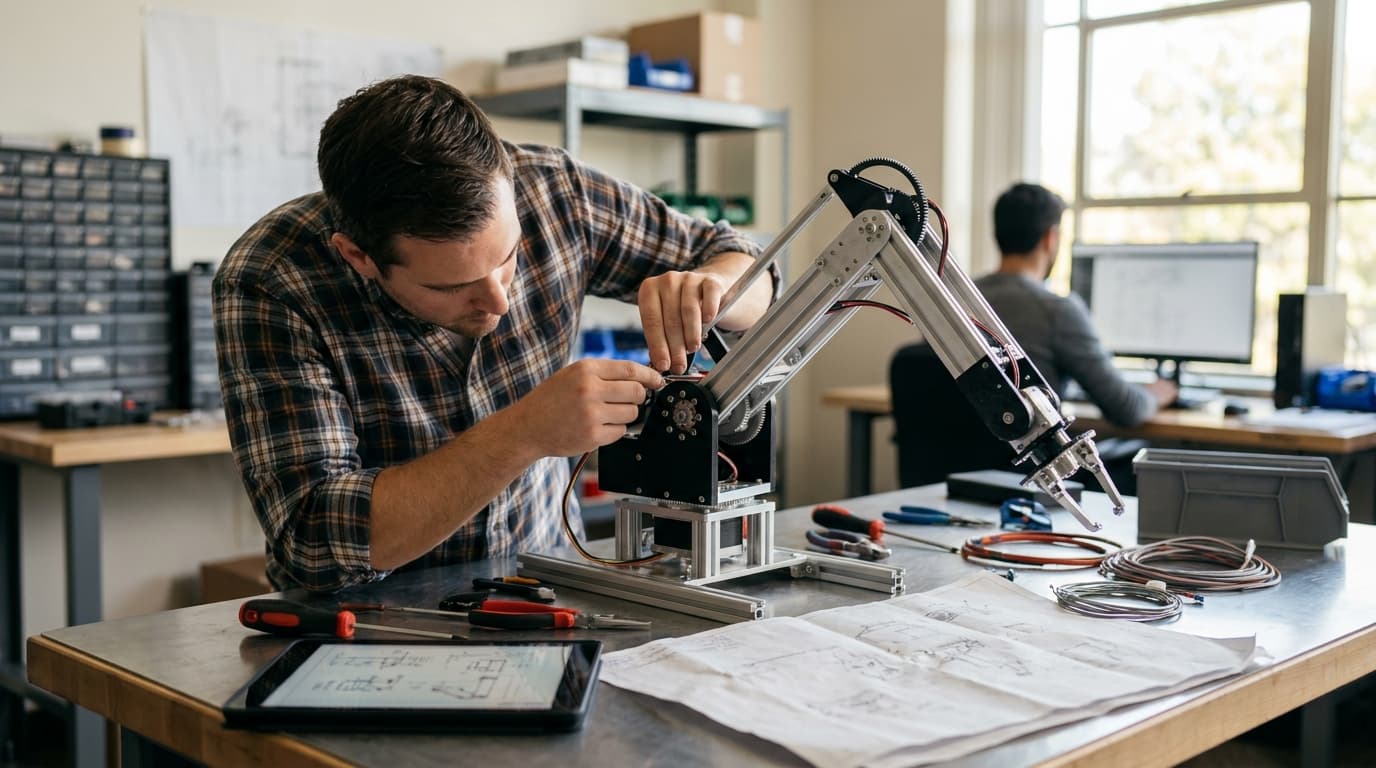
TL;DR: A former Nvidia robotics lead argues that Physical AI is still in its 'Lego era.' The basic hardware and software building blocks for robotics are not yet mature, challenging the idea that a single large AI model can solve everything.
Key facts
- Category
- AI
- Impact
- Medium
- Published
- Source
- TechCrunch Startups
Full summary
A former Nvidia robotics lead says the field is in its 'Lego era,' with fundamental hardware and software still being rebuilt.
A former Nvidia robotics executive is pushing back against the idea that a single, powerful AI model will soon solve the challenges of robotics. According to a TechCrunch report, Amulya Vishwanath, who previously led product marketing for Nvidia’s robotics platforms, argues that the industry is currently in its “Lego era.” She contends that the fundamental building blocks of Physical AI—the intersection of artificial intelligence and the physical world—are still being developed and refined. This perspective suggests that progress in robotics is less about a single software breakthrough and more about the difficult, incremental work of improving the underlying hardware, software, and safety systems that allow machines to interact with their environment reliably.
The “Lego blocks” Vishwanath refers to are the core components that make up any robotic system. This includes the physical hardware, such as actuators (the “muscles” of a robot), grippers and hands for manipulation, and the sensors that provide awareness. It also includes the specialized software stacks that control movement and the safety standards required for robots to operate alongside humans. Her argument is that these elements are far from being standardized or perfected. For example, current robotic hands lack the dexterity and sensory feedback of a human hand, and actuators often fall short in combining speed, strength, and precision. This view frames the challenge of Physical AI not as a problem of pure intelligence, but as a complex systems engineering problem where the physical components are just as critical as the AI model controlling them.
This grounded perspective offers a crucial counter-narrative to the dominant hype cycle in the AI industry, which is heavily focused on large-scale foundation models. While companies are pouring billions into creating more powerful language and vision models, the development of physical hardware remains a slower, more capital-intensive process. Companies like Tesla with its Optimus robot and startups like Figure AI are attempting to integrate advanced AI into humanoid forms, but they are simultaneously confronting these fundamental hardware limitations. Vishwanath’s analysis implies that even with a super-intelligent AI “brain,” a robot is only as capable as its physical body. The slow progress in battery technology, material science, and motor efficiency acts as a natural brake on the rapid advancements seen in pure software.
For founders, developers, and CTOs, this “Lego era” framing provides a more realistic roadmap for innovation and investment in the robotics space. It suggests that significant business opportunities lie not just in developing the next general-purpose AI model for robots, but in creating superior building blocks. This could mean designing more efficient actuators, novel tactile sensors for robotic hands, or more robust software for managing real-world interactions. The key takeaway is that a full-stack approach is necessary. Rather than waiting for a single AI model to unlock the future, the industry must focus on co-designing hardware and software. The next major breakthroughs in Physical AI are just as likely to come from a lab focused on materials science or mechatronics as they are from a large AI research firm.
Why it matters
For engineers and CTOs, this perspective highlights that solving robotics requires more than just better algorithms. It underscores the need for innovation in hardware, sensors, and safety systems, suggesting that a full-stack approach is critical for making meaningful progress in the field.
Business impact
For founders and investors, this view suggests that opportunities exist not just in AI models but in the enabling hardware and software components. Overlooking the physical stack in favor of pure software plays could lead to misallocated capital and unrealistic product timelines in the robotics industry.
Tags
Related on Notifire
Related stories
Primary source: TechCrunch Startups