A Lean GCP Stack for Building Faster Startups
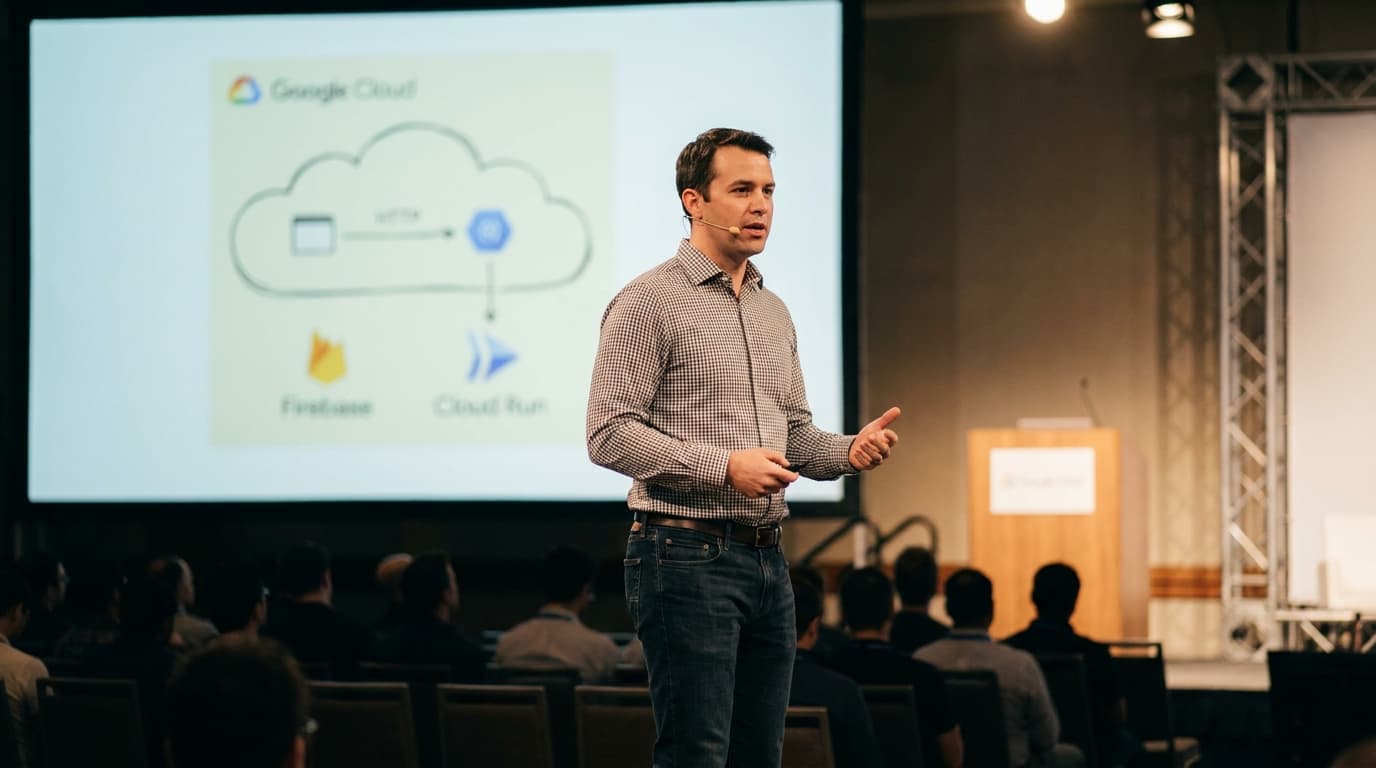
TL;DR: A startup veteran shared a lean architectural pattern using GCP, Firebase, and Cloud Run. This stack helps small teams build scalable products quickly, manage state efficiently, and maintain lean DevOps practices to accelerate product-market fit.
Key facts
- Category
- Infrastructure
- Impact
- Medium
- Published
- Source
- InfoQ
Full summary
A startup engineering veteran details a lean architecture using GCP, Firebase, and Cloud Run to help small teams build scalable products faster.
Startup engineering veteran David Gudeman, drawing on over a decade of experience, recently shared a battle-tested blueprint for building successful products with limited resources. In a presentation highlighted by InfoQ, Gudeman outlined an architectural pattern designed specifically for resource-constrained teams who need to move quickly without accumulating debilitating technical debt. The core of his advice centers on a strategic combination of Google Cloud Platform (GCP) services: Firebase for frontend-facing operations and Cloud Run for backend logic. He argues this specific stack provides a powerful shortcut for startups, enabling them to accelerate their journey to product-market fit. By leveraging these managed services, small teams can focus more on building features and less on managing infrastructure, all while laying a foundation that can support long-term growth and scalability. This approach directly addresses the classic startup dilemma of needing to build for both the immediate present and the uncertain future, offering a pragmatic path forward.
The technical elegance of this proposed architecture lies in its clear separation of concerns and its embrace of serverless principles. Firebase acts as the primary interface for the client-side application, handling critical functions like user authentication, real-time database updates with Firestore, and file storage. According to Gudeman's model, this significantly simplifies frontend development by offloading state management directly to Firebase's robust, real-time infrastructure, thereby eliminating redundant and often complex state-handling logic in the client application itself. The backend, meanwhile, is composed of containerized, stateless services running on Cloud Run. This event-driven structure allows business logic to be triggered by events from Firebase (like a new document in Firestore) or other sources, processing tasks asynchronously. Because Cloud Run scales from zero, this model is incredibly cost-effective, as you only pay for compute resources when your code is actually running, a critical advantage for early-stage companies managing tight budgets.
Gudeman's recommended stack is not an isolated idea but rather a prime example of a broader industry trend toward leveraging managed services and serverless computing to gain a competitive edge. For years, the default for a "serious" scalable backend might have been a complex microservices architecture running on Kubernetes. While powerful, that approach introduces significant operational overhead that can crush a small engineering team. At the other end of the spectrum, a simple monolith on a virtual machine can be fast to start but often hits a scaling wall. The GCP, Firebase, and Cloud Run combination occupies a strategic middle ground, offering much of the scalability of microservices without the DevOps complexity of Kubernetes. It reflects a maturation of the cloud market, where providers are no longer just offering raw infrastructure primitives but are creating highly integrated, opinionated platforms that solve common business problems out of the box, allowing startups to build sophisticated applications with a fraction of the resources previously required.
For founders, CTOs, and developers, the key takeaway is the immense value of deliberately choosing a tech stack that minimizes operational burden. While the specific combination of GCP, Firebase, and Cloud Run is a compelling option, the underlying principle is to aggressively favor managed services that handle scaling, security, and reliability for you. This frees up precious engineering time to focus on the one thing that truly matters for a startup: finding and serving customers. Teams considering this architecture should evaluate its fit for their specific use case, as it is particularly well-suited for event-driven applications and those requiring real-time data synchronization. Looking ahead, it's important to be mindful of potential vendor lock-in and to understand the future migration path. A team might eventually need more control and graduate to a platform like Google Kubernetes Engine (GKE), but this stack provides a remarkably powerful and cost-effective runway to get to that point of success.
Why it matters
For CTOs and founding engineers, this isn't just another architectural talk; it's a specific, battle-tested blueprint for survival. Choosing the right initial stack can mean the difference between rapidly iterating toward product-market fit and getting bogged down by operational overhead and technical debt before you even launch.
Business impact
This lean GCP-based architecture directly impacts a startup's bottom line by reducing initial cloud spend and minimizing DevOps headcount. It accelerates the path to revenue by enabling faster product iteration, giving small companies a crucial speed advantage in competitive markets while building a foundation for future growth.
Tags
Related on Notifire
Related stories
Primary source: InfoQ