A Tiny Chip Could Power a 1 Petabyte SSD
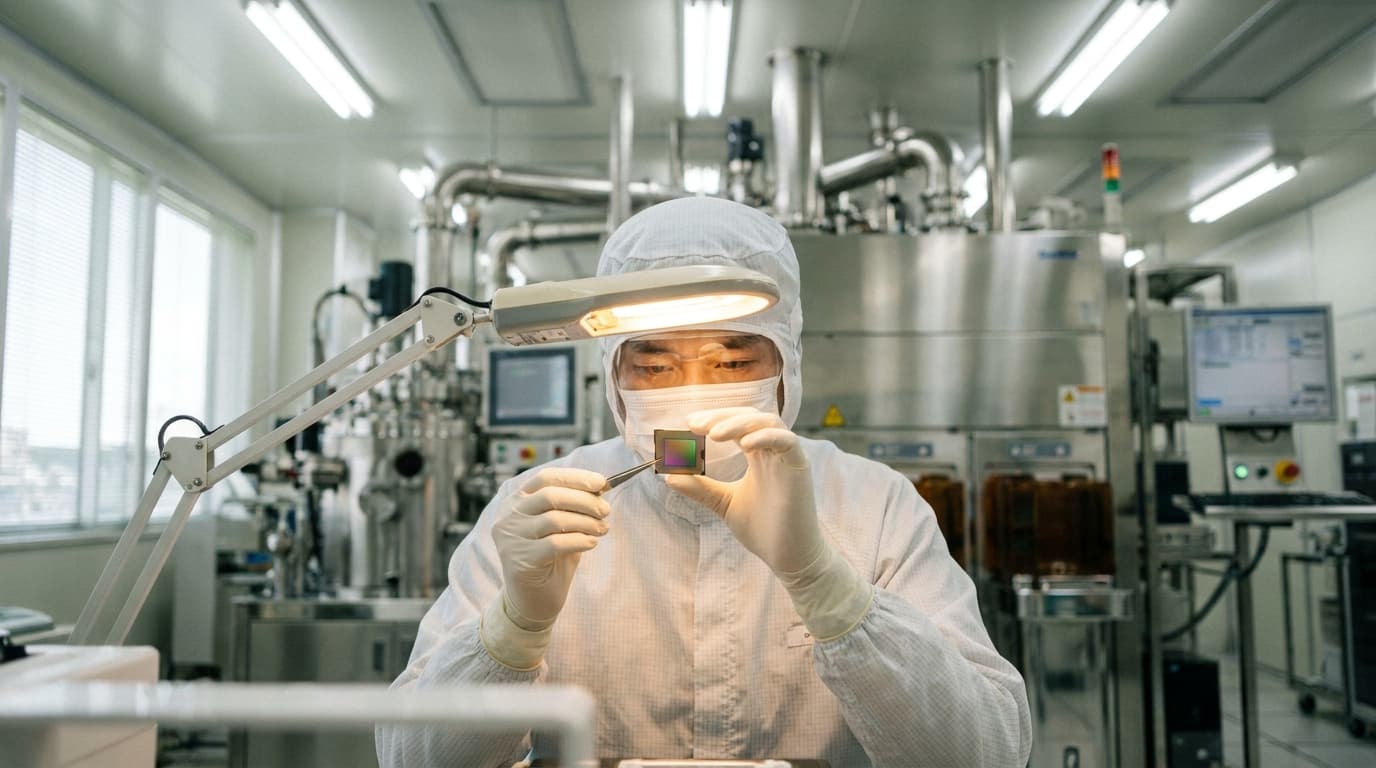
TL;DR: Kioxia and SanDisk revealed a new memory chip that could enable the world's first 1 petabyte SSDs. This breakthrough promises massive increases in storage density and speed for data centers and cloud infrastructure.
Key facts
- Category
- Infrastructure
- Impact
- High
- Published
- Source
- TechRadar
Full summary
A new memory chip from Kioxia and SanDisk could soon power the world's first 1 petabyte solid-state drives for data centers.
Kioxia and its partner SanDisk, a Western Digital brand, have unveiled a new flash memory chip that could fundamentally change the economics and architecture of data storage. According to reporting from TechRadar, this small component is the technological key that could unlock the world's first 1 petabyte (PB) solid-state drive (SSD). A petabyte is equivalent to one thousand terabytes, or about one million gigabytes. Reaching this capacity in a single drive would represent a monumental leap forward from the largest SSDs available today, which typically top out around 100 terabytes. The announcement signals a major milestone in the quest for greater storage density, a critical requirement for the continued growth of cloud computing, artificial intelligence, and large-scale data analytics. This development moves petabyte-scale storage from a theoretical possibility to a tangible engineering goal, with significant implications for how data centers are designed and managed.
The breakthrough is built on an advanced form of Quad-Level-Cell (QLC) 3D flash memory. In simple terms, QLC technology allows each memory cell on the chip to store four bits of data, a significant increase over the three bits in Triple-Level-Cell (TLC) or two in Multi-Level-Cell (MLC) memory. This ability to pack more data into the same physical space is what drives the massive potential for capacity. However, increasing density often comes with a performance trade-off. To counteract this, the new chip features an industry-first 4.8 GB/s interface speed. This high-speed connection between the storage and the processor is crucial; without it, having a petabyte of data would be useless if you couldn't access it quickly. The combination of extreme density from QLC and a high-speed interface ensures that the drive can both store and deliver vast amounts of data without creating a bottleneck, making it a viable solution for demanding enterprise workloads.
For CTOs, infrastructure managers, and developers, the implications of a 1 PB SSD are profound. The most immediate benefit is a dramatic consolidation of physical hardware. A single petabyte drive could replace a full rack of today's highest-capacity SSDs or hard drives, drastically reducing the physical footprint required for storage. This consolidation translates directly into lower operational costs through significant savings on power, cooling, and data center real estate. For teams building and managing AI infrastructure, this level of density is a game-changer. Training large language models and running complex data analytics requires fast access to enormous datasets. The ability to store a petabyte of data in a compact, high-performance format simplifies system architecture and can accelerate model training and inference times, providing a competitive advantage in the race to develop more powerful AI.
The business and industry impact extends beyond simple cost savings. By fundamentally altering the cost-per-terabyte and total cost of ownership (TCO) for mass storage, this technology could make new data-intensive business models feasible. Cloud service providers could offer new tiers of ultra-large, high-performance storage, enabling customers to manage massive datasets without complex sharding or distributed file systems. For enterprises, it could make building on-premise data lakes for analytics and machine learning more accessible and affordable. This development also intensifies the competitive pressure on the traditional hard disk drive (HDD) market, which has long held the advantage in low-cost, high-capacity storage. As the capacity of flash memory skyrockets, the economic case for HDDs in certain large-scale applications will continue to weaken.
While the chip itself is a significant achievement, it is important to view it as a foundational component rather than a finished product. Kioxia and SanDisk have demonstrated the technology, but a commercially available 1 PB SSD is not yet on the market. The industry will now be watching for the next steps, including announcements of specific drive models, pricing information, and, crucially, data on the long-term endurance and reliability of this new QLC memory. The transition from a technology demonstration to mass production and widespread adoption will be the next major hurdle. Nonetheless, this breakthrough is a clear signal of the trajectory of storage technology, pointing toward a future where data centers are smaller, more efficient, and capable of handling data on an unprecedented scale.
Tags
Related on Notifire
Related stories
Primary source: TechRadar