A new laptop uses its SSD as an AI cache, allowing it to run 120-billion-parameter models with just 64GB of RAM. This technique could make powerful local AI development more accessible and affordable for developers.
Samsung is shifting production of consumer memory like DDR5 and SSDs to third-party partners. This move frees up its own factories to produce high-demand HBM memory, a critical component for AI hardware.
Kioxia is developing new flash memory products that act like traditional RAM. This could help data centers dramatically expand memory capacity for AI workloads without the high cost of DRAM, easing a major infrastructure bottleneck.
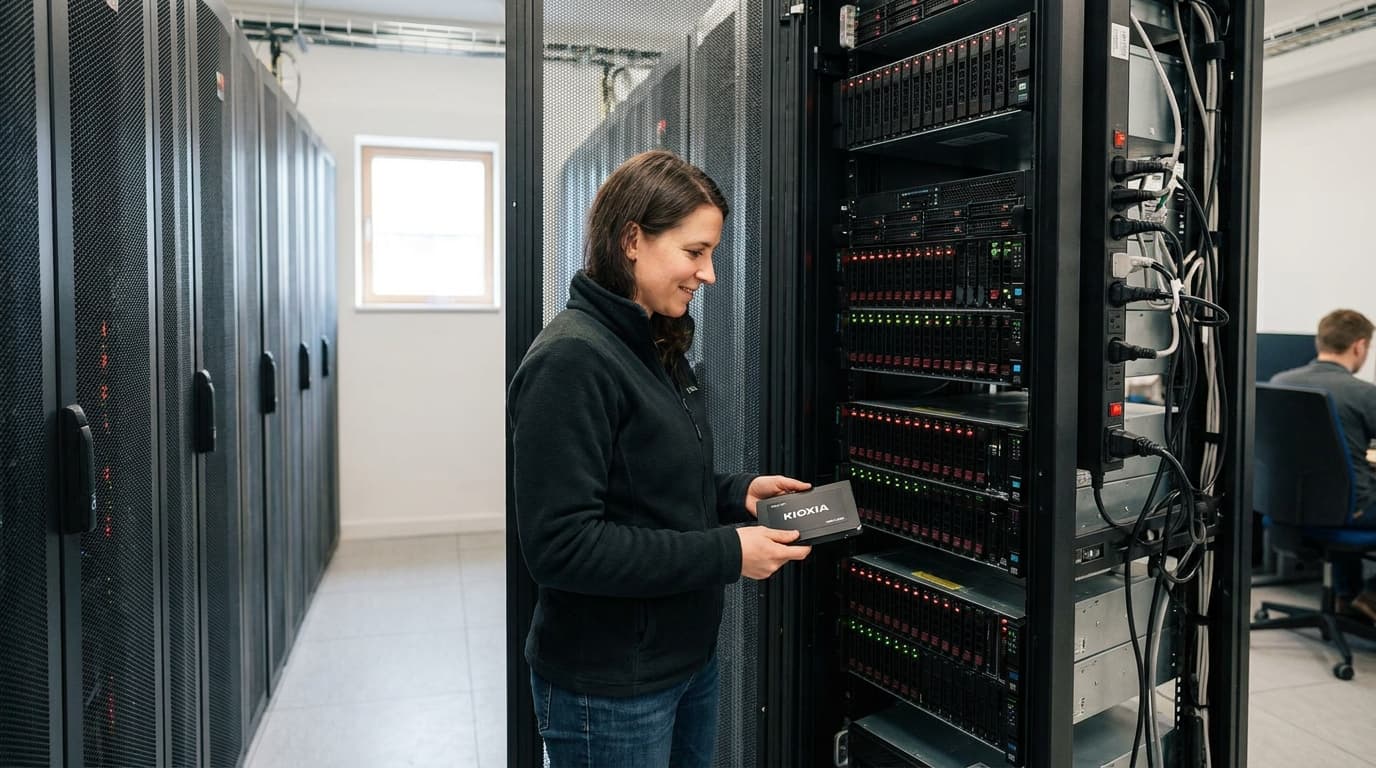
Kioxia unveiled a new enterprise SSD that achieves a record 10 million input/output operations per second. Its extreme speed and endurance are engineered to eliminate data bottlenecks for the most demanding AI systems.
Kioxia and SanDisk revealed a new memory chip that could enable the world's first 1 petabyte SSDs. This breakthrough promises massive increases in storage density and speed for data centers and cloud infrastructure.
A new side-channel attack called FROST allows websites to track users across different sites without cookies. It exploits modern browser APIs to measure subtle interactions with a computer's solid-state drive (SSD), creating a unique fingerprint to identify visitors and monitor their browsing activity.