Your AI Models Can Now Learn From Real Users
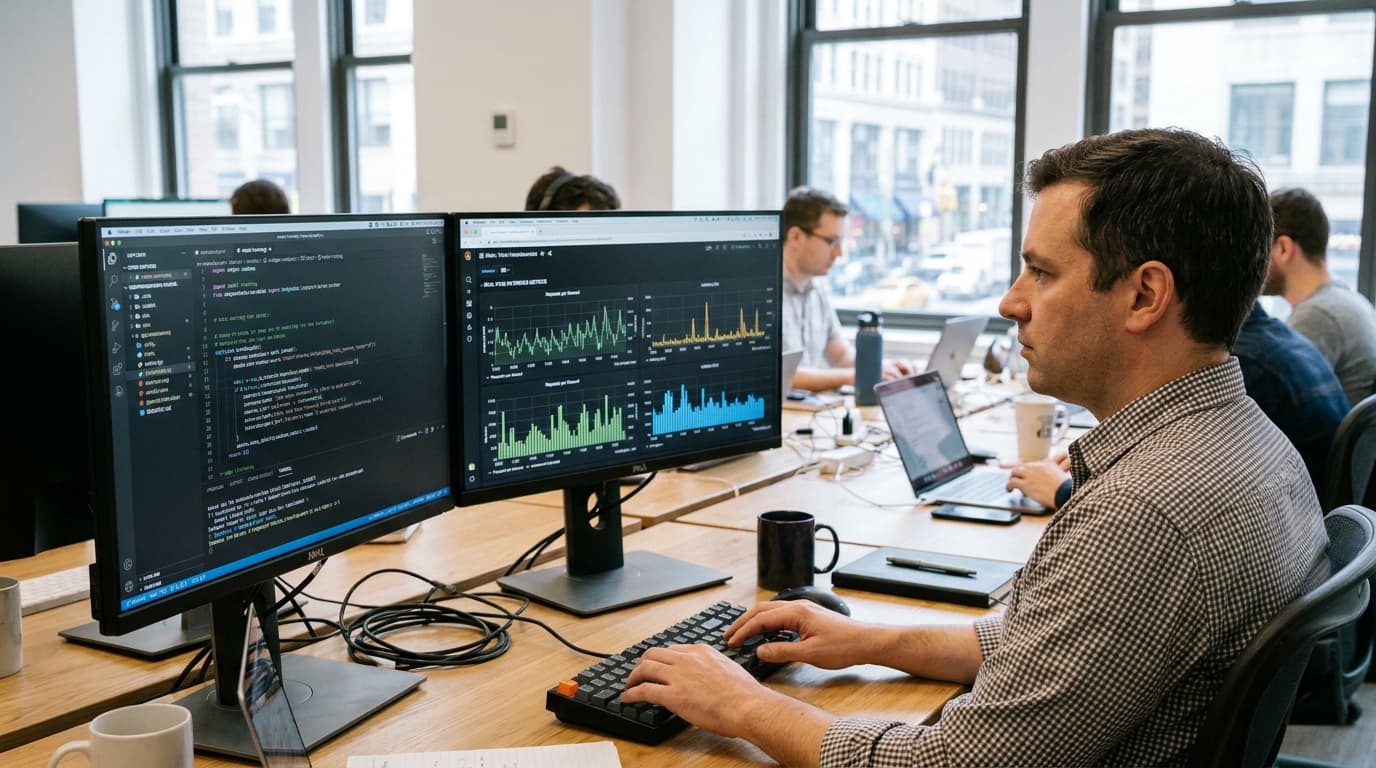
TL;DR: AI cloud provider CoreWeave has launched a new feature that connects model serving directly to custom training. This allows developers to use real-world user data and failures to automatically improve their AI models over time.
Key facts
- Category
- Infrastructure
- Impact
- High
- Published
- Source
- The New Stack
Full summary
CoreWeave now lets developers feed live production data directly back into their model training, creating a powerful feedback loop for improvement.
CoreWeave, a prominent cloud provider specializing in AI infrastructure, has released a significant platform update that directly connects model training with production serving environments. According to reporting from The New Stack, this new capability is designed to help developers create a continuous feedback loop for their AI models. The feature addresses a common and difficult challenge in machine learning operations (MLOps): using real-world data from live applications to inform and improve subsequent versions of a model. By bridging the gap between training and deployment, CoreWeave aims to streamline the process of iterating on AI, allowing models to learn directly from their performance and interactions with actual users. This move positions the company as a provider of more integrated, end-to-end solutions for the entire AI development lifecycle, moving beyond just providing raw compute power for training.
The core problem this feature solves is the logistical complexity of creating a data pipeline from a production environment back to a training one. When an AI model is live, it generates a wealth of data, including user inputs, model outputs, and performance metrics. This data often reveals critical edge cases and failure modes that were not apparent during pre-deployment testing. However, capturing, cleaning, and routing this information back into a format suitable for retraining is a significant engineering effort. CoreWeave's new functionality abstracts much of this infrastructure work away. It provides a structured pathway for developers to channel signals from their serving endpoints—such as user-flagged errors or low-confidence predictions—directly into datasets for custom training loops. This allows teams to more easily determine if a model's weights need to be updated, rather than trying to fix a problem through prompt engineering or changes to other parts of the application stack.
This update fits into a broader industry trend toward mature, integrated MLOps platforms. As the AI field moves from experimental models to production-grade applications, the focus has shifted from simply training a powerful model to managing its entire lifecycle. This includes deployment, monitoring, governance, and, crucially, continuous improvement. Major cloud providers like AWS, Google, and Microsoft offer a suite of MLOps tools, but they often consist of disparate services that require significant integration work. CoreWeave's strategy appears to be one of differentiation through simplification and specialization. By offering a tightly integrated solution for the specific, high-value problem of closing the training-serving loop, it provides a more developer-friendly experience tailored to AI-native companies. This approach mirrors the success of platforms in other domains, like Vercel for web frontends, which won developer loyalty by simplifying complex workflows.
For founders, CTOs, and AI teams, the practical implication of this feature is a potential acceleration in the pace of product improvement. By reducing the manual effort required to learn from production traffic, teams can iterate on their models more quickly and effectively. This leads to AI products that are more robust, more accurate, and better aligned with user needs. It also lowers the barrier to entry for implementing sophisticated continuous learning systems, which were previously only feasible for large, well-resourced organizations. Looking ahead, the next logical steps for CoreWeave would be to build further automation on top of this foundation. This could include tools for automatic data labeling based on user feedback, real-time model performance monitoring, and automated triggers for retraining when performance degradation is detected. This development is a key step toward enabling more autonomous AI systems that can adapt and improve with minimal human intervention.
Why it matters
This update from CoreWeave directly addresses a major MLOps bottleneck: closing the loop between model deployment and retraining. For AI teams, it means a more streamlined way to use production signals to fix edge cases and improve model performance, reducing manual data pipeline work and accelerating iteration cycles.
Business impact
By simplifying the process of learning from production data, CoreWeave helps companies build better, more responsive AI products faster. This can lead to a significant competitive advantage, improved user satisfaction, and lower operational costs by automating a complex part of the AI development lifecycle.
Tags
Related on Notifire
Related stories
Primary source: The New Stack