Data Centers Are Being Rebuilt Just for AI
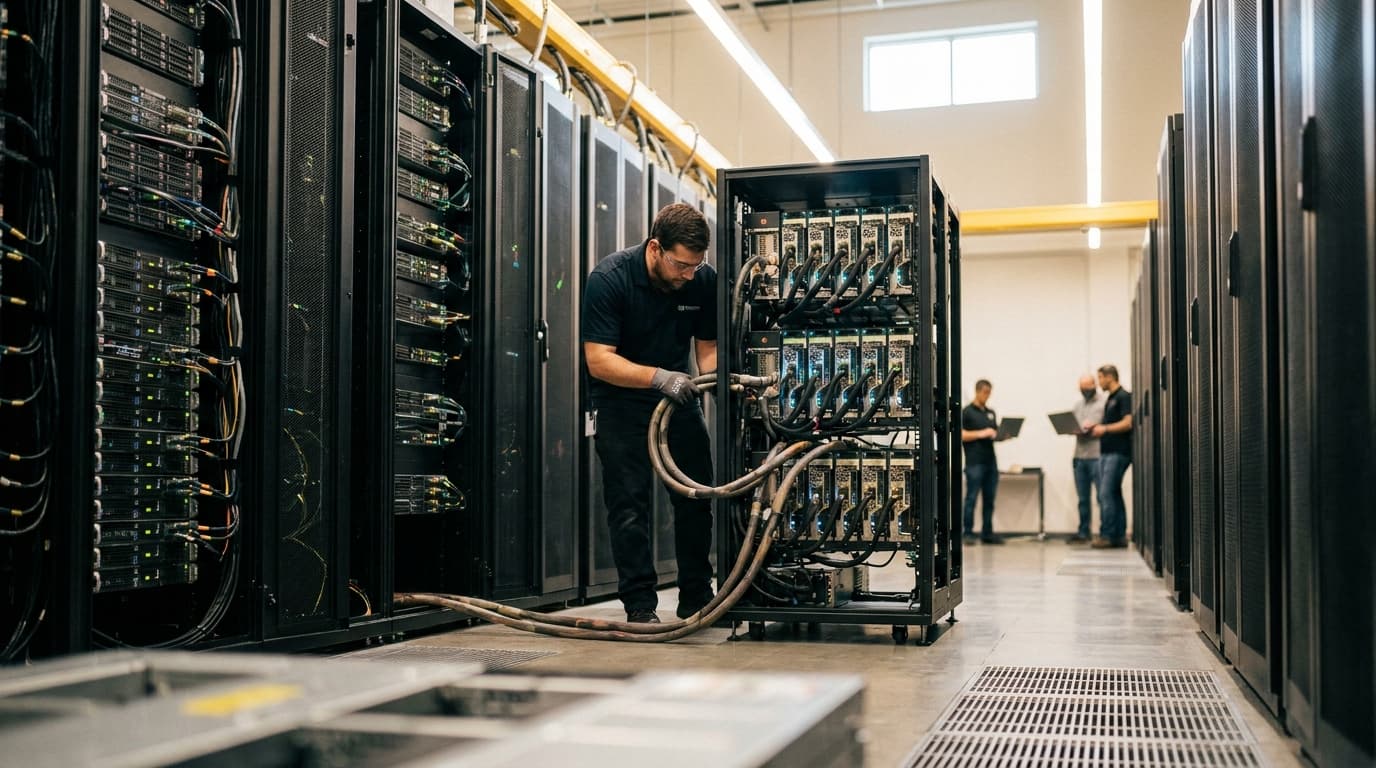
TL;DR: AI workloads are demanding so much power that traditional data centers can't keep up. This is forcing a complete rethinking of infrastructure, from energy supply to cooling, impacting future cloud costs and availability for everyone.
Key facts
- Category
- Infrastructure
- Impact
- High
- Published
- Source
- TechRadar
Full summary
Artificial intelligence is completely reshaping data center design, pushing power and cooling infrastructure to their absolute limits and forcing an industry-wide rethink.
The rise of artificial intelligence is forcing a fundamental and costly transformation of the global data center landscape. According to reporting from TechRadar, the infrastructure that powers the cloud was largely designed for a previous era of computing. Traditional data centers were built around the relatively stable and predictable power needs of CPU-based servers. This allowed for methodical growth in energy supply and the use of mature, air-based cooling technologies. However, the massive, parallel processing required for training and running large AI models relies on power-hungry Graphics Processing Units (GPUs). These new workloads are creating demands for power and cooling that older facilities simply cannot meet, rendering decades of design principles obsolete and triggering a race to build a new generation of AI-native data centers from the ground up.
The core of the problem is a concept known as power density. A standard server rack in a traditional data center might consume between 10 to 15 kilowatts (kW) of power. In contrast, a single rack packed with the latest GPUs for AI training can easily draw over 100 kW. This extreme concentration of energy in a small physical space generates an immense amount of heat that conventional air conditioning systems are incapable of dissipating effectively. The industry is therefore rapidly shifting toward advanced solutions like direct-to-chip liquid cooling, where fluid is piped directly to the processors to carry heat away. This represents a monumental shift in complexity and cost, moving data center mechanics from something akin to commercial HVAC to intricate, high-performance plumbing on a massive scale.
This infrastructure shift has immediate and significant consequences for CTOs, IT leaders, and founders. The true cost of running AI is not just in the expensive silicon of the GPUs, but in the radically more expensive and specialized facilities required to power and cool them. For companies relying on public clouds, these escalating capital and operational expenditures will inevitably be passed on in the form of higher prices for AI and GPU-compute services. This could make large-scale model training or even high-volume inference applications financially challenging for smaller companies and startups. For organizations considering on-premise AI hardware, the barrier to entry is no longer just buying servers; it involves complex facility engineering, securing massive power contracts, and managing specialized cooling systems that are far beyond the scope of a typical corporate IT environment.
The business impact extends across the entire technology sector, creating a new wave of investment and a potential consolidation of power. This transition is fueling a boom for a new class of hardware companies specializing in liquid cooling, high-density power distribution, and modular data center construction. It is also forcing a strategic re-evaluation of where data centers are located, with a new emphasis on building facilities in close proximity to massive, stable power sources. In the long run, this could create a deeper divide between the hyperscale cloud providers—who can afford to invest billions in this new infrastructure—and smaller players. For business leaders, the key takeaway is that AI compute should be treated as a strategic, and increasingly expensive, resource. Financial models and technology roadmaps must now account for the rising underlying costs of the power and infrastructure that make AI possible.
Looking ahead, the industry is focused on solving this power and heat challenge to prevent it from becoming a bottleneck for AI innovation. We can expect to see continued advancements in chip efficiency, but the laws of physics place a hard limit on how much can be achieved. The more immediate developments to watch are the standardization of liquid cooling technologies and the emergence of new data center architectures designed explicitly for high-density AI workloads. The way cloud providers price their GPU instances may also evolve to more accurately reflect the immense infrastructure costs they incur. Ultimately, the future pace of AI development will be directly tied to how successfully and economically the industry can solve these fundamental problems of energy and thermodynamics at a global scale.
Why it matters
The immense power and cooling needs of AI are making traditional data centers obsolete. This directly impacts cloud costs, infrastructure planning, and the future availability of computing resources for all tech leaders and developers.
Business impact
Companies face soaring costs for AI infrastructure, whether through cloud providers or building their own. This creates a new competitive landscape favoring those who can secure power and invest in next-generation facilities, potentially centralizing AI capabilities.
Tags
Related on Notifire
Related stories
Primary source: TechRadar