Palo Alto's AI Finds Bugs But Still Calls You
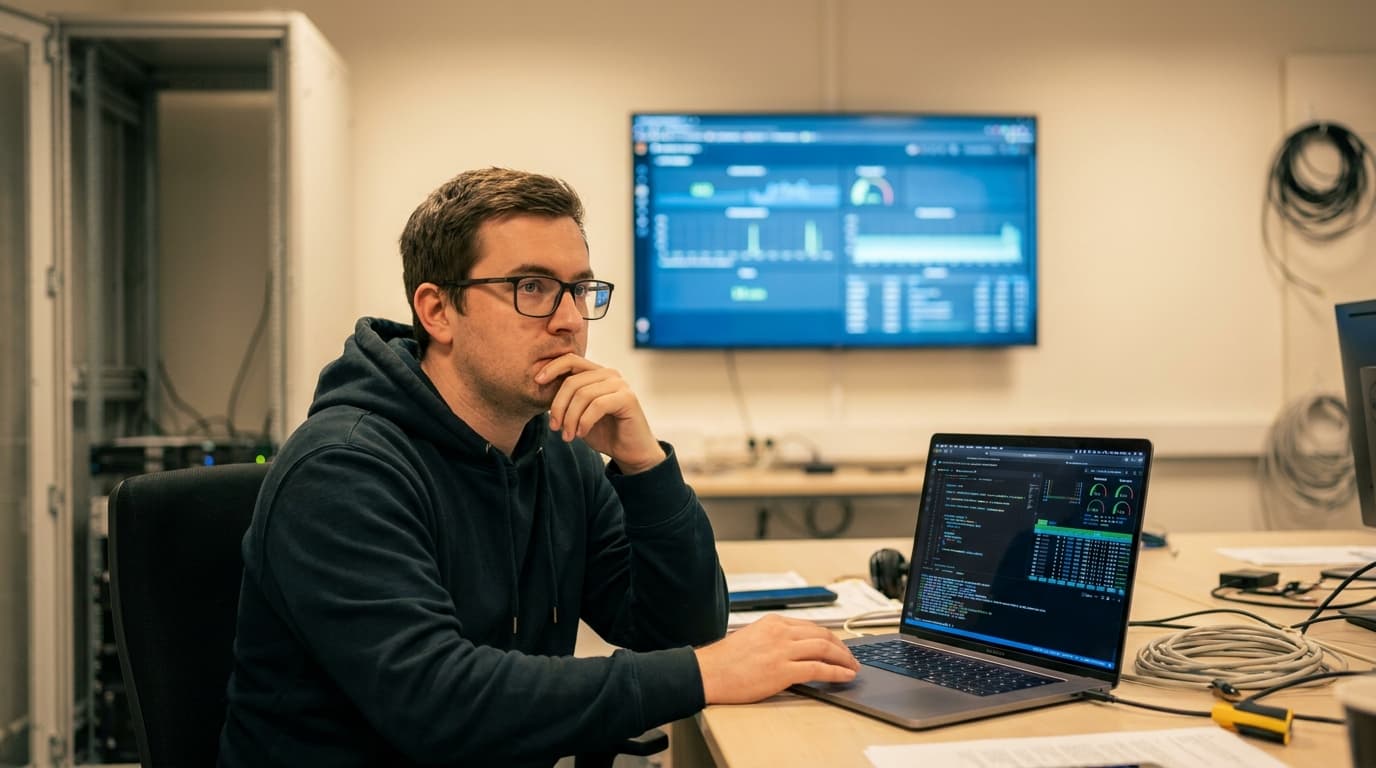
TL;DR: Palo Alto Networks launched Cortex XCOR, an AI platform that automatically investigates system outages. It aims to find the root cause and suggest fixes, reducing the manual work for on-call engineers trying to debug complex systems.
Key facts
- Category
- Infrastructure
- Impact
- High
- Published
- Source
- The New Stack
Full summary
Palo Alto Networks' new AI platform, Cortex XCOR, automatically investigates system issues to find the root cause and recommend fixes for engineers.
Palo Alto Networks has officially entered the increasingly competitive AIOps market with the launch of Cortex XCOR, a new platform designed to change how teams handle system outages. As reported by The New Stack, the company is positioning XCOR as a significant evolution in observability. Instead of presenting engineers with complex dashboards and endless logs to sift through during an incident, XCOR uses AI-driven agents to take on the initial investigation. The platform’s core promise is to automatically perform root cause analysis, pinpointing the source of a problem within minutes and recommending a specific course of action. This represents a deliberate move away from the passive monitoring tools that have dominated the industry, which often tell you that something is broken but leave the difficult “why” and “how to fix it” questions for human operators to solve under pressure. Palo Alto Networks, a giant in the cybersecurity space, is leveraging its expertise in data analysis and automation to tackle one of the most persistent challenges in modern infrastructure management: reducing the time it takes to detect and resolve problems.
The key innovation behind Cortex XCOR lies in its shift from a data-presentation model to an active investigation model. Traditional observability tools collect vast amounts of telemetry data—logs, metrics, and traces—and provide powerful ways to query and visualize it. However, the cognitive load on the engineer is immense. They must know what questions to ask and how to navigate the data to form a hypothesis. XCOR’s AI agents are designed to automate this process. When an issue is detected, an agent begins its own inquiry, traversing the complex web of dependencies in a modern microservices architecture. It analyzes relationships between services, infrastructure components, and recent code deployments to construct a narrative of what went wrong. The goal is to deliver a concise, actionable insight, such as “The recent deployment of the payments service introduced a memory leak, causing cascading failures in the checkout API.” This approach aims to shortcut the manual, often frantic, troubleshooting process that defines the on-call experience for many developers and IT professionals today, turning hours of guesswork into minutes of targeted analysis.
This launch places Palo Alto Networks in direct competition with established players in the observability and AIOps space, such as Datadog, Splunk, New Relic, and Dynatrace. For years, these companies have been racing to integrate artificial intelligence and machine learning into their platforms to help customers manage overwhelming data volumes. The concept of AIOps—applying AI to IT operations—is not new, but early iterations often focused on anomaly detection and noise reduction, essentially making dashboards smarter. The introduction of autonomous investigative agents by platforms like Cortex XCOR signals the next phase of this trend. The industry is moving toward a future where observability tools act more like junior members of the engineering team, capable of performing initial triage and analysis. This shift is driven by the sheer complexity of cloud-native environments, where a single user-facing issue can stem from a subtle problem in one of hundreds of interconnected services, making manual root cause analysis an almost impossible task.
Despite the ambitious goal of automation, the rollout of Cortex XCOR comes with a dose of realism. The platform is designed to assist, not replace, human engineers. As the original reporting notes, the system still pages a human when it finds a problem. The AI’s role is to provide a high-quality starting point for the investigation and a strong recommendation, but the final decision-making and implementation of a fix remain in the hands of a person. This human-in-the-loop approach is critical for building trust and ensuring safety in complex production systems. For CTOs, developers, and IT teams, the practical takeaway is that these new AIOps tools are powerful force multipliers, not magic wands. The next frontier for these platforms will be to prove the accuracy and reliability of their automated findings in diverse, real-world scenarios. The evolution of the on-call engineer’s role will be a key trend to watch, as it shifts from frantic data-digging to supervising and validating the work of AI-powered investigative agents.
Why it matters
This launch marks a significant step in AIOps, moving from tools that just display data to AI agents that actively investigate problems. For engineers, this could shift their role from manual troubleshooting to validating AI-driven recommendations, potentially speeding up incident resolution but also requiring new skills.
Business impact
Cortex XCOR aims to dramatically reduce system downtime by automating root cause analysis, directly impacting revenue and customer trust. For businesses, this means faster incident response and lower operational costs, while intensifying competition in the crowded observability and AIOps market.
Tags
Related on Notifire
Related stories
Primary source: The New Stack