Smarter Transformers Could Prevent an AI Power Crunch
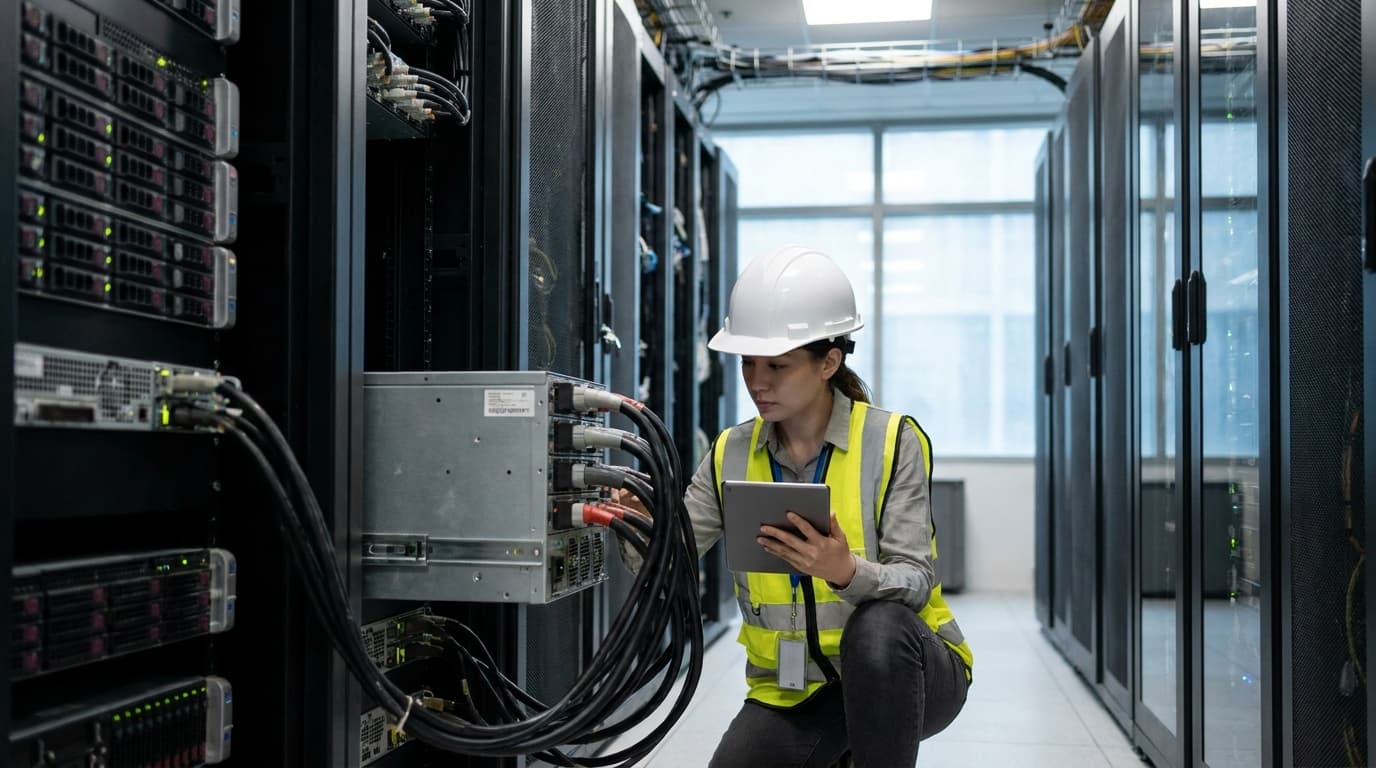
TL;DR: The century-old transformers powering our grid are a bottleneck for the AI boom. Researchers are now developing solid-state transformers, a smaller, more efficient technology that could help data centers meet their massive and growing energy demands.
Key facts
- Category
- Infrastructure
- Impact
- High
- Published
- Source
- MIT Technology Review
Full summary
The century-old transformers powering our grid are a bottleneck for AI. New solid-state transformers offer a smaller, smarter, more efficient solution.
The massive energy appetite of the AI industry is creating a critical bottleneck in an unexpected place: the power grid. According to a report from MIT Technology Review, the century-old design of traditional electrical transformers is struggling to keep up with the demands of modern data centers. These essential devices, which adjust voltage to move electricity efficiently, are in short supply and are not well-suited for the power needs of AI infrastructure. This supply-chain and technology gap is prompting researchers and companies to accelerate the development of a new solution: solid-state transformers (SSTs), which could fundamentally change how data centers are powered.
Unlike traditional transformers that rely on heavy copper coils and magnetic fields to passively change AC voltage, solid-state transformers operate on entirely different principles. SSTs use advanced power electronics, specifically semiconductors like silicon carbide, to actively manage electricity. The process typically involves converting incoming high-voltage AC power to DC, using a smaller, high-frequency transformer to change the voltage, and then converting it back to the precise AC or DC voltage needed by servers. This digital control allows SSTs to be significantly smaller, lighter, and more efficient. They can also provide cleaner, more stable power and can handle bidirectional energy flow, making them a much smarter and more flexible component for the grid.
This innovation is part of a much broader trend of modernizing global energy infrastructure. The traditional power grid was designed for a one-way flow of electricity from large power plants to consumers. Today, the grid must manage dynamic loads from data centers and electric vehicle charging, as well as intermittent supply from renewable sources like solar and wind. SSTs are a key enabling technology for a more intelligent, responsive, and decentralized “smart grid.” Their ability to precisely control power quality and flow makes them ideal for integrating renewables and managing the complex power demands of facilities like AI data centers, which require immense amounts of stable, reliable electricity around the clock.
For founders, CTOs, and IT leaders planning the next generation of infrastructure, solid-state transformers are a technology to watch closely. While still more expensive than their traditional counterparts, their costs are expected to fall as semiconductor technology improves and manufacturing scales up. In the near term, companies building new data centers or retrofitting existing ones should factor the limitations of the current power grid into their strategic planning. Looking further ahead, SSTs could unlock new possibilities for data center design, allowing for greater power density in smaller footprints and more direct integration with on-site renewable energy sources. The evolution of this technology may soon become a critical factor in determining who can build and scale AI capabilities most effectively.
Why it matters
For CTOs and infrastructure leaders, the physical limits of the power grid are a real barrier to scaling AI. Solid-state transformers represent a fundamental shift in power electronics that could directly enable higher-density data centers and prevent energy supply from becoming the primary bottleneck for computational growth.
Business impact
The high energy consumption of AI is a major operational cost and a strategic risk for companies. Adopting more efficient power infrastructure like solid-state transformers could lower long-term energy bills, improve reliability, and provide a competitive advantage by enabling faster and larger-scale AI deployments.
Tags
Related on Notifire
Related stories
Primary source: MIT Technology Review