An 'Evil Valet' Can Hack Your Honda Civic
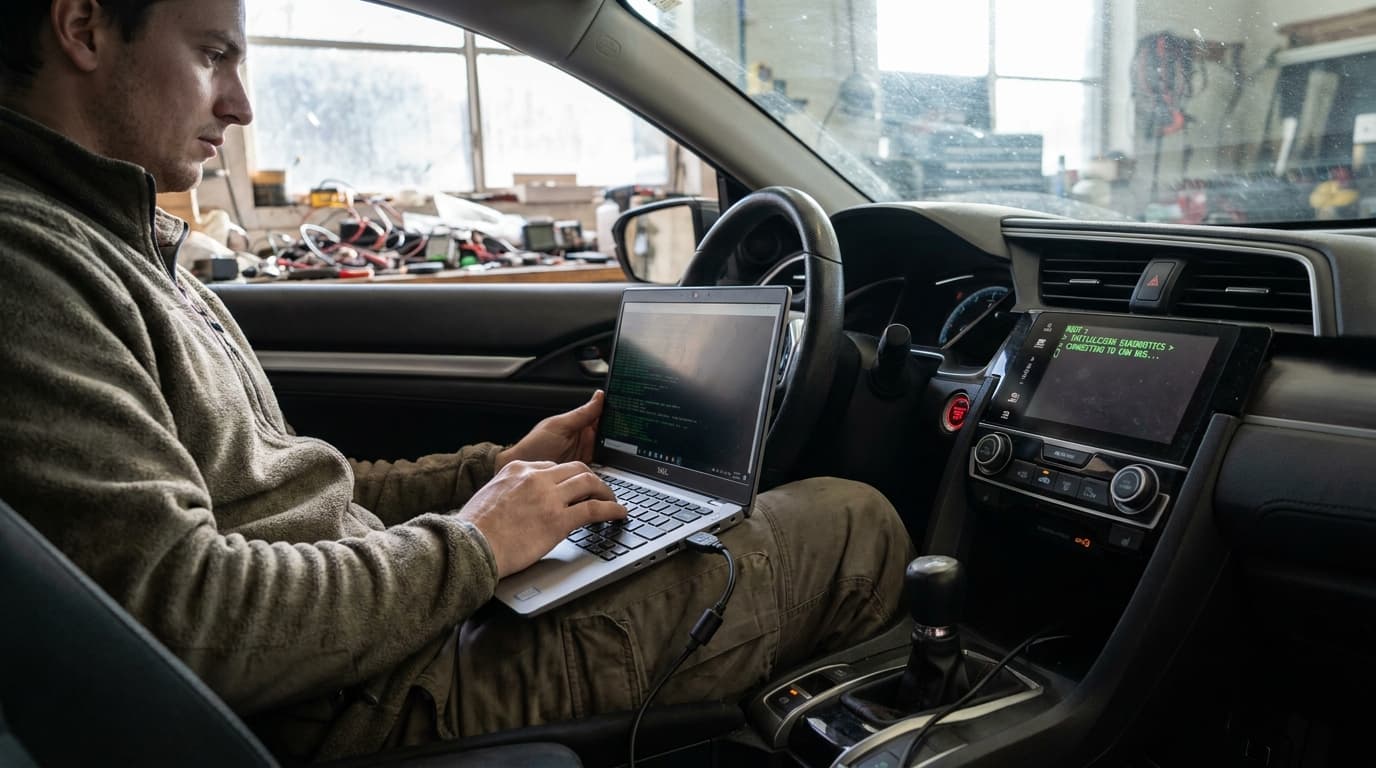
TL;DR: A security researcher found a major vulnerability in Honda Civics. An attacker with temporary physical access, like a valet, can gain control of the car's infotainment system, potentially accessing user data and vehicle functions.
Key facts
- Category
- Cybersecurity
- Impact
- High
- Published
- Source
- Hacker News
Full summary
A new vulnerability allows an attacker with brief physical access to hack the infotainment system of a modern Honda Civic.
A security researcher has uncovered a significant vulnerability in the infotainment system of modern Honda Civics. By reverse-engineering the system's software, they found a method to execute arbitrary code, effectively taking control of the unit. The attack requires brief physical access to the vehicle's USB port, a scenario dubbed the "Evil Valet" attack. This means anyone with temporary access to the car, such as a valet, mechanic, or even a car wash attendant, could potentially install malicious software. The exploit leverages the way the system handles USB devices, allowing an attacker to bypass security checks and gain deep access.
This discovery is a critical reminder for developers, CTOs, and security teams about the risks of physical access vectors in connected devices. While remote attacks often get more attention, an insecure physical port can be an equally dangerous entry point. For the automotive industry, it highlights the need for robust security measures that go beyond network firewalls, including secure boot processes and hardware port authentication. A compromised infotainment system could potentially lead to the theft of personal data synced from a user's phone or, in a worst-case scenario, serve as a pivot point to access more critical vehicle control systems.
The "Evil Valet" scenario is not just a theoretical threat; it represents a growing class of vulnerabilities as vehicles become more complex. This incident underscores the importance of independent security research in identifying flaws that may be overlooked during internal development. For business leaders, it's a case study in the reputational and liability risks of insecure Internet of Things (IoT) products. As consumers become more aware of digital security, the safety and privacy of in-car technology will increasingly become a key factor in their purchasing decisions, making robust cybersecurity a competitive advantage.
Why it matters
This is a real-world example of an IoT exploit in a popular consumer product with a physical attack vector. It highlights the often-overlooked threat of physical port security and serves as a crucial lesson for anyone building or managing connected hardware.
Business impact
The vulnerability exposes potential reputational and liability risks for automotive manufacturers. It demonstrates that insecure in-car technology can erode consumer trust and highlights the need for comprehensive security audits that include physical access scenarios, which can impact brand loyalty and future sales.
Tags
Related on Notifire
Related stories
Primary source: Hacker News