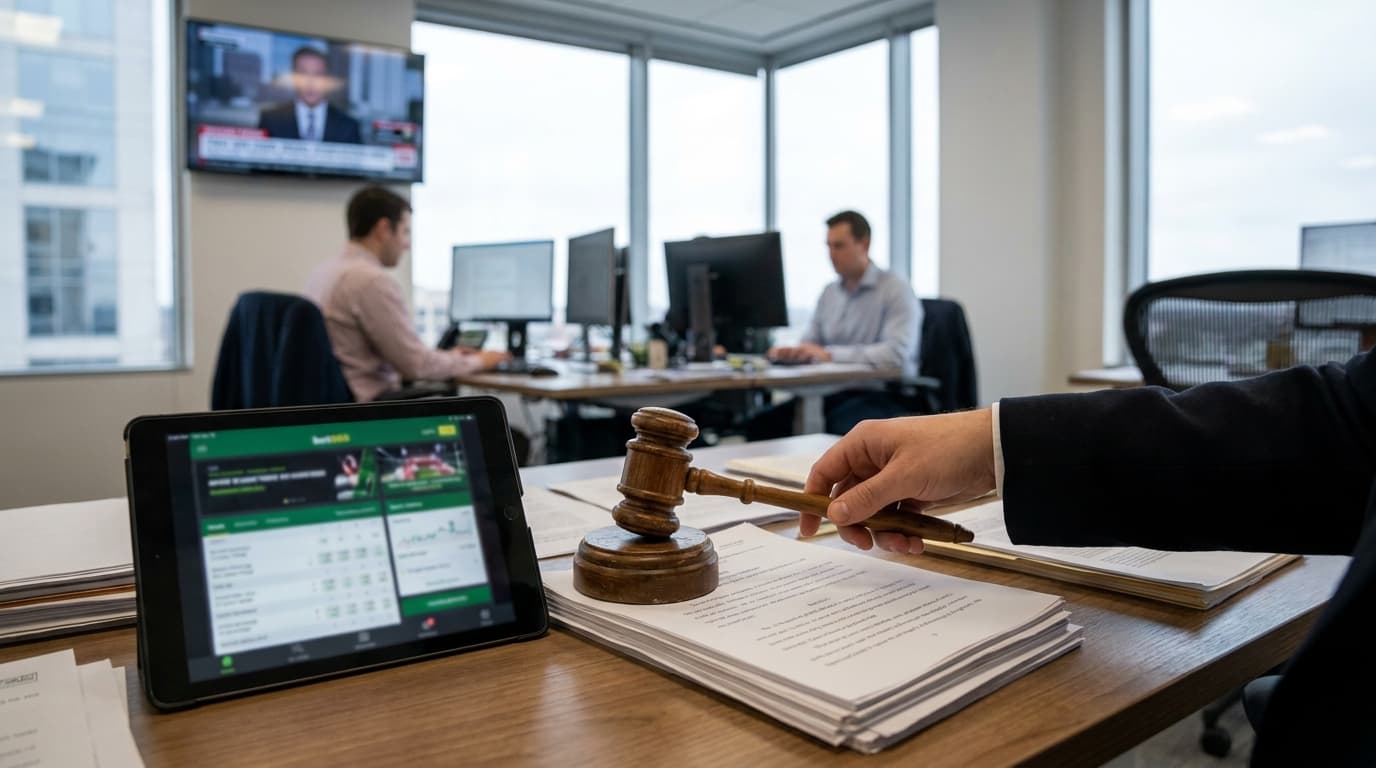
States Can Treat Your Fintech App Like a Casino
A federal court ruled states can regulate the prediction market Kalshi under their gambling laws. This creates a complex and costly legal patchwork for fintech platforms trying to operate nationwide.
27 verified briefings on Fintech. Each story includes a plain-English summary, why it matters, and the concrete action engineering teams should take.

A federal court ruled states can regulate the prediction market Kalshi under their gambling laws. This creates a complex and costly legal patchwork for fintech platforms trying to operate nationwide.

Revolut is introducing a new point-of-sale device in the UK that lets customers pay using facial recognition. The system aims to offer a faster, more secure checkout experience without needing a card or phone.

Fantasy sports company Underdog is suing Connecticut after the state ordered it and others, including Coinbase, to stop operating. The lawsuit escalates a fight over who can regulate prediction markets, with major implications for the emerging product category.

US regulators clarified that developers of trading software don't need a broker license if they don't handle user funds. This new guidance creates a safe harbor, reducing legal uncertainty for FinTech and crypto innovation.

A new fintech, Skalar, offers startups cash to acquire customers without taking equity or requiring fixed repayments. The model provides an alternative to traditional venture debt, tying repayment directly to the revenue those new customers generate.

Texas lawmakers are debating whether to regulate prediction markets like Kalshi as financial exchanges or as gambling. This decision will set a major precedent for how new fintech platforms are treated across the U.S.

A federal court ruled that sports prediction markets are not financial products. This decision allows states like Nevada to apply their own gaming laws, creating a major regulatory hurdle for platforms like Kalshi and Crypto.com.

Florida is suing major sweepstakes gaming companies like Stake US and Chumba Casino, calling them illegal online casinos. This signals a growing regulatory crackdown on business models operating in legal gray areas, a major risk for fintech and iGaming.

A federal agency used emergency powers to stop New York from shutting down prediction market Kalshi. The move signals a major clash over who regulates new financial tech, creating uncertainty for fintech founders and operators.

The IMF and Bank of England have raised concerns about AI's risks to the financial system. This is pressuring institutions to establish clear governance and accountability for how AI is used in critical decisions.

A key group of state lawmakers wants to keep control over gambling policy as prediction markets grow. This sets up a potential regulatory battle that could create a patchwork of rules for tech companies operating in the space.

A Nevada court has paused a legal battle with prediction market Kalshi. The focus is now on a court-supervised rollout of geofencing technology, highlighting how technical compliance is becoming central to legal disputes in regulated industries.

The EU is advancing its plan for a digital euro, aiming for a 2029 launch. The new currency is designed to reduce Europe's reliance on US payment giants like Visa and Mastercard, reshaping the continent's payment landscape.
Meta has appointed fintech founder Kunal Shah as the new head of WhatsApp, replacing Will Cathcart. The move signals a major strategic shift for the messaging app, focusing on payments and commerce for its global user base.

US regulators are increasing scrutiny on prediction markets. The CFTC is targeting Polymarket's U.S. operations, while Underdog has submitted its first filings, signaling a changing legal landscape for the industry.

OpenAI and Visa are partnering to let AI agents make online purchases. This allows AI to autonomously handle e-commerce transactions, creating new opportunities and significant security challenges.

Replit is introducing a financial stack to help developers monetize apps built on its platform. The new tools, including a Shopify integration, aim to simplify turning a coding project into a revenue-generating business.

Spain's gambling regulator has ordered internet service providers to block access to prediction market platforms Polymarket and Kalshi. The move comes because the platforms lack the necessary gambling licenses to operate in the country, highlighting growing regulatory challenges for web3 and fintech services in Europe.

The UK government is replacing Stripe as its payment processor for Gov.uk services. The move to a Dutch competitor highlights the intense competition and evolving priorities for large-scale public sector payment systems.

A new report shows 68% of financial services firms are getting a positive return on their generative AI investments. This signals a major shift from experimental projects to AI systems that deliver measurable business value.

The US commodities regulator has proposed new rules to define the line between legal prediction markets and illegal gambling. This could significantly change how fintech and web3 companies operate, impacting product design and compliance.

New Mexico is suing prediction market Kalshi, claiming it's an unlicensed online sports betting platform. The case highlights growing legal risks for fintech startups that blur the line between financial products and gambling.

A bipartisan bill, the Gambling Disorder Health Study Act, has been introduced in the US. It calls for a federal study into gambling addiction as online betting expands. The study's findings could lead to new regulations impacting gaming, fintech, and ad-tech companies operating in the space.

Illinois has passed a budget bill that introduces the first state tax specifically targeting sports prediction markets. This move sets a new regulatory precedent for the fintech and online wagering industries, signaling a new type of financial and compliance risk for platform operators.

Financing platform Capchase has secured $200 million in a new funding round, combining $26 million in equity and a $174 million credit facility. The company provides flexible payment solutions for B2B sales, targeting software, hardware, and cybersecurity vendors to help them accelerate their sales cycles.

The US Commodity Futures Trading Commission (CFTC) is intensifying its surveillance of prediction markets. The agency is using AI, blockchain tracing, and other advanced tools to detect and prevent insider trading and market manipulation, including monitoring US traders accessing offshore platforms through VPNs.

Neobank Monzo has redesigned its data warehouse using a "data mesh" approach to support over 100 teams and 12,000 data models. This new system successfully reduced warehouse costs by approximately 40% and accelerated data delivery speeds by a significant 25%, improving overall efficiency.