EV Giants Team Up to Swap Batteries in Minutes
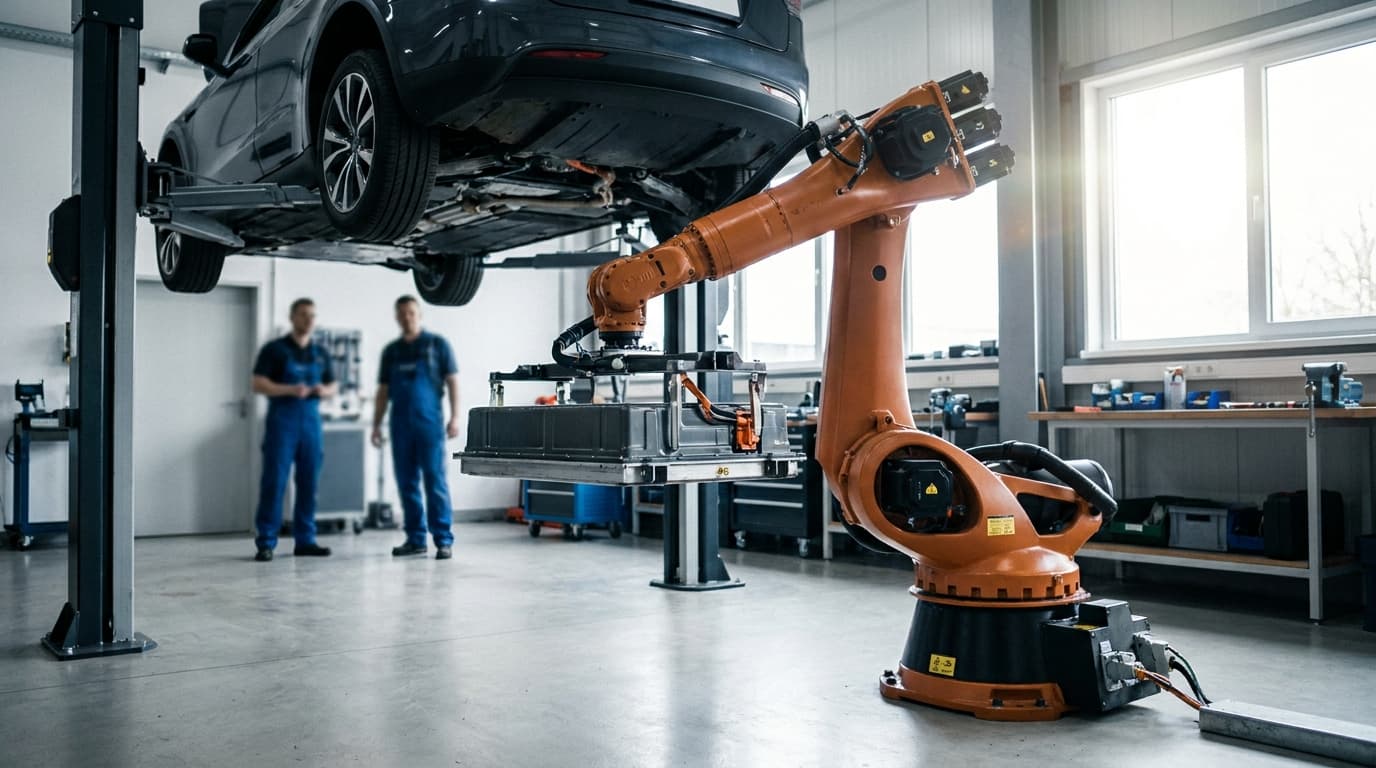
TL;DR: Chinese EV makers Nio and Geely are partnering to build a shared network of battery swapping stations. The collaboration aims to standardize the technology, offering a three-minute 'refill' that could solve the EV charging bottleneck.
Key facts
- Category
- Tech Updates
- Impact
- High
- Published
- Source
- TechRadar
Full summary
Two of China's largest EV makers, Nio and Geely, are partnering to build a shared network of automated battery swapping stations.
Two of China’s largest electric vehicle manufacturers, Nio and Geely, are joining forces to tackle one of the biggest hurdles to EV adoption: charging time. According to a report from TechRadar, the companies have signed a strategic partnership to jointly develop and operate a network of automated battery swapping stations. The core promise of this technology is to provide a refueling experience similar to a traditional gas station. Instead of plugging in and waiting for a battery to charge, a driver enters a station, and an automated system replaces their depleted battery pack with a fully charged one in a claimed three minutes. This collaboration between two major industry players signals a significant bet that swapping, not just faster charging, is a key to unlocking the mass market for electric vehicles.
At a technical level, battery swapping decouples the act of refueling from the time it takes to charge a battery. The process involves a highly automated, garage-like station where a vehicle is precisely positioned over a platform. Robotic arms and lifts then unscrew and remove the spent battery pack from the car's undercarriage and replace it with a fresh one from a climate-controlled storage rack. The removed battery is then placed on a charger within the station, ready for the next vehicle. The primary innovation in this partnership is not the swapping mechanism itself, which Nio has already deployed at scale, but the move toward standardization. By agreeing to a common standard for battery packs, connection interfaces, and station protocols, Nio and Geely can create an interoperable network, dramatically increasing its utility and appeal for consumers.
The concept of EV battery swapping is not new, but this partnership marks a critical turning point. A decade ago, the startup Better Place famously attempted to build a similar network but failed due to a lack of automaker support and the high cost of building proprietary infrastructure. What has changed is the maturity of the EV market and the direct involvement of major manufacturers. Nio has already proven the model's viability with its own network in China, but a solo effort lacks the scale to become a universal standard. By partnering with Geely—a massive conglomerate that owns Volvo, Polestar, and Lotus—the alliance gains the critical mass needed to challenge the dominant plug-in charging model. This move creates a powerful counterweight to Tesla's Supercharger network, which recently became the de facto NACS standard in North America, and suggests the future of EV infrastructure may not be a one-size-fits-all solution.
For technology leaders and founders, this development validates battery swapping as a serious infrastructure play and opens new avenues for innovation. The success of this venture hinges on creating an open standard that other automakers can adopt, transforming the competitive landscape from proprietary networks to a shared utility. This creates opportunities beyond the stations themselves, including in logistics software for managing battery inventory across a network, advanced battery management systems (BMS) for tracking pack health, and the development of 'Battery-as-a-Service' (BaaS) business models. The key thing to watch is whether other major automakers, particularly in Europe and North America, join this alliance or form competing ones. The outcome will determine if the future of refueling is a single plug-in standard or a more diverse ecosystem where rapid swapping serves fleets, high-mileage drivers, and those without home charging access.
Why it matters
This partnership could establish a dominant standard for battery swapping technology and infrastructure. For engineers in mobility and energy, it signals a shift from focusing solely on faster charging to developing interoperable, modular battery systems and robotics for automation.
Business impact
This alliance creates a powerful bloc challenging Tesla's Supercharger network and the prevailing charging-focused model. It opens up new 'battery-as-a-service' revenue streams and forces other automakers to decide whether to join this standard or risk being left behind.
Tags
Related on Notifire
Related stories
Primary source: TechRadar