Microsoft Asks DARPA to Vet Its Quantum Computer
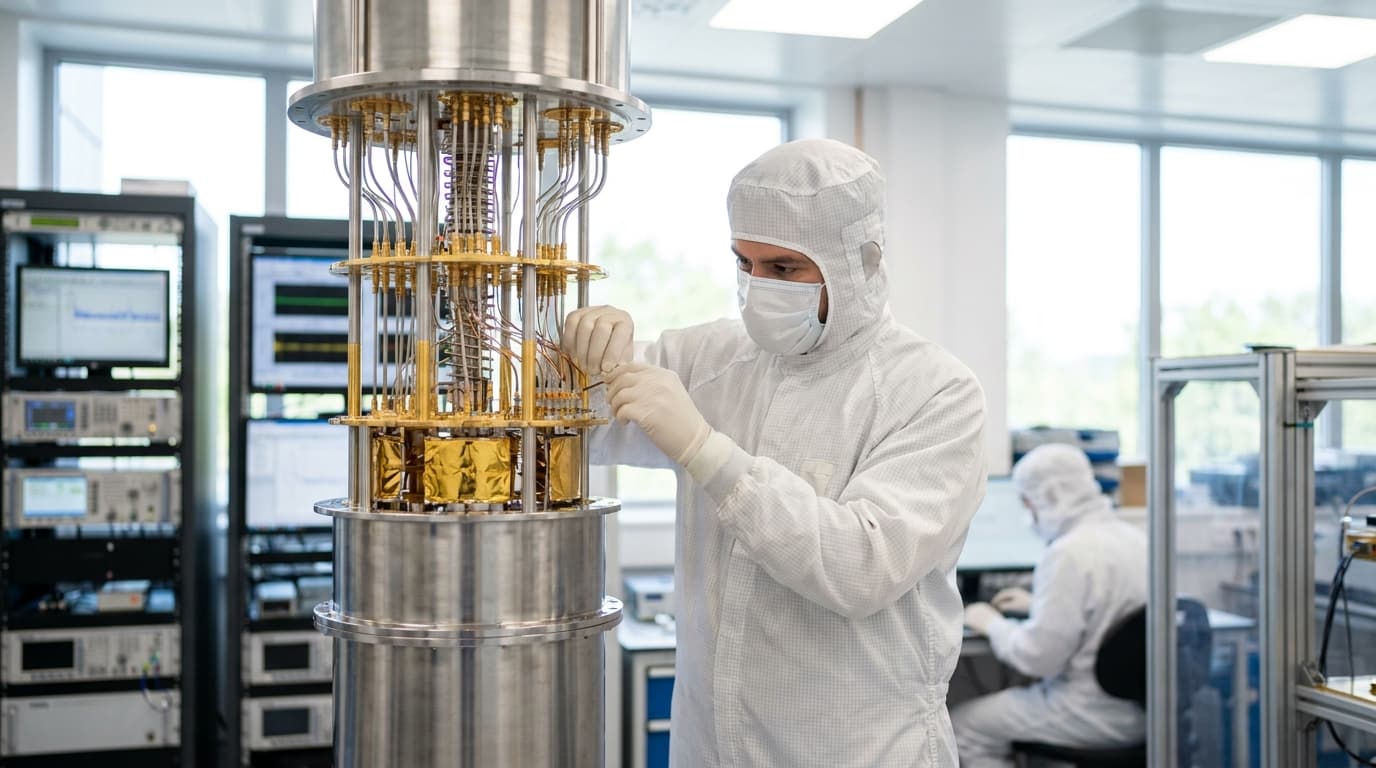
TL;DR: Microsoft is giving U.S. defense agency DARPA on-site access to test its unique quantum computing hardware. This move aims to independently validate its controversial approach to building a stable, error-resistant quantum computer, a major industry milestone if successful.
Key facts
- Category
- Tech Updates
- Impact
- High
- Published
- Source
- TechRadar
Full summary
Microsoft is letting U.S. defense agency DARPA independently test its controversial quantum computing hardware at a new dedicated research facility.
Microsoft has opened a new research center in Maryland and is giving DARPA, the U.S. military's advanced research agency, direct access to its quantum hardware, according to a report from TechRadar. This is a significant step, moving Microsoft's quantum efforts from internal R&D to external, independent scrutiny. The 15,000-square-foot lab, located at the University of Maryland, will house the hardware, allowing government researchers to test Microsoft's claims about its unique approach to quantum computing. This partnership marks a pivotal moment of transparency for a project that has been in development for over a decade. It puts Microsoft's ambitious quantum strategy to its most public test yet, with the goal of seeing if its technology can live up to its theoretical promise under the watchful eye of a highly respected government body known for vetting frontier technologies.
Microsoft's approach is fundamentally different from competitors like Google or IBM. Instead of using standard qubits, which are notoriously prone to errors from environmental "noise" like heat or vibration, Microsoft is pursuing "topological qubits." In theory, these qubits are inherently more stable because the information they store is protected by the physical properties of their structure, not just by external error-correction methods. This design, based on elusive particles called Majorana zero modes, could leapfrog the difficult problem of quantum error correction that plagues other systems. However, creating and controlling these topological qubits has proven exceptionally difficult, and the scientific community has been skeptical of Microsoft's progress. By inviting DARPA in, Microsoft is essentially saying it has made a breakthrough significant enough to withstand rigorous, independent testing and prove its "Majorana 2" hardware is a viable path forward.
The quantum computing industry is at a crossroads. While many companies have built machines with increasing numbers of qubits, the quality and stability of these qubits remain a major bottleneck. The dominant strategy has been to build "noisy" intermediate-scale quantum (NISQ) devices and then develop complex software algorithms to correct the inevitable errors. Microsoft's all-or-nothing bet on topological qubits represents a different philosophy: build a better, more stable qubit from the ground up, even if it takes much longer. This collaboration with DARPA is reminiscent of historical government-industry partnerships that accelerated technologies like the internet (ARPANET) and GPS. For the U.S. government, having a direct hand in validating a potentially game-changing quantum architecture has clear national security implications, as fault-tolerant quantum computers could one day break current encryption standards.
For CTOs, founders, and developers, this is a story to watch closely over the next year. The key outcome will be DARPA's findings. A public or semi-public validation from the agency would be a massive endorsement, signaling that Microsoft's high-risk strategy is paying off and that a new, more robust type of quantum computing may be on the horizon. This could shift investment and research priorities across the industry. Conversely, a lack of positive results or silence from the agency could be interpreted as a major setback, reinforcing the dominance of more conventional qubit approaches. Businesses should monitor for any official reports or announcements from DARPA or Microsoft regarding the hardware's performance. The results will provide the clearest signal yet as to whether the long-theorized topological quantum computer is finally becoming a practical reality, with profound long-term implications for fields ranging from materials science and drug discovery to cryptography and artificial intelligence.
Why it matters
For engineers and CTOs, this is a critical test for topological qubits, a high-risk, high-reward path to fault-tolerant quantum computing. DARPA's independent validation could either legitimize Microsoft's decade-long investment or signal a major setback for this alternative quantum architecture.
Business impact
A positive DARPA review would significantly de-risk Microsoft's quantum strategy, boosting investor confidence and positioning it as a leader in a novel approach. For other companies, it could validate a new competitive path, potentially shifting R&D investments and altering the long-term quantum computing landscape.
Tags
Related on Notifire
Related stories
Primary source: TechRadar