NASA Awards Contracts for Moon Base
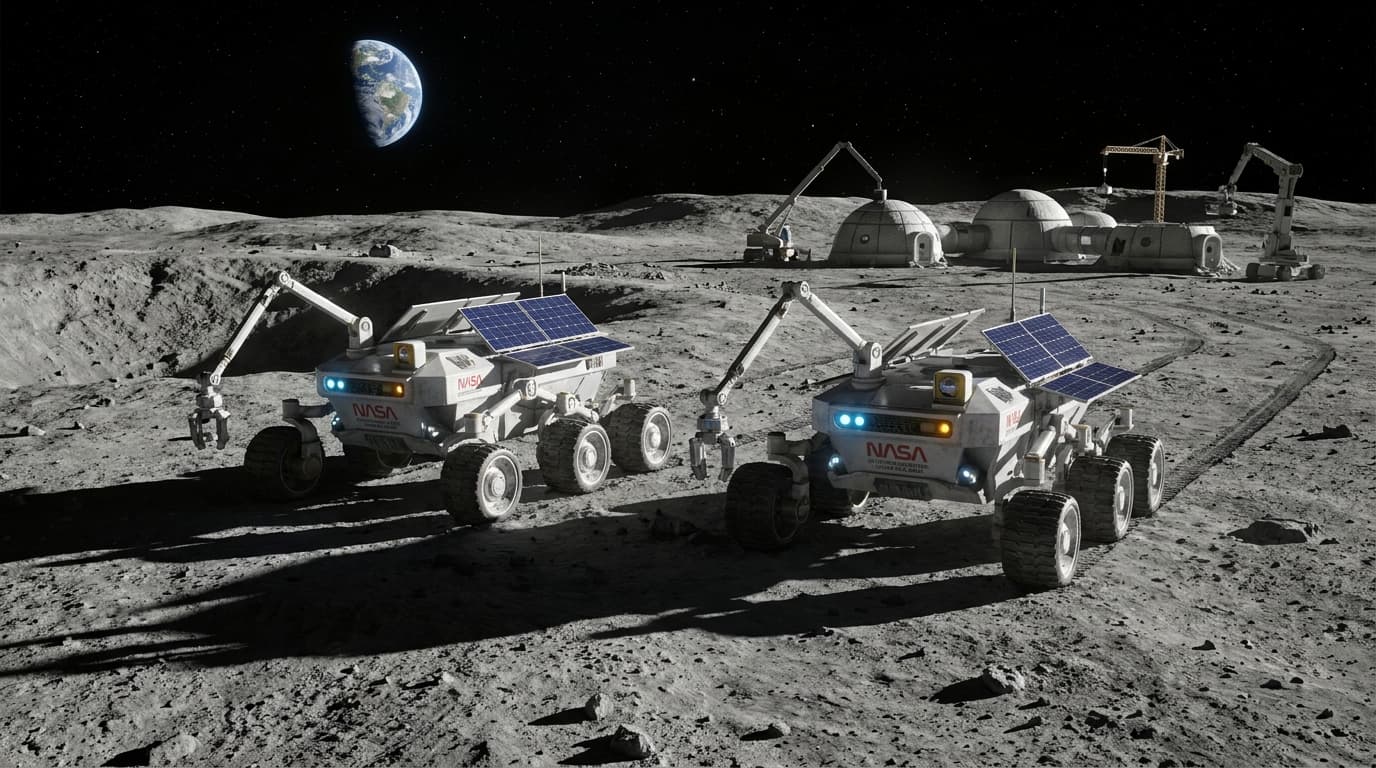
TL;DR: NASA has awarded contracts for the first components of a planned lunar base, a key step in its Artemis program. The initial awards cover two autonomous rovers designed to provide mobility for astronauts on the Moon's surface, signaling continued momentum for the ambitious long-term settlement initiative.
Key facts
- Category
- Tech Updates
- Impact
- Medium
- Published
- Source
- Ars Technica
Full summary
NASA has awarded contracts for the initial elements of a lunar base, including two autonomous rovers that will provide mobility for astronauts.
NASA has officially moved forward with its plans for a lunar base by awarding contracts for its initial components. The announcement detailed awards for two key rovers that will provide mobility for astronauts on the Moon. These vehicles are a foundational part of the infrastructure needed for a sustained human presence. According to NASA Administrator Jared Isaacman, these steps are intended to maintain momentum for the Moon Base initiative, which was first revealed two months ago as part of the agency's broader return-to-the-Moon strategy. The contracts represent a tangible commitment to establishing a permanent outpost beyond Earth.
This development is significant for the technology sector, particularly in robotics and autonomous systems. The rovers are not just transportation; they are complex machines designed to operate in an extreme environment. The engineering challenges involved in building and operating a lunar base will drive innovation in materials science, power generation, and remote operations. For developers and engineers, the Artemis program represents a long-term source of complex problems and potential contracts, pushing the boundaries of automation and resilient infrastructure.
These initial contracts are just the first phase of a much larger project. Future steps will involve developing habitats, power systems, and resource utilization technologies. The success of these early robotic and mobility systems will be critical for paving the way for more complex infrastructure and, eventually, a self-sustaining human presence on the Moon. The program's progress will be closely watched as a bellwether for the future of space exploration and off-world engineering.
Why it matters
The project will drive significant innovation in robotics, autonomous systems, and large-scale engineering, creating new technological challenges and opportunities for the tech industry.
Business impact
NASA's lunar base initiative opens up long-term opportunities for technology companies, especially those in robotics, materials science, and autonomous systems, through direct contracts and the development of new commercial applications.
Tags
Related on Notifire
Related stories
Primary source: Ars Technica