NASA overturns 100-year-old flight principle
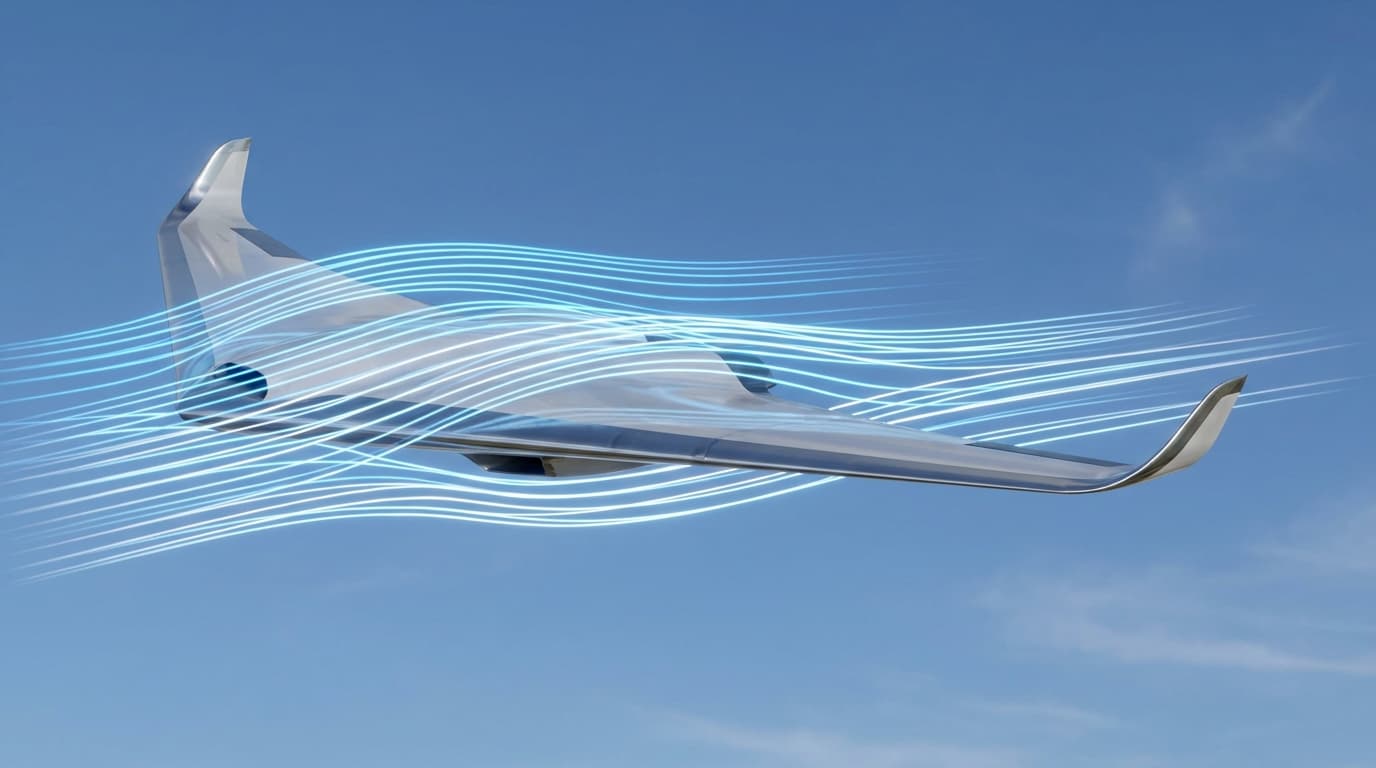
TL;DR: NASA researchers have overturned a century-old principle of aeronautical engineering. Their new wing design, featuring a bell-shaped lift distribution, is over 11% more efficient than the long-held elliptical ideal. This breakthrough could lead to more efficient aircraft by reducing drag and eliminating vertical tails.
Key facts
- Category
- Tech Updates
- Impact
- Low
- Published
- Source
- Hacker News
Full summary
NASA researchers have overturned a 100-year-old flight principle with a new, more efficient wing design that could reshape future aircraft.
A foundational principle in aeronautics, established nearly a century ago, has been overturned by NASA researchers. The long-held theory stated that an elliptical lift distribution across a wing was the most efficient design for minimizing drag, a concept that has guided aircraft design for decades. However, a team at NASA's Armstrong Flight Research Center has demonstrated a more effective approach. Their research shows that a non-elliptical, bell-shaped lift distribution can reduce drag by more than 11% compared to the theoretical ideal. The new design was validated through a series of subscale glider and drone test flights.
The key innovation lies in managing the aircraft's wake to achieve proverse yaw, where the aircraft naturally yaws into a turn, much like a bird. This superior efficiency could lead to significant changes in future aircraft. The new wing shape, with its twisted and swept-back form, also eliminates the need for a vertical tail. Removing the tail reduces both weight and drag, paving the way for lighter, more fuel-efficient planes. This fundamental shift could impact everything from commercial airliners to unmanned aerial vehicles (UAVs).
With the principle proven at a small scale, the team is now preparing to fly a full-scale experimental aircraft, the X-56B, to further validate the design. The success of this next phase could accelerate the adoption of this new aerodynamic philosophy across the aviation industry, potentially heralding a new era of highly efficient aircraft design.
Why it matters
This discovery challenges a foundational concept in a mature engineering field, demonstrating that even long-established principles can be improved upon. It opens the door for significant gains in aircraft efficiency, potentially leading to lower fuel consumption and new design possibilities for both manned and unmanned aircraft.
Business impact
The development of more fuel-efficient aircraft could significantly reduce operating costs for the aviation industry. Lighter, tail-less designs may also enable new applications for long-endurance drones and specialized aerial vehicles, creating new market opportunities and driving innovation in aerospace manufacturing.
Tags
Related on Notifire
Related stories
Primary source: Hacker News