NASA seeks bids for new Mars orbiter
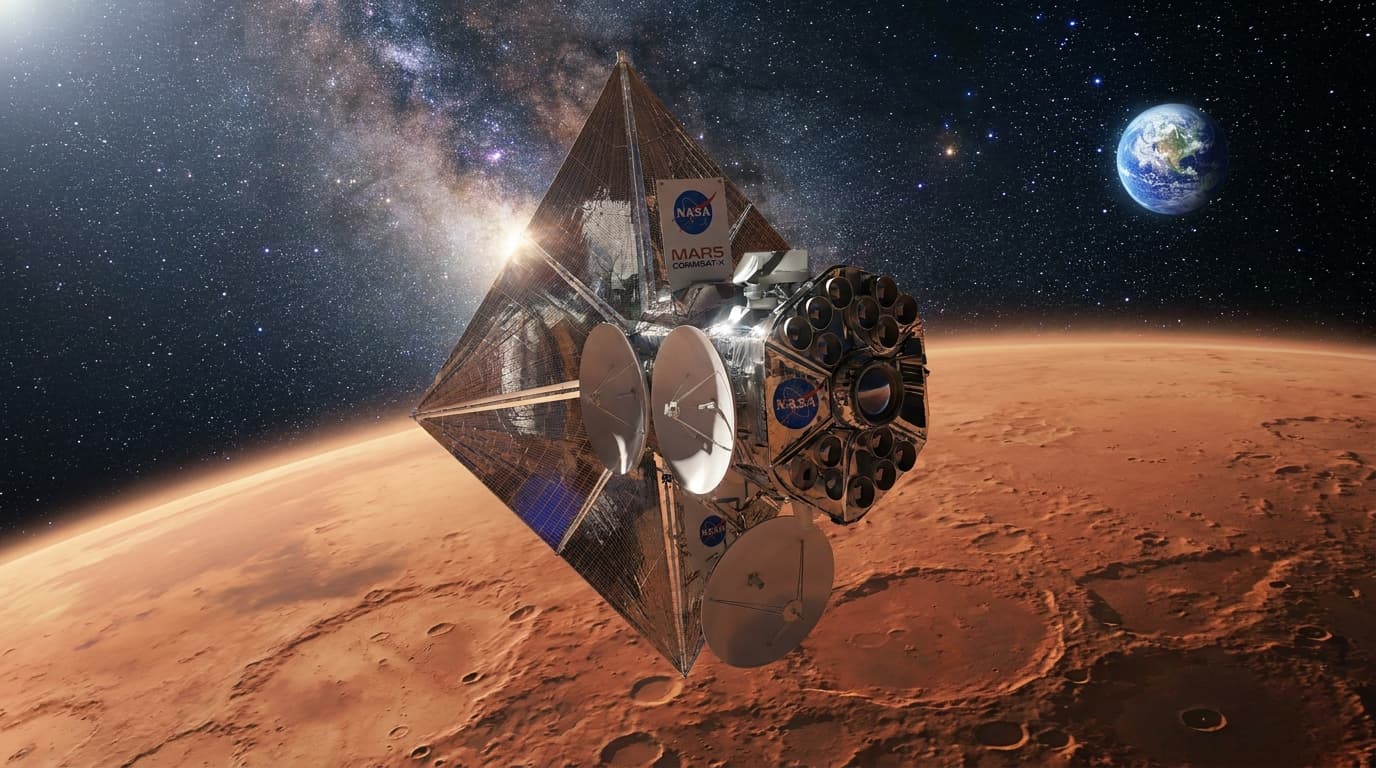
TL;DR: NASA has initiated a contract solicitation for a new Mars-orbiting spacecraft. The $700 million project, funded by Congress, aims to build a communications relay between Mars and Earth. The procurement is expected to be highly competitive and could influence the future of the Mars Sample Return mission.
Key facts
- Category
- Tech Updates
- Impact
- Low
- Published
- Source
- Ars Technica
Full summary
NASA has opened a $700 million contract for a new Mars-orbiting spacecraft to serve as a vital communications relay with Earth.
NASA has officially started the bidding process for a new Mars-orbiting spacecraft by releasing a contract solicitation. The project is backed by $700 million in funding already approved by Congress. The primary objective is to develop and launch a satellite that will act as a crucial communications relay, transmitting data between missions on the Martian surface and control centers on Earth. This procurement is expected to attract significant interest from major aerospace contractors, setting the stage for a highly competitive and closely watched selection process.
The significance of this contract extends far beyond a single communications satellite. A reliable, modern relay orbiter is essential infrastructure for any future robotic or human exploration of Mars. More immediately, this project is seen as a potential lifeline for the recently canceled Mars Sample Return (MSR) mission. The MSR program was shelved due to budget overruns and complexity, but a new communications vehicle could be the first step in resurrecting a revised version of the ambitious plan to bring Martian samples back to Earth.
The competition for this award will be intense, not just for the $700 million value but for the strategic position it offers in the future of interplanetary exploration. The outcome will likely influence the direction of U.S. space policy regarding Mars for years to come. Observers will be watching which companies submit proposals and how NASA structures the acquisition, as it could signal a new approach to managing large-scale space missions.
Tags
Related on Notifire
Related stories
Primary source: Ars Technica