NASA Wants Your Company to Save the Hubble
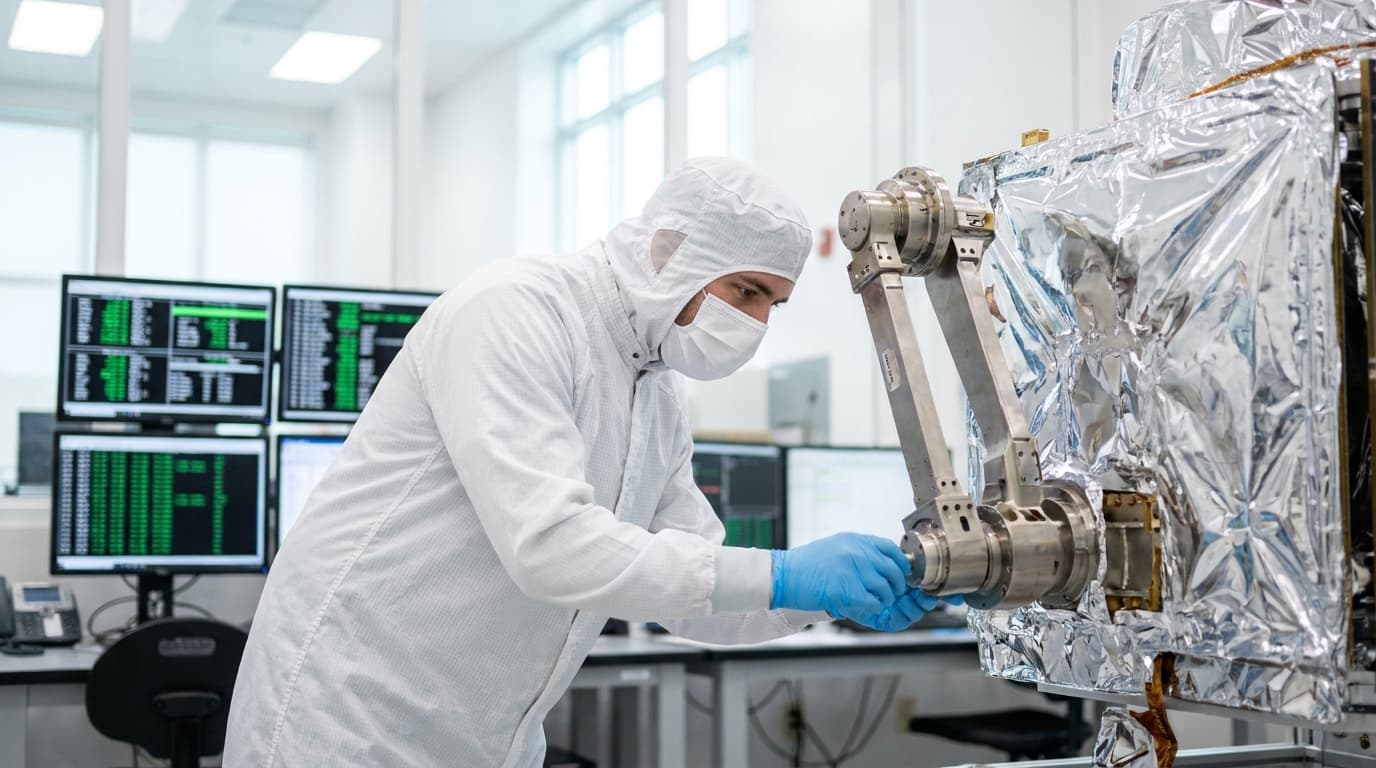
TL;DR: NASA is asking private space companies for ideas on how to boost the Hubble Space Telescope's orbit. The mission would extend the life of the iconic observatory and could create a new market for in-orbit servicing of satellites.
Key facts
- Category
- Tech Updates
- Impact
- High
- Published
- Source
- Ars Technica
Full summary
NASA is asking private companies for ideas to boost the Hubble Space Telescope's orbit, opening a new market for in-orbit servicing.
NASA is formally asking the commercial space industry for ideas on how to save the Hubble Space Telescope. According to reports from Ars Technica, the agency has released a Request for Information (RFI) to explore options for a robotic mission to boost the iconic observatory into a higher, more stable orbit. After 36 years in space, Hubble's orbit is slowly decaying due to atmospheric drag. Without intervention, it is projected to re-enter the atmosphere and be destroyed sometime in the mid-2030s. This RFI is not a contract offer but a market research effort to gauge the capabilities and potential solutions the private sector can provide for this high-stakes mission.
The technical challenge is significant. The last time Hubble's orbit was raised was in 2002 by astronauts on the Space Shuttle Columbia. With the shuttle fleet retired, any new mission must be entirely robotic. A commercial spacecraft would need to launch, autonomously rendezvous with Hubble, and then securely dock with or grapple the telescope. Once attached, the vehicle would use its own thrusters to gently push the multi-billion-dollar observatory into a higher orbit without causing any damage to its sensitive instruments. The RFI is intentionally broad, inviting a range of innovative solutions from simple propulsion "tugs" to more complex vehicles capable of performing other servicing tasks, demonstrating NASA's openness to new approaches from the industry.
This move is part of a well-established trend of NASA shifting from being an operator to a customer of the private space industry. This public-private partnership model has been highly successful for resupplying the International Space Station and launching astronauts, with companies like SpaceX and Northrop Grumman leading the way. The Hubble RFI signals NASA's intent to extend this model to a new frontier: in-orbit servicing, repair, and life extension of high-value assets. A successful Hubble mission would serve as a powerful proof-of-concept for an entire commercial market, demonstrating the viability of servicing satellites that were never designed to be touched after launch.
For founders, CTOs, and engineering leaders, this is a clear signal of a growing market opportunity beyond launch services. The future of space logistics involves sophisticated robotics, autonomous systems, and complex software for rendezvous and docking. Companies with expertise in these areas have a chance to compete for a historic, high-profile mission. The industry will be watching the responses to this RFI closely, as they will inform NASA's decision on whether to issue a formal, funded Request for Proposal. A successful partnership would not only extend the life of a critical scientific instrument but also solidify a company's position as a leader in the future of space operations.
Why it matters
This initiative validates in-orbit servicing as a viable market, moving it from concept to a concrete NASA-backed opportunity. For engineers and CTOs, it presents a high-profile challenge in autonomous robotics, orbital mechanics, and mission control, setting a precedent for future satellite life-extension projects.
Business impact
This creates a potential multi-million dollar contract and a landmark case study for the commercial space industry. A successful mission would establish a company as a leader in the emerging satellite servicing market, unlocking future revenue from government and private satellite operators.
Tags
Related on Notifire
Related stories
Primary source: Ars Technica