Pirelli Puts Bluetooth Sensors Inside Car Tires
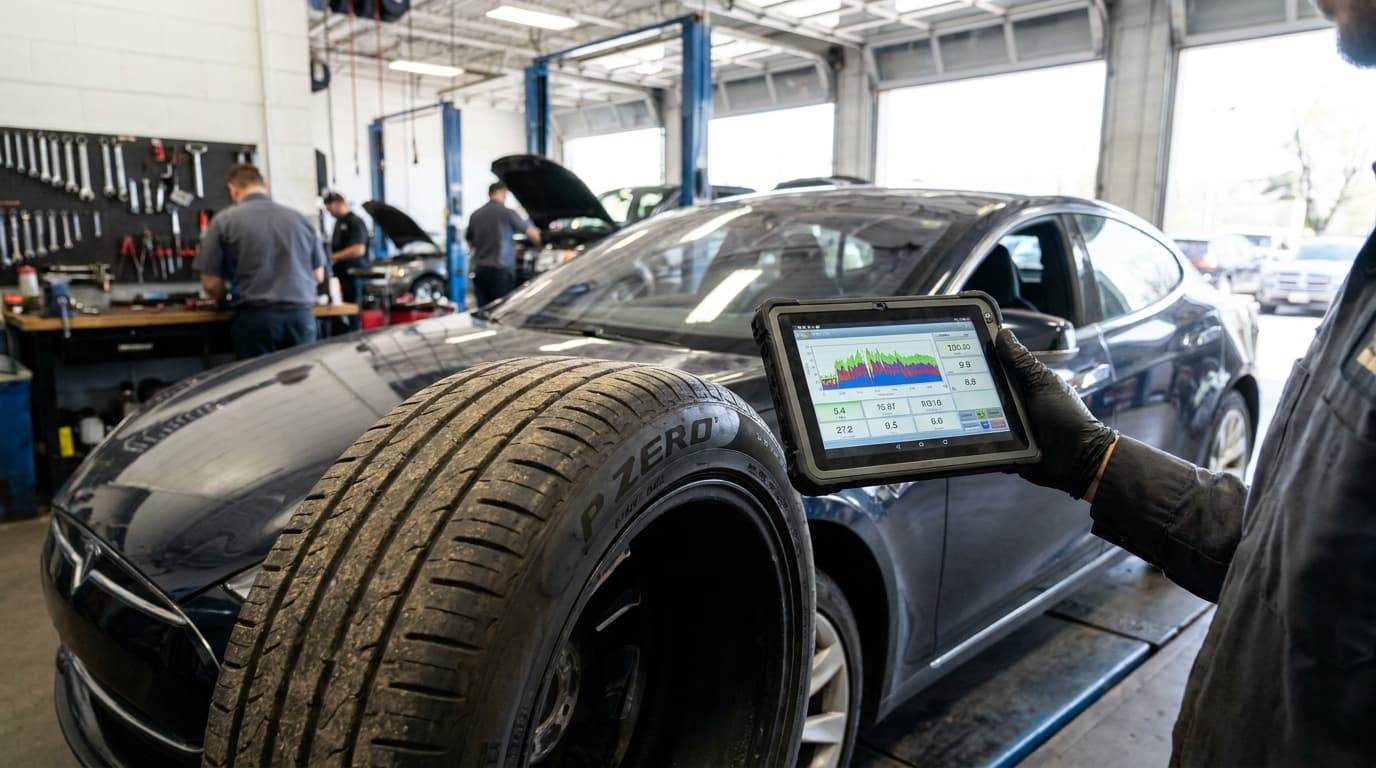
TL;DR: Pirelli is embedding sensors directly into its tires, creating a 'Cyber Tyre' that transmits real-time road and performance data over Bluetooth. This transforms a passive component into an active data source to improve driver assistance systems.
Key facts
- Category
- Tech Updates
- Impact
- High
- Published
- Source
- TechRadar
Full summary
Pirelli is embedding Bluetooth sensors directly into its tires to gather real-time data, improving driver assistance and vehicle performance.
Pirelli is making a significant push into automotive IoT with its "Cyber Tyre" technology, backed by a $1.2 billion investment. According to reporting from TechRadar, the company is embedding sensors directly into the structure of its tires. This innovation transforms the tire from a simple piece of rubber into an active data-gathering device. The goal is to provide vehicles with a much richer understanding of their immediate environment and performance characteristics. By transmitting this information wirelessly to the car's onboard systems, Pirelli aims to dramatically improve the effectiveness of modern driver assistance features and overall vehicle safety. This move signals a fundamental shift in how even the most traditional automotive components are being re-imagined as part of a connected digital ecosystem.
The core of the Cyber Tyre technology lies in its unique sensor placement and data transmission method. Unlike existing Tire Pressure Monitoring Systems (TPMS), which are typically located on the valve stem, Pirelli's sensors are integrated directly into the tire's internal structure during manufacturing. This strategic placement allows them to capture a wealth of previously inaccessible data points in real time. The sensors can measure not only pressure and temperature but also the dynamic load on the tire, the shape and size of the contact patch with the road, and even infer the condition of the road surface, such as detecting water or ice. This granular data is then transmitted via a low-energy Bluetooth connection to the vehicle's electronic control unit (ECU), providing the car's central computer with a constant, high-fidelity stream of information about the single most critical point of contact between the vehicle and the road.
This development is part of a much larger industry trend where every part of the automobile is becoming a smart, connected component. For decades, the focus of automotive innovation was on the engine and powertrain, but now the entire vehicle is being treated as an integrated technology platform. Pirelli's move is a prime example of a supplier transforming a traditionally "dumb" and passive component into an intelligent, data-generating asset. It mirrors the evolution of other systems like suspension, which went from simple springs to adaptive, electronically controlled units. By creating a proprietary data stream, Pirelli is not just selling a physical product but also a valuable information service. This positions the company as a key player in the data ecosystem for Advanced Driver-Assistance Systems (ADAS) and the future of autonomous driving, where precise knowledge of tire grip and road conditions is paramount for safe operation.
The practical implications for technology and business leaders are substantial. For developers working on ADAS and vehicle control systems, the Cyber Tyre opens up a new, highly valuable data source that can be used to refine algorithms for traction control, stability management, and braking. CTOs and data architects must now plan for the integration and management of this new, continuous data stream. However, the introduction of a wireless link from a critical safety component also creates a new attack surface. Security teams must scrutinize the Bluetooth implementation to prevent potential vulnerabilities that could allow malicious actors to spoof data or interfere with the system. Looking ahead, the key things to watch will be the rate of adoption by major automakers, the response from competing tire manufacturers, and the potential emergence of industry standards for tire data communication to ensure interoperability.
Why it matters
This transforms the tire from a passive mechanical part into an active IoT endpoint. For developers working on ADAS and V2X systems, this provides a new, high-fidelity data stream for vehicle dynamics, but also introduces a new wireless component that must be secured and integrated.
Business impact
Pirelli's investment signals a shift in the automotive supply chain, turning a commodity part into a high-value data source. For automakers, this offers performance gains but introduces new security risks and data management costs, forcing competitors to develop their own smart tire strategies.
Tags
Related on Notifire
Related stories
Primary source: TechRadar