This Vest Could Make Deep Space Travel Safer
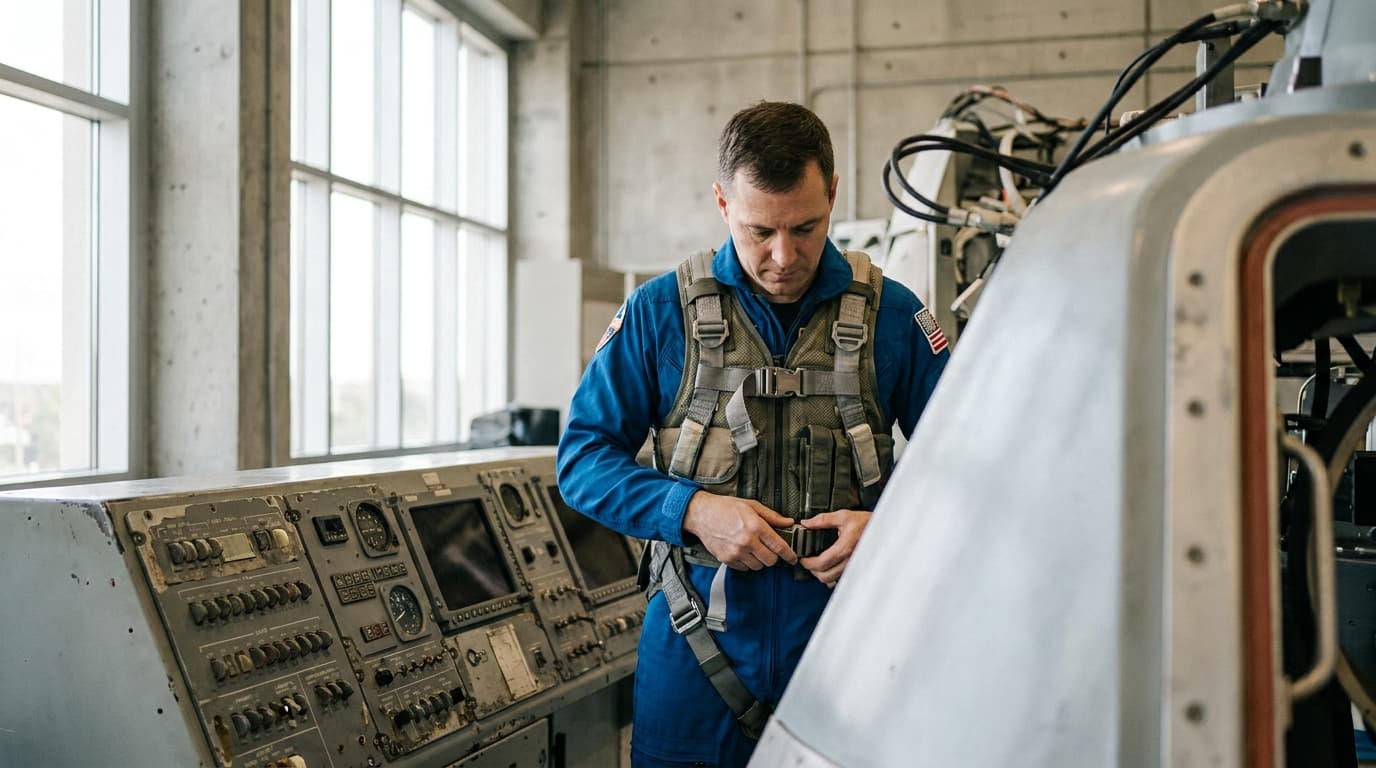
TL;DR: A new radiation-blocking vest successfully passed a test flight around the Moon. This breakthrough is a crucial step in protecting astronauts from dangerous solar radiation on future missions to Mars and beyond, making deep space travel safer.
Key facts
- Category
- Tech Updates
- Impact
- Low
- Published
- Source
- Ars Technica
Full summary
A new radiation-blocking vest has passed a critical test flight around the Moon, paving the way for safer deep space travel.
A specialized radiation-blocking vest has successfully completed a test flight to the Moon and back, according to reporting from Ars Technica. The test was part of a mission to validate technologies critical for future human exploration of deep space. The primary threat this vest addresses is solar storms, which can erupt from the Sun without warning and release intense bursts of high-energy protons. Unlike on Earth, where the atmosphere and magnetic field provide protection, astronauts traveling to the Moon or Mars are completely exposed. A powerful solar storm, like the one that occurred between the Apollo 16 and 17 missions in 1972, could deliver a dose of radiation high enough to cause acute sickness or significantly increase an astronaut's lifetime cancer risk. This successful test marks a major milestone in developing practical safeguards against one of the most persistent dangers of space travel.
The core engineering challenge is that comprehensive radiation shielding is incredibly heavy. Building a spacecraft with walls thick enough to block severe solar particle events would make it prohibitively expensive, and perhaps even impossible, to launch with current rocket technology. The vest represents a more targeted and efficient solution. Instead of shielding the entire vehicle, it focuses protection on the astronaut's most vulnerable and critical areas, such as vital organs and bone marrow. This approach provides a substantial degree of protection where it matters most, without adding excessive mass to the overall mission. By concentrating the shielding material into a wearable garment, engineers can provide meaningful protection that can be used during a solar storm, allowing for a much lighter and more flexible spacecraft design. It’s a practical solution to a problem that has long constrained the ambitions of mission planners.
This development is significant because it directly addresses a fundamental barrier to long-duration human spaceflight. For decades, the risk of radiation exposure has been a major limiting factor for missions beyond low-Earth orbit. Without a reliable way to protect crews, a multi-month journey to Mars would expose astronauts to radiation levels far exceeding established safety limits. This technology could be the key to unlocking these future missions, moving them from the drawing board to reality. For the astronauts and space agencies like NASA, it represents a potential lifeline, a tool that could mitigate one of the most serious health risks they face. It transforms a high-stakes gamble with astronaut health into a manageable and calculated risk, making the prospect of a sustained human presence on the Moon and the first steps on Mars far more achievable.
The business implications extend across the rapidly growing commercial space industry. As companies like SpaceX, Blue Origin, and others develop their own plans for lunar bases and Martian colonies, they face the same fundamental safety challenges as government agencies. A flight-proven radiation protection system is not just a scientific curiosity; it is an essential piece of enabling technology with a clear commercial market. This vest, or technologies like it, could become a standard, mandatory piece of safety equipment for any commercial deep space flight. This creates a new, high-value market for companies specializing in advanced materials and aerospace safety hardware. For founders and investors in the space sector, this is a powerful reminder that solving the most basic safety and logistics problems often yields the most critical and commercially viable innovations, de-risking the entire industry and paving the way for further investment and growth.
Following this successful uncrewed test, the next step will be to analyze the data collected by sensors on the vest to precisely measure its effectiveness. This will inform any necessary design refinements before it is tested further, potentially on the International Space Station or on upcoming crewed Artemis missions around the Moon. The ultimate goal is to certify the technology for the long-duration flights required to reach Mars, which are anticipated in the 2030s. The success of this targeted shielding approach also opens the door for developing similar solutions for other applications, such as localized shielding within lunar habitats or Martian rovers. It represents a crucial advancement in the broader effort to learn how to live and work safely beyond the protective bubble of Earth, a necessary step for humanity's future in space.
Why it matters
This technology is a critical enabler for long-duration human spaceflight, directly addressing one of the biggest health risks for astronauts on missions to the Moon and Mars. It moves deep space exploration from theoretical to practical.
Business impact
A proven radiation shield creates a new market for specialized safety equipment within the growing commercial space industry. For companies like SpaceX and Blue Origin, this technology de-risks multi-billion dollar plans for lunar and Martian missions.
Tags
Related on Notifire
Related stories
Primary source: Ars Technica