Self-Driving Cars Need More Than Just Cameras
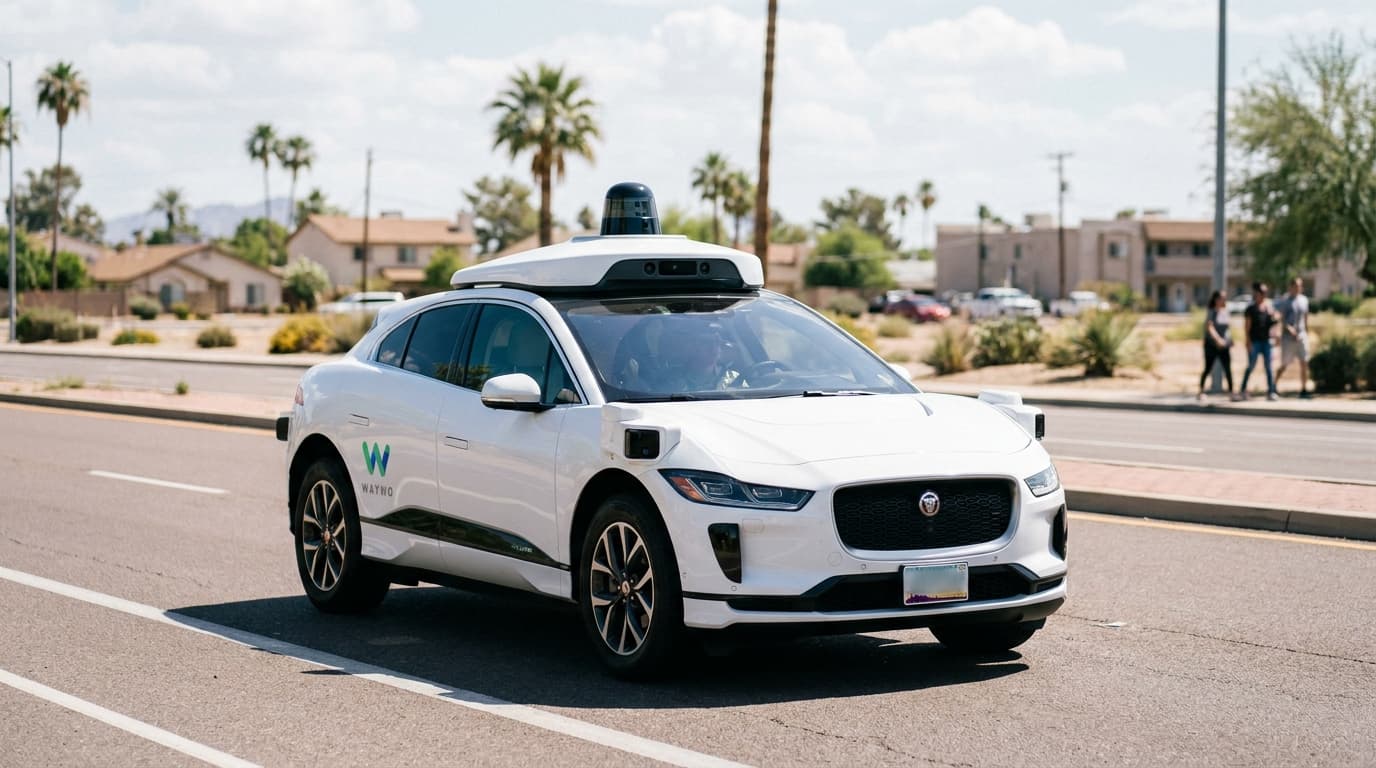
TL;DR: Waymo's co-CEO argues camera-only systems can't achieve full self-driving, only matching human drivers at best. This directly challenges Tesla's approach, stating that Lidar and radar are non-negotiable for safe, fully autonomous vehicles.
Key facts
- Category
- Tech Updates
- Impact
- High
- Published
- Source
- TechRadar
Full summary
Waymo's co-CEO says camera-only systems are not enough for full autonomy, directly challenging the approach used by competitors like Tesla.
Waymo co-CEO Dmitri Dolgov has publicly stated that self-driving systems relying only on cameras cannot achieve full autonomy. According to a report from TechRadar, Dolgov argued that such systems can, at best, “approximately match” the capabilities of a human driver. He suggests this level of performance is insufficient for a safe and scalable robotaxi service. While Dolgov did not mention any competitors by name, his comments are widely seen as a direct challenge to Tesla, the most prominent advocate for a camera-only approach to autonomous driving. This statement from a leader at one of the world's foremost autonomous vehicle companies frames the central technological debate in the industry: whether vision alone is enough to safely navigate the complexities of the real world.
At the heart of this debate are two fundamentally different philosophies on vehicle perception. Waymo champions a multi-sensor fusion approach, integrating data from cameras, radar, and Lidar. Lidar (Light Detection and Ranging) uses pulsed lasers to create a highly accurate, three-dimensional map of the surrounding environment, making it exceptionally good at measuring distances and identifying the shape of objects regardless of lighting conditions. Radar excels at detecting the speed of other objects and performs reliably in adverse weather like rain or fog. Cameras provide rich color and texture information, crucial for tasks like reading traffic signs and identifying lane markings. Waymo argues that by fusing these different data streams, its system builds a redundant and far more robust understanding of the world. In contrast, Tesla’s vision-only strategy bets that advanced AI and neural networks can learn to infer all necessary information, including depth and velocity, from camera feeds alone, much like a human driver uses their eyes. This approach significantly reduces hardware costs and complexity by eliminating expensive Lidar sensors.
For CTOs, founders, and developers, this is more than just a corporate rivalry; it represents a foundational disagreement on the architecture of safety-critical AI systems. Dolgov’s stance reinforces the engineering principle of redundancy. Relying on a single sensor modality, even a sophisticated one like computer vision, creates a potential single point of failure. A camera can be blinded by sun glare, confused by shadows, or hampered by heavy rain in ways that radar and Lidar are not. For teams building autonomous systems, the choice of sensor stack dictates everything from data processing pipelines and hardware costs to the complexity of the software needed to handle edge cases. Waymo's position suggests that for applications where human lives are at stake, the added cost and complexity of a multi-sensor system is a necessary investment for achieving the required level of safety and reliability.
The business implications of this debate are significant. Waymo is strategically positioning its technology as the more responsible and robust solution, aiming to influence regulators, partners, and public opinion. By framing the conversation around the limitations of cameras, Waymo hopes to cast doubt on the viability of its chief competitor's approach and build a moat around its own technology. This highlights the different market strategies at play: Waymo is developing a fleet-based robotaxi service where the high cost of each vehicle's sensor suite can be amortized over its operational lifetime. Tesla, on the other hand, sells cars directly to consumers, making the per-unit cost of hardware a much more sensitive factor. Dolgov's comments serve to pressure competitors to prove their systems are safe, not just affordable.
Ultimately, this technological debate will be settled by real-world data, performance metrics, and regulatory approvals. The industry will be closely watching key indicators like disengagement rates, accident statistics, and operational capabilities in challenging environments for both approaches. Another critical factor is the falling cost of Lidar technology. As Lidar sensors become cheaper and more compact, the primary economic argument for a camera-only system weakens. If Waymo's multi-sensor vehicles can demonstrate a statistically significant safety and performance advantage, it could force a strategic shift across the industry. Conversely, a major breakthrough in Tesla's computer vision capabilities could prove that a software-centric approach is indeed viable, potentially reshaping the future of autonomous mobility.
Tags
Related on Notifire
Related stories
Primary source: TechRadar