A Local Revolt Threatens Big Tech's Data Centers
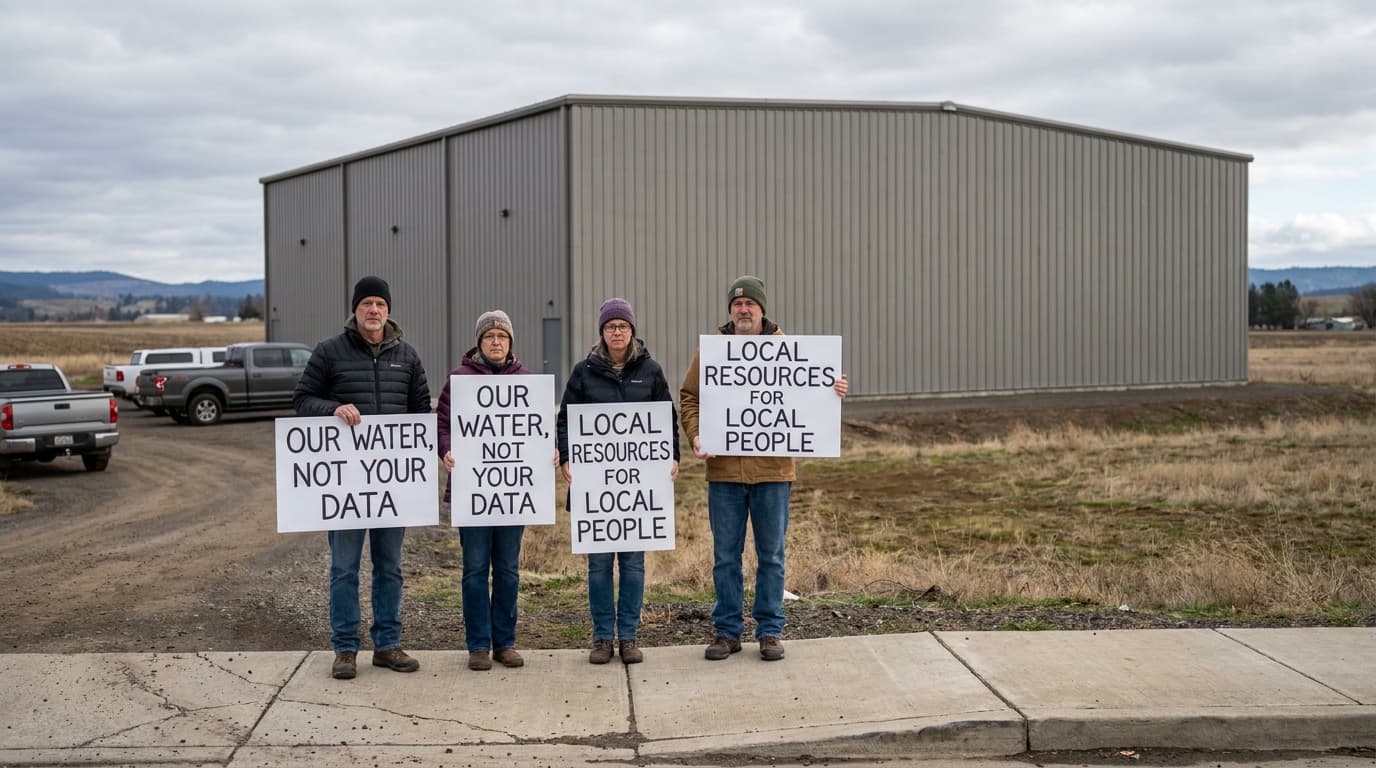
TL;DR: A grassroots movement in Oregon, fueled by concerns over massive tax breaks, is successfully ousting local politicians who support data center expansion. This signals a growing political risk for tech infrastructure in key regions.
Key facts
- Category
- Infrastructure
- Impact
- High
- Published
- Source
- TechRadar
Full summary
A grassroots movement in Oregon is ousting politicians over data center tax breaks, signaling a growing political risk for tech giants.
A grassroots movement in Oregon is gaining significant political power by challenging the massive tax breaks granted to data centers, according to reporting from TechRadar. Local residents, environmental groups, and educators have organized to oppose exemptions that total over $450 million. This backlash has already proven effective, leading to the ousting of local politicians who supported the industry-friendly policies. The movement was reportedly accelerated by a stark warning that opponents had only “one election cycle” to act before the industry’s influence became too entrenched. This represents a direct and successful challenge to the expansion of major tech infrastructure in a key US hub, signaling a new front in the battle over the tech industry's local impact.
The core of the conflict revolves around enterprise zones, a common economic development tool used to grant long-term property tax exemptions to capital-intensive projects. In Oregon, these tax breaks can last for years, effectively shifting the financial burden for public services like schools and emergency response onto residents and other businesses. While data centers create some high-tech jobs, critics argue the number is small relative to the immense strain they place on local power grids and water resources, especially given the minimal tax revenue they contribute in return. The movement's success lies in its ability to translate these complex financial arrangements into a simple, powerful political message: that tech giants are not paying their fair share while consuming public resources.
This is not an isolated incident. Across the country and globally, communities are beginning to question the “growth at all costs” model for data centers. Similar debates are flaring up in places like Virginia's “Data Center Alley,” Arizona, and Ireland, where concerns about energy consumption, water usage, and noise pollution are mounting. The rise of AI is set to dramatically increase the resource demands of data centers, which will only make these conflicts more acute. The situation in Oregon serves as a leading indicator of a broader trend where the physical footprint and environmental impact of the digital world face intense local scrutiny. The era of quietly building massive server farms with minimal public opposition appears to be ending.
For technology leaders, this story is a critical warning about a new class of operational and political risk. Site selection for data centers can no longer be a purely technical and financial decision; it now requires sophisticated political and community engagement strategies. Companies must be prepared to justify their value proposition beyond a few jobs, demonstrating clear benefits to the local tax base and addressing environmental concerns head-on. Going forward, expect to see more local governments demanding community benefit agreements, stricter environmental reviews, and new limits on tax abatements. The key development to watch is whether this political pressure translates into higher operating costs for cloud providers, which could eventually be passed on to customers as increased prices for cloud services.
Why it matters
For CTOs and infrastructure leaders, this movement represents a new, tangible political risk to cloud infrastructure. The stability and cost-effectiveness of key data center hubs like Oregon can no longer be taken for granted, potentially impacting future cloud costs and availability.
Business impact
The political backlash in Oregon creates significant uncertainty for companies reliant on cloud services or planning data center investments. This grassroots opposition could lead to higher taxes, stricter regulations, and increased operational costs, affecting long-term strategic planning and site selection.
Tags
Related on Notifire
Related stories
Primary source: TechRadar