Short, verified tech briefings on AI, Cybersecurity, Infrastructure, Database, and Tech Updates — with the analysis and action steps engineering teams need.
A new report challenges the common fear that AI is hurting graduate hiring. Researchers found no direct evidence of an AI-driven spike in unemployment, suggesting that other economic factors are the primary drivers of job market trends.
Google Cloud has launched its new Z4D machine series, designed to speed up applications that handle large amounts of data. These new virtual machines and bare-metal servers target databases, analytics, and other I/O-intensive business-critical workloads.
A new benchmark tested how major PostgreSQL providers handle memory-intensive queries. The test revealed that some popular services, including AWS RDS and Google Cloud SQL, crashed completely, causing significant downtime.
A federal judge blocked Utah's VPN age verification law, ruling that flawless geolocation is technically impossible. This decision sets a major precedent for state-level internet regulations and user privacy protections, acknowledging fundamental technological limits.
pgEdge launched Starfleet, a Postgres platform that gives AI coding agents their own isolated database branches. These branches are never merged, letting developers safely test AI-generated code without risking their main production database.
Meta built a new gateway that reduced persistent database connections by 19 times. Called ZGateway, the stateless proxy handles over a billion operations per second, centralizing traffic routing, caching, and load balancing for its ZippyDB system.
ChatGPT's voice feature can now use plugins and connected apps while you talk. This turns the AI from a simple conversationalist into a hands-free assistant that can complete tasks in other services for you.
Database firm pgEdge has launched Starfleet, a new service to help developers move AI applications using Postgres from the prototype stage to full-scale production, addressing a common point of failure for many AI projects.
Chinese EV makers Nio and Geely are partnering to build a shared network of battery swapping stations. The collaboration aims to standardize the technology, offering a three-minute 'refill' that could solve the EV charging bottleneck.
JetBrains Rider's latest update introduces an AI agent that automatically analyzes application performance. This helps developers quickly identify and fix bottlenecks without manual profiling, saving significant time and effort.
A federal court ruled states can regulate the prediction market Kalshi under their gambling laws. This creates a complex and costly legal patchwork for fintech platforms trying to operate nationwide.
Uber developed a new Kubernetes tool that separates scaling decisions from the actual scaling actions. This allows multiple systems to manage capacity safely, enabling regional failover without paying for constantly running idle servers.
JetBrains is rolling out a new compilation scheme for Kotlin Multiplatform to fix inconsistencies between the IDE and compiler. This update promises more reliable builds and better performance for developers using the cross-platform framework.
AWS has added foreign key support to its Aurora MySQL database, a feature users have long requested. This allows the database itself to enforce data consistency, removing a major reason some developers avoided the service.
The Java ecosystem saw a wave of updates, including major releases for TornadoVM and Groovy, plus new versions of GraalVM, Hibernate, and Quarkus. These releases offer developers performance gains, new features, and critical stability improvements across the board.
X-energy is building America's first advanced nuclear fuel plant in decades. The Tennessee facility will produce next-generation fuel, a potential solution for the massive power demands of AI and data centers.
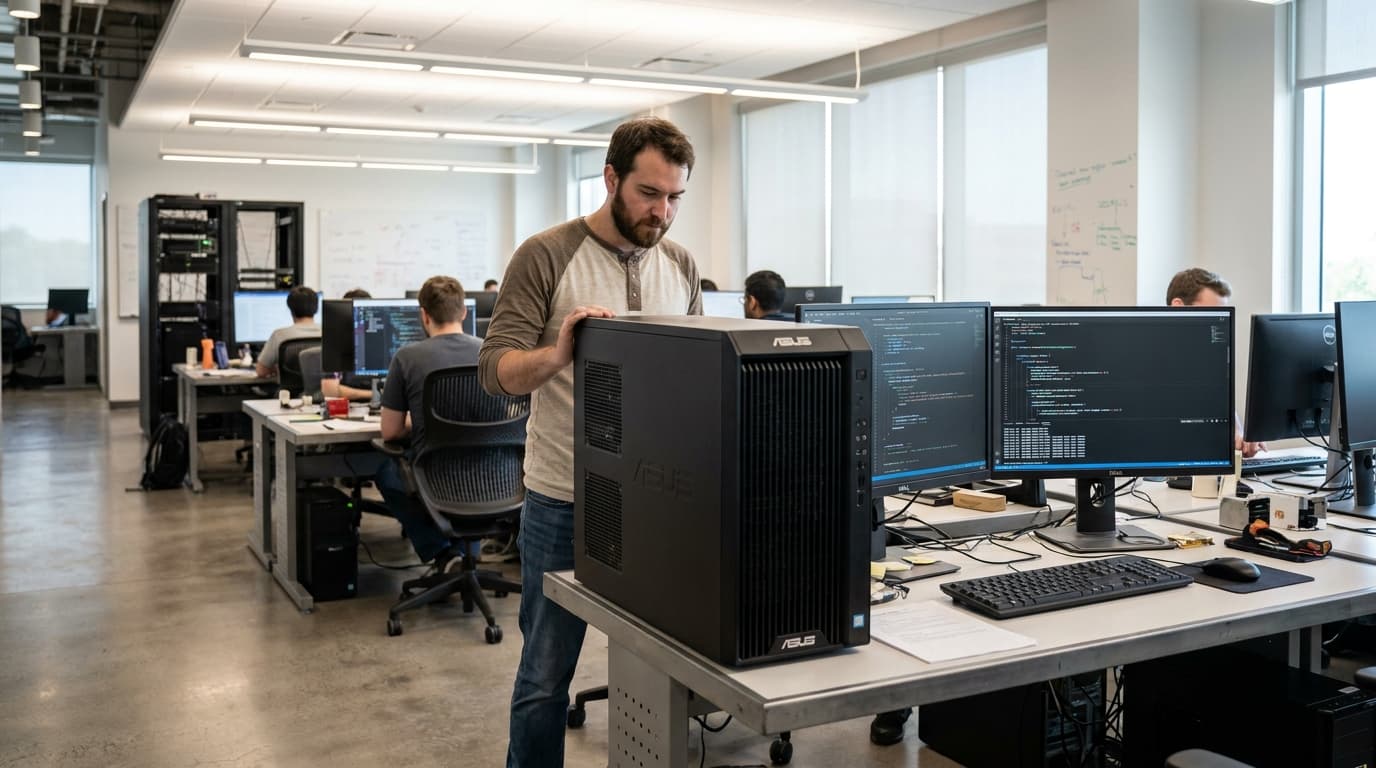
Asus released a new workstation powered by Nvidia's GB300 Grace Blackwell superchip. The $120,000 machine offers 748GB of unified memory, bringing on-premise AI supercomputing power to a desktop form factor for elite development teams.
Google's new GKE Pod Snapshots can load a 70-billion-parameter AI model in just 37 seconds. The feature cuts startup latency by up to 89% by saving a model's memory state to Cloud Storage for faster reloads.
Fujifilm has released new LTO-10 data tapes, offering a massive 40TB of native storage capacity. This technology provides a cost-effective solution for long-term archival and backup for large enterprises managing huge datasets.
Docker has launched Cloud Sandboxes, secure hosted environments for running code. The new platform aims to provide a consistent experience for developers moving workloads from their laptops to the cloud, with a special focus on AI agents.
Cloudflare has replaced WordPress for its main blog, migrating to a new open-source system it built in-house. The new platform, EmDash, is designed for extreme performance and can handle up to 7,000 requests per second.
AI agents for coding often fail because they only remember conversations, not their work environment. A new approach gives them a persistent "workspace" to manage files and dependencies, letting them work just like a human developer.
AWS has updated its Model Context Protocol to be stateless, eliminating the need for complex "sticky sessions." This change simplifies server architecture, making it easier to scale applications horizontally and improve overall system resilience.
AI search company Perplexity replaced Amazon's DynamoDB with its own custom database written in Rust. The move cut query latency by five times and significantly reduced cloud storage costs, improving efficiency for its high-volume search infrastructure.