Short, verified tech briefings on AI, Cybersecurity, Infrastructure, Database, and Tech Updates — with the analysis and action steps engineering teams need.
Vercel has introduced Elastic Build Machines, a new feature that automatically monitors memory usage during deployments. It dynamically adjusts compute resources to prevent common out-of-memory (OOM) failures, improving deployment reliability and developer productivity by reducing the need for manual intervention.
Java Champion Gunnar Morling shares insights on building high-performance Java applications for data engineering. He discusses experiments with durable execution engines and the development of Apache Hardwood, a new, minimal-dependency Java parser for the Apache Parquet file format, offering lessons for developers and engineering leaders.
Indonesia has blocked access to the prediction market platform Polymarket. The government classified the service as a form of illegal online gambling under national law. This move highlights the growing regulatory pressure on decentralized platforms as more countries scrutinize their operations and legal status.
AI-powered tools are enabling non-technical staff in departments like HR and marketing to generate code, a trend called 'vibe coding.' This shift is democratizing software development, helping reduce backlogs and solve business problems faster, but it also introduces new risks that require IT oversight.
Google Cloud has announced the general availability of its managed Remote MCP Server for AlloyDB. This new service provides a direct and secure connection for AI models and agents to access real-time data stored in AlloyDB databases, improving the quality of context for AI-powered applications.
NASA has announced several new missions to the Moon's South Pole, which will lay the groundwork for a permanent lunar base. The first of these, Moon Base I, is scheduled for fall 2026 and will utilize Blue Origin's Blue Moon lander, paving the way for a 2028 crewed landing.
Xreal is launching a new sub-brand, X By Xreal, with its first product being the a01 AR glasses. Priced at $299 and launching in the US in July, the glasses feature an anti-shake mode and customizable frames that can even be 3D printed by users.
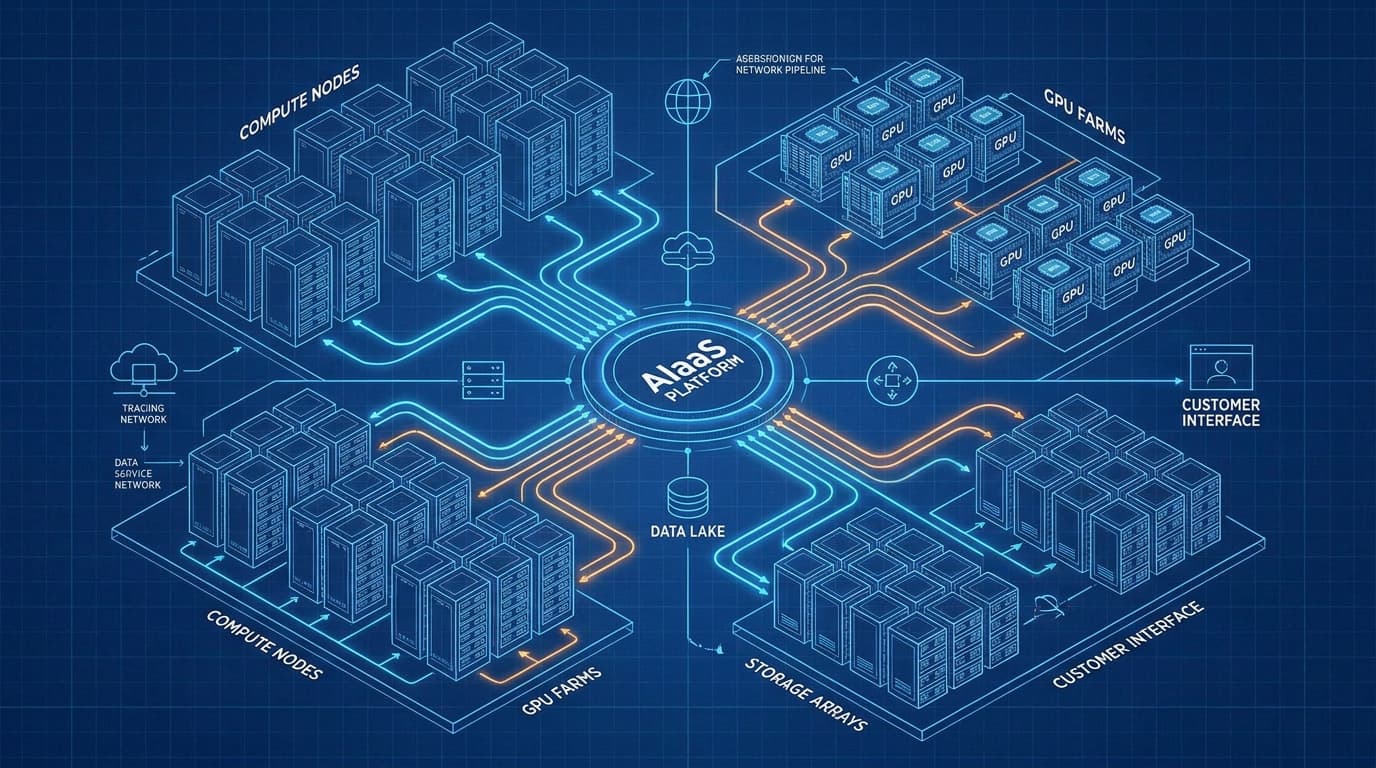
An engineer outlines a practical blueprint for building a secure and efficient AI-as-a-Service platform in a private cloud. The guide covers maximizing GPU usage, managing workloads with Valkey, securing LLMs against OWASP risks, and scaling data pipelines for enterprise use.
Many CIOs find they can't leave their roles because they haven't prepared a successor. Their top deputies are often skilled architects but lack leadership training, a phenomenon known as the "Architect's Trap." This oversight in succession planning creates a critical leadership gap in many organizations.
A new analysis highlights how advanced AI models can now autonomously discover software vulnerabilities at an unprecedented scale. This fundamentally changes the balance between offense and defense in cybersecurity, making traditional disclosure timelines potentially obsolete and requiring an urgent rethinking of security strategies.
Google Cloud published a guide on using its BigQuery Graph feature to create digital twins of complex systems, like a food supply chain. The approach helps businesses model and analyze relationships within their operations, moving beyond the limitations of traditional spreadsheets to manage growth and complexity effectively.
Julien Verlaguet, creator of the Hack language, is building a new AI coding agent at SkipLabs. It challenges the standard 'copilot' model of prompt-draft-iterate. Instead of focusing on speed through iteration, the tool aims to generate production-ready code that can ship without developer feedback.
Vercel has rolled out an update for microfrontend deployments. Alias and branch-assigned domains now fully inherit the routing configuration from the source deployment. This change simplifies the process of creating preview environments, ensuring aliased URLs behave exactly like the original deployment for developers.
Spotify has introduced a new feature allowing users to listen to narrated versions of long-form magazine articles. The initial launch includes over 650 articles in English from major publications like Rolling Stone, Wired, and Vogue, expanding its audio content beyond music and podcasts.
A developer has released an open-source AI racing harness for AI Grand Prix contestants. Built with Rust and the Bevy engine, the tool provides a real-time flight software simulation that matches competition constraints, allowing teams to test their code while waiting for the official qualifier.
NASA has awarded contracts for the first components of a planned lunar base, a key step in its Artemis program. The initial awards cover two autonomous rovers designed to provide mobility for astronauts on the Moon's surface, signaling continued momentum for the ambitious long-term settlement initiative.
Gartner predicts that by 2025, 40% of enterprise autonomous AI projects will be partially derailed by governance failures. These gaps are often discovered only after production incidents occur, stemming from a flawed, all-or-nothing approach to trust and control, according to the analyst firm.
Financing platform Capchase has secured $200 million in a new funding round, combining $26 million in equity and a $174 million credit facility. The company provides flexible payment solutions for B2B sales, targeting software, hardware, and cybersecurity vendors to help them accelerate their sales cycles.
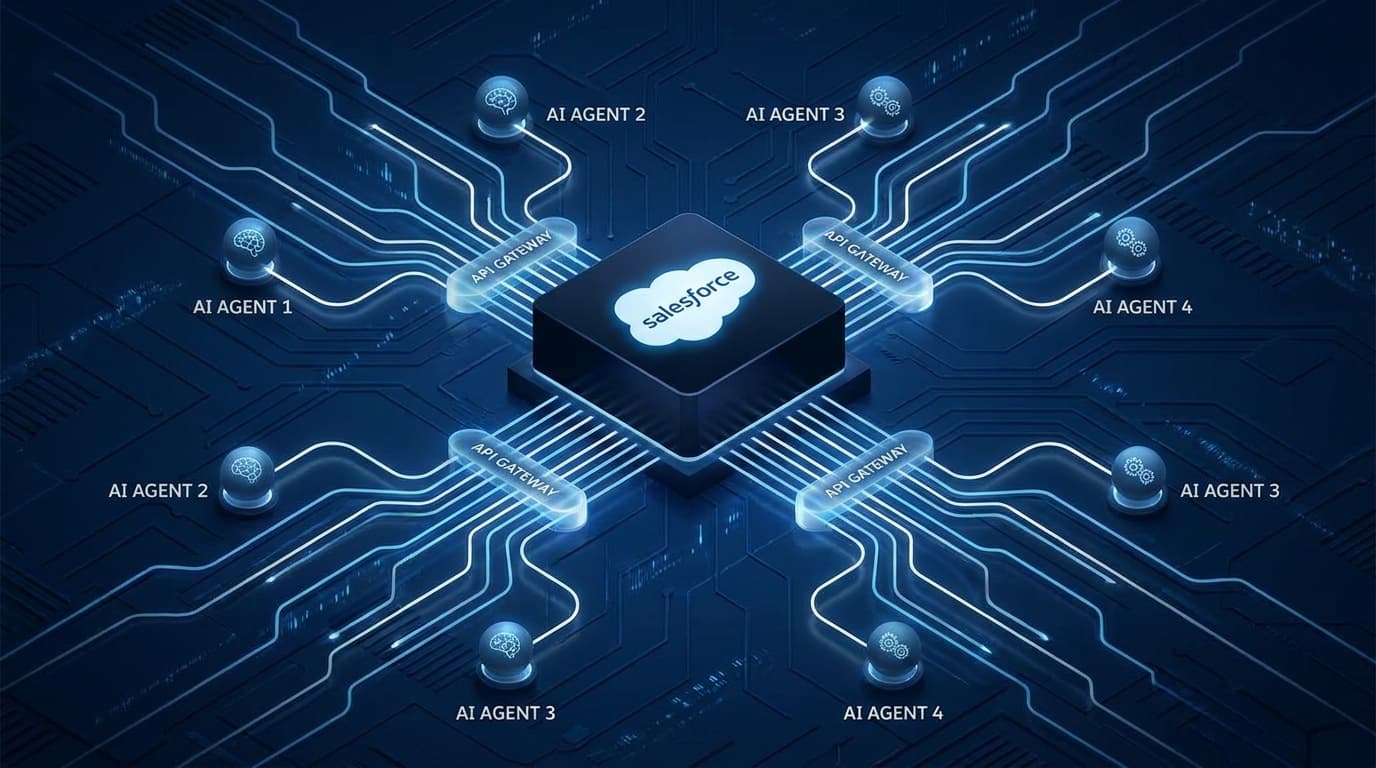
Salesforce has launched Headless 360, a new offering marking a significant strategic shift. The move is a response to the rise of AI agents and automated workflows, which reduce the need for users to stay within a single application. This change will impact IT architecture and budgeting.
Expanse, a new YC-backed startup, has launched a tool to increase the efficiency of GPU clusters. It analyzes job scripts and code before execution to predict the actual resources needed, aiming to reduce underutilization on platforms like Kubernetes and SLURM for AI and HPC workloads.
Strava is now requiring developers to pay a subscription to access its API. The fitness platform cites the rise of zero-code AI tools and data scraping for degrading performance. This change marks a significant shift for developers building apps on Strava's data, reflecting a broader industry trend.
Shopify has launched GraphQL Cardinal, a new execution engine that uses a breadth-first approach instead of the traditional depth-first method. This change delivers significant performance gains, including up to 15x faster field execution, 6x lower garbage collection overhead, and improved latency for large-scale queries.
Valve has raised the prices for its Steam Deck OLED models. The 512GB version is now $789, up from $549, and the 1TB model is $949, up from $649. The company attributes the significant increase to rising costs for memory and storage components, but both are now in stock.
Former Google CEO Eric Schmidt was booed by University of Arizona graduates during his commencement speech. He told the class their task was to shape AI, prompting a negative reaction. Schmidt acknowledged their fears about job loss and the future were "rational," highlighting growing public skepticism.